SHAWORDS

The work itself will cover a wide field including clearance of slums, — Franklin D. Roosevelt

"The work itself will cover a wide field including clearance of slums, which for adequate reasons cannot be undertaken by private capital; in rural housing of several kinds, where, again, private capital is unable to function; in rural electrification; in the reforestation of the great watersheds of the Nation; in an intensified program to prevent soil erosion and to reclaim blighted areas; in improving existing road systems and in constructing national highways designed to handle modern traffic; in the elimination of grade crossings; in the extension and enlargement of the successful work of the Civilian Conservation Corps; in non-Federal works, mostly self-liquidating and highly useful to local divisions of Government; and on many other projects which the Nation needs and cannot afford to neglect."
Franklin D. Roosevelt
author258 quotes

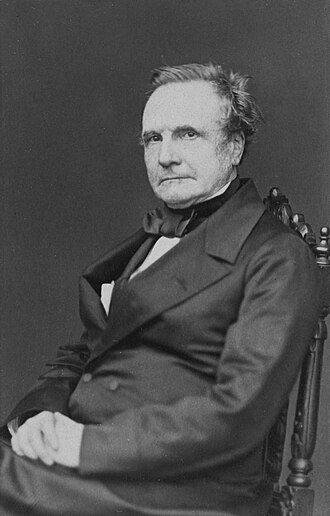
Franklin Delano Roosevelt, also known as FDR, was the 32nd president of the United States, serving from 1933 until his death in 1945. He is the longest-serving US president and the only one to have served more than two terms. His first two terms were centered on combating the Great Depression, while his third and fourth focused on US involvement in World War II. A member of the Democratic Party, R

More by Franklin D. Roosevelt

View all →
Quote
"Let us first examine that nightmare to many Americans, especially our friends in California, the growing population of Japanese on the Pacific slope. It is undoubtedly true that in the past many thousands of Japanese have legally or otherwise got into the United States, settled here and raised up children who became American citizens. Californians have properly objected on the sound basic ground that Japanese immigrants are not capable of assimilation into the American population. If this had throughout the discussion been made the sole ground for the American attitude all would have been well, and the people of Japan would today understand and accept our decision. Anyone who has traveled in the Far East knows that the mingling of Asiatic blood with European or American blood produces, in nine cases out of ten, the most unfortunate results. There are throughout the East many thousands of so-called Eurasians—men and women and children partly of Asiatic blood and partly of European or American blood. These Eurasians are, as a common thing, looked down on and despised, both by the European and American who reside there, and by the pure Asiatic who lives there."
Franklin D. RooseveltFranklin D. Roosevelt
Quote
"Forests require many years to mature; consequently the long point of view is necessary if the forests are to be maintained for the good of our country. He who would hold this long point of view must realize the need of subordinating immediate profits for the sake of the future public welfare. ... A forest is not solely so many thousand board feet of lumber to be logged when market conditions make it profitable. It is an integral part of our natural land covering, and the most potent factor in maintaining Natures delicate balance in the organic and inorganic worlds. In his struggle for selfish gain, man has often needlessly tipped the scales so that Natures balance has been destroyed, and the public welfare has usually been on the short-weighted side. Such public necessities, therefore, must not be destroyed because there is profit for someone in their destruction. The preservation of the forests must be lifted above mere dollars and cents considerations. ... The handling of our forests as a continuous, renewable resource means permanent employment and stability to our country life. The forests are also needed for mitigating extreme climatic fluctuations, holding the soil on the slopes, retaining the moisture in the ground, and controlling the equable flow of water in our streams. The forests are the "lungs" of our land, purifying the air and giving fresh strength to our people. Truly, they make the country more livable. There is a new awakening to the importance of the forests to the country, and if you foresters remain true to your ideals, the country may confidently trust its most precious heritage to your safe-keeping."
Franklin D. RooseveltFranklin D. Roosevelt

More on Success

View all →
Quote
"One of the first major steps in the direction of modern skepticism came through the victory of Occam over Aquinas in a controversy about language. The statement that modi essendi were replaced by modi significandi et intelligendi, or that ontological referents were abandoned in favor of pragmatic significations, describes broadly the change in philosophy which continues to our time. From Occam to Bacon, from Bacon to Hobbes, and from Hobbes to contemporary semanticists, the progression is clear: ideas become psychological figments, words become useful signs. ... To one completely committed to this realm of becoming, as are the empiricists, the claim to apprehend verities is a sign of . Probably we have here but a highly sophisticated expression of the doctrine that ideals are hallucination and that the only normal, sane person is the healthy extrovert, making instant, instinctive adjustments to the stimuli of the material world."
O
Ontology
Quote
"I, too, believed it was impossible to change the existing society into one that would be for the benefit of all; neither could I espouse any given ideal for society. But [...] I felt that even if one did not have an ideal vision of society, one could have one’s work to do. Whether it was successful or not was not our concern; it was enough that we believed it to be a valid work. The accomplishment of that work, I believed, was what our real life was about. Yes. I want to carry out a work of my own; for I feel that by so doing our lives are rooted in the here and now, not in some far-off ideal goal."
P
Purpose
Quote
"The war was finished. It had lasted ten equivalent years and taken ten million lives. Thus it was neither of long duration nor of serious attrition. It hadnt any great significance; it was not intended to have. It did not prove a point, since all points had long ago been proven. What it did, perhaps, was to emphasize an aspect, sharpen a concept, underline a trend. On the whole it was a successful operation. Economically and ecologically it was of healthy effect, and who should grumble? And after wars, men go home. No, no, men start for home. Its not the same."
R
R. A. Lafferty