Quote
"You cannot change what you are, only what you do."
P
Philip Pullman"They’re often bracketed together, Tolkien and Lewis, which I suppose is fair because they were great friends — both Oxford writers and scholars, both Christians. Tolkien’s work has very little of interest in it to a reader of literature, in my opinion. When I think of literature — Dickens, George Eliot, Joseph Conrad — the great novelists found their subject matter in human nature, emotion, in the ways we relate to each other. If that’s what Tolkien’s up to, he’s left out half of it. The books are wholly male-oriented. The entire question of sexual relationships is omitted."
Sir Philip Nicholas Outram Pullman is an English writer. He is best known for the fantasy trilogy His Dark Materials. The first volume, Northern Lights (1995), won the Carnegie Medal and later the "Carnegie of Carnegies". The third volume, The Amber Spyglass (2000), won the Whitbread Award. In 2017, he started a companion trilogy, The Book of Dust, of which the final novel, The Rose Field, was pub
"You cannot change what you are, only what you do."
"Human beings can’t see anything without wanting to destroy it, Lyra. That’s original sin."
"Who is this man whos got the knife?"
"Im trying to write a book about what it means to be human, to grow up, to suffer and learn. My quarrel with much (not all) fantasy is it has this marvellous toolbox and does nothing with it except construct shoot-em-up games. Why shouldnt a work of fantasy be as truthful and profound about becoming an adult human being as the work of George Eliot or Jane Austen? Well, there are a few fantasies that are. One of them is Paradise Lost."
"I have said that His Dark Materials is not fantasy but stark realism, and my reason for this is to emphasise what I think is an important aspect of the story, namely the fact that it is realistic, in psychological terms. I deal with matters that might normally be encountered in works of realism, such as adolescence, sexuality, and so on; and they are the main subject matter of the story — the fantasy (which, of course, is there: no-one but a fool would think I meant there is no fantasy in the books at all) is there to support and embody them, not for its own sake."
"That light," said the Chaplain, "is it going up or coming down?" "Its coming down," said Lord Asriel, "but it isnt light. Its Dust." Something in the way he said it made Lyra imagine dust with a capital letter, as if this wasnt ordinary dust. The reaction of the Scholars confirmed her feeling, because Lord Asriels words caused a sudden collective silence, followed by gasps of incredulity."
"Now Art, used collectively for painting, sculpture, architecture and music, is the mediatress between, and reconciler of, nature and man. It is, therefore, the power of humanizing nature, of infusing the thoughts and passions of man into everything which is the object of his contemplation."
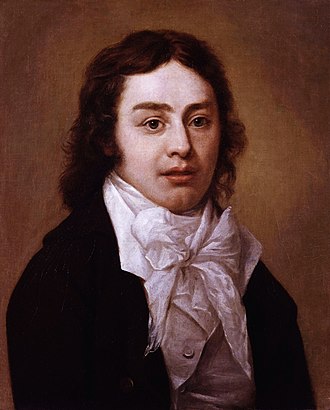 Samuel Taylor Coleridge
"The Good consists in the congruity of a thing with the laws of the reason and the nature of the will, and in its fitness to determine the latter to actualize the former: and it is always discursive. The Beautiful arises from the perceived harmony of an object, whether sight or sound, with the inborn and constitutive rules of the judgment and imagination: and it is always intuitive."
Samuel Taylor Coleridge"I believe that the unity of man as opposed to other living things derives from the fact that man is the conscious life of himself. Man is conscious of himself, of his future, which is death, of his smallness, of his impotence; he is aware of others as others; man is in nature, subject to its laws even if he transcends it with his thought."
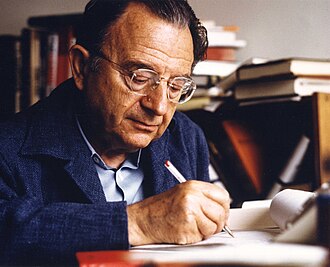 Erich Fromm
"Who made you glorious as the gates of heaven Beneath the keen full moon? Who bade the sun Clothe you with rainbows? Who, with living flower Of loveliest blue, spread garlands at your feet? God! let the torrents, like a shout of nations, Answer! and let the ice-plains echo, God! God! sing, ye meadow-streams, with gladsome voice! Ye pine-groves, with your soft and soul-like sounds! And they too have a voice, yon piles of snow, And in their perilous fall shall thunder, God!"
Samuel Taylor Coleridge"All Nature seems at work. Slugs leave their lair — The bees are stirring — birds are on the wing — And Winter slumbering in the open air, Wears on his smiling face a dream of Spring! And I the while, the sole unbusy thing, Nor honey make, nor pair, nor build, nor sing."
Samuel Taylor Coleridge"Taste is the intermediate faculty which connects the active with the passive powers of our nature, the intellect with the senses; and its appointed function is to elevate the images of the latter, while it realizes the ideas of the former."
Samuel Taylor Coleridge