SHAWORDS

This first non-evaluative insight into history does not inevitably lea — Karl Mannheim

"This first non-evaluative insight into history does not inevitably lead to relativism, but rather to relationism. Knowledge, as seen in the light of the total conception of ideology, is by no means an illusory experience, for ideology in its relational concept is not at all identical with illusion. Knowledge arising out of our experience in actual life situations, though not absolute, is knowledge none the less. The norms arising out of such actual life situations do not exist in a social vacuum, but are effective as real sanctions for conduct. Relationism signifies merely that all of the elements of meaning in a given situation have reference to one another and derive their significance from this reciprocal interrelationship in a given frame of thought. Such a system of meanings is possible and valid only in a given type of historical existence, to which, for a time, it furnishes appropriate expression. When the social situation changes, the system of norms to which it had previously given birth ceases to be in harmony with it. The same estrangement goes on with reference to knowledge and to the historical perspective. All knowledge is oriented toward some object and is influenced in its approach by the nature of the object with which it is pre-occupied. But the mode of approach to the object to be known is dependent upon the nature of the knower."
K
Karl Mannheim
Karl Mannheim
author26 quotes

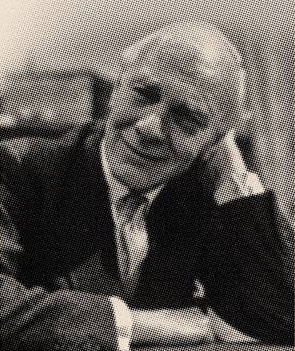
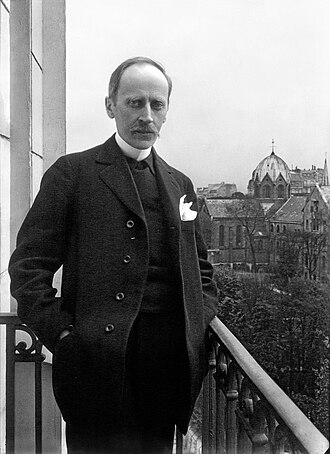
Karl Mannheim was a Hungarian sociologist and a key figure in classical sociology as well as one of the founders of the sociology of knowledge. Mannheim is best known for his book Ideology and Utopia (1929/1936), in which he distinguishes between partial and total ideologies, the latter representing comprehensive worldviews distinctive to particular social groups, and also between ideologies that

More by Karl Mannheim

View all →
Quote
"The particular conception of "ideology" makes its analysis of ideas on a purely psychological level. If it is claimed for instance that an adversary is lying, or that he is concealing or distorting a given factual situation, it is still nevertheless assumed that both parties share common criteria of validity — it is still assumed that it is possible to refute lies and eradicate sources or error by referring to accepted criteria of objective validity common to both parties. The suspicion that ones opponent is the victim of an ideology does not go so far as to exclude him from discussion on the basis of a common theoretical frame of reference. The case is different with the total conception of ideology. When we attribute to one historical epoch one intellectual world and to ourselves another one, or if a certain historically determined social stratum thinks in categories other than our own, we refer not to the isolated cases of thought-content, but to fundamentally divergent thought-systems and to widely differing modes of experience and interpretation."
K
Karl Mannheim
Quote
"Relativism is a product of the modern historical-sociological procedure which is based on the recognition that all historical thinking is bound up with the concrete position in life of the thinker [Standortsgebundenheit des Denkers]. But relativism combines this historical-sociological insight with an older theory of knowledge which was as yet unaware of the interplay between conditions of existence and modes of thought, and which modelled its knowledge after static prototypes such as might be exemplified by the proposition 2 x 2 = 4. This older type of thought, which regarded such examples as the model of all thought, was necessarily led to the rejection of all those forms of knowledge which were dependent upon the subjective standpoint and the social situation of the knower, and which were, hence, merely "relative"."
K
Karl Mannheim
Quote
"The non-evaluative general total conception of ideology is to be found primarily in those historical investigations, where, provisionally and for the sake of the simplification of the problem, no judgments are pronounced as to the correctness of the ideas to be treated. This approach confines itself to discovering the relations between certain mental structures and the life-situations in which they exist. We must constantly ask ourselves how it comes about that a given type of social situation gives rise to a given interpretation. Thus the ideological element in human thought, viewed at this level, is always bound up with the existing life-situation of the thinker. According to this view human thought arises, and operates, not in a social vacuum but in a definite social milieu."
K
Karl Mannheim

More on Life

View all →
Quote
"If it fulfills our hopes, this center will be, at once, a symbol and a reflection and a hope. It will symbolize our belief that the world of creation and thought are at the core of all civilization. Only recently in the White House we helped commemorate the 400th anniversary of Shakespeare. The political conflicts and ambitions of his England are known to the scholar and to the specialist. But his plays will forever move men in every corner of the world. The leaders that he wrote about live far more vividly in his words than in the almost forgotten facts of their own rule. Our civilization, too, will largely survive in the works of our creation. There is a quality in art which speaks across the gulf dividing man from man and nation from nation, and century from century. That quality confirms the faith that our common hopes may be more enduring than our conflicting hostilities. Even now men of affairs are struggling to catch up with the insights of great art. The stakes may well be the survival of civilization. The personal preferences of men in government are not important--except to themselves. However, it is important to know that the opportunity we give to the arts is a measure of the quality of our civilization. It is important to be aware that artistic activity can enrich the life of our people, which really is the central object of Government. It is important that our material prosperity liberate and not confine the creative spirit."
L
Lyndon B. Johnson
Quote
"I did not go to join Kurtz there and then. I did not. I remained to dream the nightmare out to the end, and to show my loyalty to Kurtz once more. Destiny. My destiny! Droll thing life is — that mysterious arrangement of merciless logic for a futile purpose. The most you can hope from it is some knowledge of yourself — that comes too late — a crop of unextinguishable regrets. I have wrestled with death. It is the most unexciting contest you can imagine. It takes place in an impalpable grayness, with nothing underfoot, with nothing around, without spectators, without clamor, without glory, without the great desire of victory, without the great fear of defeat, in a sickly atmosphere of tepid skepticism, without much belief in your own right, and still less in that of your adversary. If such is the form of ultimate wisdom, then life is a greater riddle than some of us think it to be. I was within a hairs-breadth of the last opportunity for pronouncement, and I found with humiliation that probably I would have nothing to say. This is the reason why I affirm that Kurtz was a remarkable man. He had something to say. He said it. Since I had peeped over the edge myself, I understand better the meaning of his stare, that could not see the flame of the candle, but was wide enough to embrace the whole universe, piercing enough to penetrate all the hearts that beat in the darkness. He had summed up — he had judged. The horror! He was a remarkable man. After all, this was the expression of some sort of belief; it had candor, it had conviction, it had a vibrating note of revolt in its whisper, it had the appalling face of a glimpsed truth — the strange commingling of desire and hate."
H
Heart of Darkness