Quote
"Spinoza (1634-77) is the noblest and most lovable of the great philosophers. Intellectually, some others have surpassed him, but ethically he is supreme."
B
Baruch Spinoza"This impels me, before going into your reasons, to set forth briefly my opinion on the question, whether the world was made by chance. But I answer, that as it is clear that chance and necessity are two contraries, so is it also clear, that he, who asserts the world to be a necessary effect of the divine nature, must utterly deny that the world has been made by chance; whereas, he who affirms that God need not have made the world, confirms, though in different language, the doctrine that it has been made by chance; inasmuch as he maintains that it proceeds from a wish, which might never have been formed. However, as this opinion and theory is on the face of it absurd, it is commonly very unanimously admitted, that Gods will is eternal, and has never been indifferent; hence... the world is a necessary effect of the divine nature. Let them call it will, understanding, or any name they like, they come at last to the same conclusion, that under different names they are expressing one and the same thing. If you ask them, whether the divine will does not differ from the human, they answer, that the former has nothing in common with the latter except its name; especially as they generally admit that Gods will, understanding, intellect, essence, and nature are all identical; so I... lest I... confound the divine nature with the human, do not assign to God human attributes, such as will, understanding, attention, hearing, &c. I therefore say, as I have said already, that the world is a necessary effect of the divine nature, and that it has not been made by chance. I think this is enough to persuade you, that the opinion of those (if such there be) who say that the world has been made by chance, is entirely contrary to mine; and relying on this hypothesis, I proceed to examine those reasons which lead you to infer the existence of all kinds of ghosts."
Baruch (de) Spinoza, also known under his Latinized pen name Benedictus de Spinoza, was a philosopher of Portuguese-Jewish origin, who was born and lived in the Dutch Republic. A forerunner of the Age of Enlightenment, Spinoza significantly influenced modern biblical criticism, 17th-century rationalism, and Dutch intellectual culture, establishing himself as one of the most important and radical p
"Spinoza (1634-77) is the noblest and most lovable of the great philosophers. Intellectually, some others have surpassed him, but ethically he is supreme."
"According to the seventeenth-century way of thinking, an atheist was by definition a decadent. If there was no God (or, at least, no providential, rewarding-and-punishing God of the sort worshipped in all the traditional religions), the reasoning went, then everything is permitted. So a non-beliver would be expected to indulge in all manner of sensual stimulation... to lie, cheat, and steal... Spinoza, according to all seventeenth-century interpreters, rejected all the traditional ideas about God; he was indesputably a heretic. Yet his manner of living was humble and apparently free of vice. Then, as now, the philosopher seemed a living oxymoron: he was an ascetic sensualist, a spiritual materialist, a sociable hermit, a secular saint. How could his life have been so good, the critics asked, when his philosophy was so bad?"
"Few philosophers have been so mythologised as the 17th century Jew, Baruch Spinoza. Legends abound regarding his life, thought and character. He has been claimed as hero and as villain by both secular and ecclesiastical authorities. During his life he was widely attacked for his blasphemous and heretical opinions on God, the bible, and religion, even suffering one of the most vitriolic cherem (excommunication) ever issued by the Amsterdam Portuguese-Jewish community. But after his death he was appropriated by others who believed that within his complex writings could be found a deeply religious instinct. To German Romantics like the poet Novalis, he was "a God intoxicated man", while Goethe called him simply theissimus, most theistic. So what was Spinozas attitude to God? Certainly no one who read his work thoroughly could argue that he held a traditional theistic conception of a divine being, the providential God of Abraham, Isaac and Jacob. In the Ethics, his philosophical masterpiece, Spinoza says that God is immanent in nature, not some supernatural entity beyond the world. But does this mean that we can describe him as a pantheist, as someone who believes that God is revealed in every aspect of the natural world that lies around us? This was certainly a popular interpretation."
"Spinoza believed that he had, through metaphysical inquiry, discovered important truths about God, nature and human beings, truths that led to principles of great consequence for our happiness and our emotional and physical flourishing. This, in fact, is what he called “true religion.” There is a lesson here: By enforcing conformity of belief and punishing deviations from dogma, religious authorities may end up depriving the devoted of the possibility of achieving in religion that which they most urgently seek."
"What is remarkable is how popular this heretic remains nearly three and a half centuries after his death, and not just among scholars. Spinozas contemporaries, René Descartes and Gottfried Leibniz, made enormously important and influential contributions to the rise of modern philosophy and science, but you won’t find many committed Cartesians or Leibnizians around today. The Spinozists, however, walk among us. They are non-academic devotees who form Spinoza societies and study groups, who gather to read him in public libraries and in synagogues and Jewish community centres. Hundreds of people, of various political and religious persuasions, will turn out for a day of lectures on Spinoza, whether or not they have ever read him. There have been novels, poems, sculptures, paintings, even plays and operas devoted to Spinoza."
"Spinozas extraordinary views on freedom have never been more relevant. In 2010, for example, the United States Supreme Court declared constitutional a law that, among other things, criminalized certain kinds of speech. The speech in question need not be extremely and imminently threatening to anyone or pose “a clear and present danger” (to use Justice Oliver Wendell Holmes phrase). It may involve no incitement to action or violence whatsoever; indeed, it can be an exhortation to non-violence. In a troubling 6-3 decision, Holder v. Humanitarian Law Project, the Court, acceding to most of the arguments presented by President Obamas attorney general, Eric Holder, upheld a federal law which makes it a crime to provide support for a foreign group designated by the State Department as a “terrorist organization,” even if the “help” one provides involves only peaceful and legal advice, including speech encouraging that organization to adopt nonviolent means for resolving conflicts and educating it in the means to do so. (The United States, of course, is not alone among Western nations in restricting freedom of expression. Just this week, France — fresh from outlawing the wearing of veils by Muslim women, and in a mirror image of Turkeys criminalizing the public affirmation of the Armenian genocide — made it illegal to deny, in print or public speech, officially recognized genocides. [...] I cited the case of Holder v. Humanitarian Law Project not to make a constitutional point — I leave it to legal scholars to determine whether or not the Supreme Courts decision represents a betrayal of our countrys highest ideals — but rather to underscore the continuing value of Spinozas philosophical one."
"The wound is the place where the Light enters you."
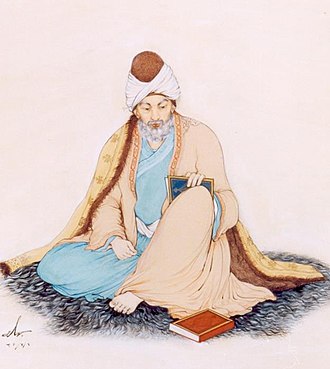 Rumi
Rumi"Be the change that you wish to see in the world."
 Mahatma Gandhi
"In philosophy equally as in poetry it is the highest and most useful prerogative of genius to produce the strongest impressions of novelty, while it rescues admitted truths from the neglect caused by the very circumstance of their universal admission."
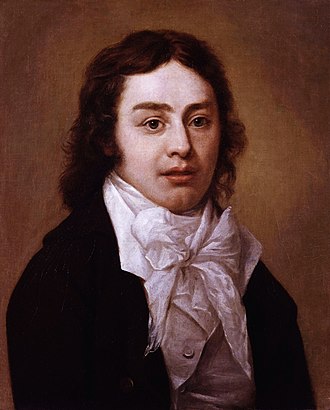 Samuel Taylor Coleridge
"An [hypertext] encyclopaedia will be an overall attempt by the knowledgeable, the learned societies or anyone else, to represent the state-of-the-art in their field. An encyclopaedia will be a living document, as up to date as it can be, instantly accessible at any time. It will contain carefully authored explanations and summaries of the subject, as well as computer-generated indexes of literature. A reference to a paper from the encyclopaedia conveys authority and acceptance by academic society. A measure of a paper’s standing may be conveyed by the number of links it is away from an encyclopaedia."
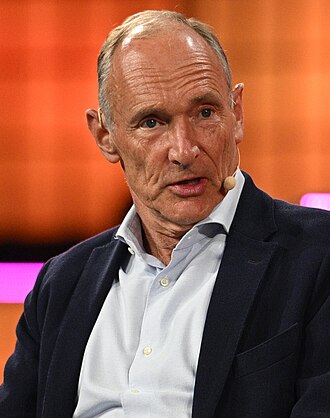 Tim Berners-Lee
"The British intellectual tradition is empirical and liberal, the French is rationalist and aristocratic, and the German is idealist and conservative. ...In the great ontological debate between mind and matter, German philosophy comes down solidly on the side of mind. Its emphasis is intuition as opposed to reason, ideas as opposed to facts."
"To know the mighty works of God, to comprehend His wisdom and majesty and power; to appreciate, in degree, the wonderful workings of His laws, surely all this must be a pleasing and acceptable mode of worship to the Most High, to whom ignorance cannot be more grateful than knowledge."