Quote
"I like Brandos acting ... and ... and . Quite a few of em I like."
E
Elvis Presley"This is a case produced by the Thai Nakorn company, the best silversmiths in my country and as you can see, it reads “To Elvis Presley Hollywood 1960” with my special dedication to you, Sir, reading " “King Bhumibol Adulyadej to the King of Rock ดnด Roll”--"
Elvis Aaron Presley was an American singer and actor. Referred to as the "King of Rock and Roll", he is widely regarded as one of the most culturally significant figures of the 20th century. Presley's energetic and sexually provocative performance style, combined with a mix of influences across color lines during a transformative era in race relations, brought both great success and initial contro
"I like Brandos acting ... and ... and . Quite a few of em I like."
"In times of trouble, I put my faith in Elvis Presley, who represented the Souths better angels. He was a hard worker, and although he lived the high life, he never forgot that he had been born into poverty. And he was a self-made talent, perhaps the greatest entertainer of all time, born in a two-room shack in Tupelo, Miss., in 1935. Ive been to that small shotgun house many times, reflecting on what it says about America. Greatness can be born anywhere. His father Vernon was a laborer who was often out of work, and the Presleys relied on the kindness of family and neighbors to get them through the hard times.When Elvis was young, the Presleys lost it, and they ended up shuttling around Tupelo, often living in black neighborhoods, where Elvis famously developed an ear for black gospel and blues to supplement his love of the old-time gospel he knew from his own church.I still believe in my heart that most Southerners are still more like Elvis than President Trump. We are most likely to pull over and help someone stranded on the roadside. Most of the people I know in my Mississippi town would give you the shirt off their backs. Most Southern preachers dont spend Sundays in the pulpit spewing hatred and intolerance. Most people agree that racism and white supremacy are evil. Even preschoolers know its always better to tell the truth and take your lumps than lie and evade. And yet here we are. We know right from wrong, but most of us down here voted for wrong. As Elvis once said, “Truth is like the sun. You can shut it out for a time, but it ain’t goin’ away."
"What honey? What is that? Its a sign, I cant see it, wait a minute. Oh, thank you darlin, thank you very much. Oh, thank you. The thought is beautiful dear, and I love you for it, but I, I havent been caught up in this thing and I cant accept this kingship thing because to me theres only one, which is Christ."
"A live concert to me is exciting because of all the electricity that is generated in the crowd and on stage. Its my favorite part of the business — live concerts."
"Princesses Margrit of Denmark (now HRH, the Queen of Denmark), Margaret of Sweden and I, were assigned to represent the people of Scandinavia on the SAS maiden intercontinental flight to Los Angeles. We went to Disneyland, then to the Paramount Studios. He was making a film, we watched him sing a song and then he greeted us. He was very polite, a man with an M in capital letters. He was very pretty, had been our idol and we three had heard all his records, seen all his movies, so when I found out he had died, I was very saddened."
"Im never going to sing another song I dont believe in. Im never going to make another picture I dont believe in."
"History is a strange experience. The world is quite small now; but history is large and deep. Sometimes you can go much farther by sitting in your own home and reading a book of history, than by getting onto a ship or an airplane and traveling a thousand miles. When you go to Mexico City through space, you find it a sort of cross between modern Madrid and modern Chicago, with additions of its own; but if you go to Mexico City through history, back only 500 years, you will find it as distant as though it were on another planet: inhabited by cultivated barbarians, sensitive and cruel, highly organized and still in the Copper Age, a collection of startling, of unbelievable contrasts."
"I cant read ten pages of Steinbeck without throwing up. I couldnt read the proletarian crap that came out in the 30s; again you had sentimentalism — the poor oppressed workers."
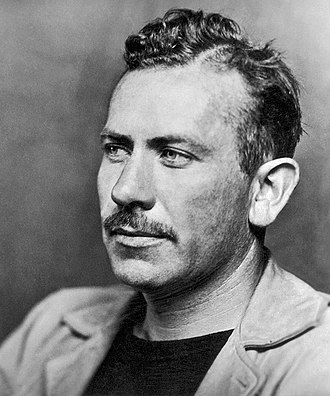 John Steinbeck
"Fiction is history, human history, or it is nothing. But it is also more than that; it stands on firmer ground, being based on the reality of forms and the observation of social phenomena, whereas history is based on documents, and the reading of print and handwriting — on second-hand impression. Thus fiction is nearer truth. But let that pass. A historian may be an artist too, and a novelist is a historian, the preserver, the keeper, the expounder, of human experience."
"(reading) Golden Mist Cologne. Mmm, my favorite."
 Josie and the Pussycats (TV series)
"I learned about renormalization theory as a graduate student, mostly by reading Dyson’s papers. ... From the beginning it seemed to me to be a wonderful thing that very few quantum field theories are renormalizable. Limitations of this sort are, after all, what we most want, not mathematical methods which can make sense of an infinite variety of physically irrelevant theories, but methods which carry constraints, because these constraints may point the way toward the one true theory."
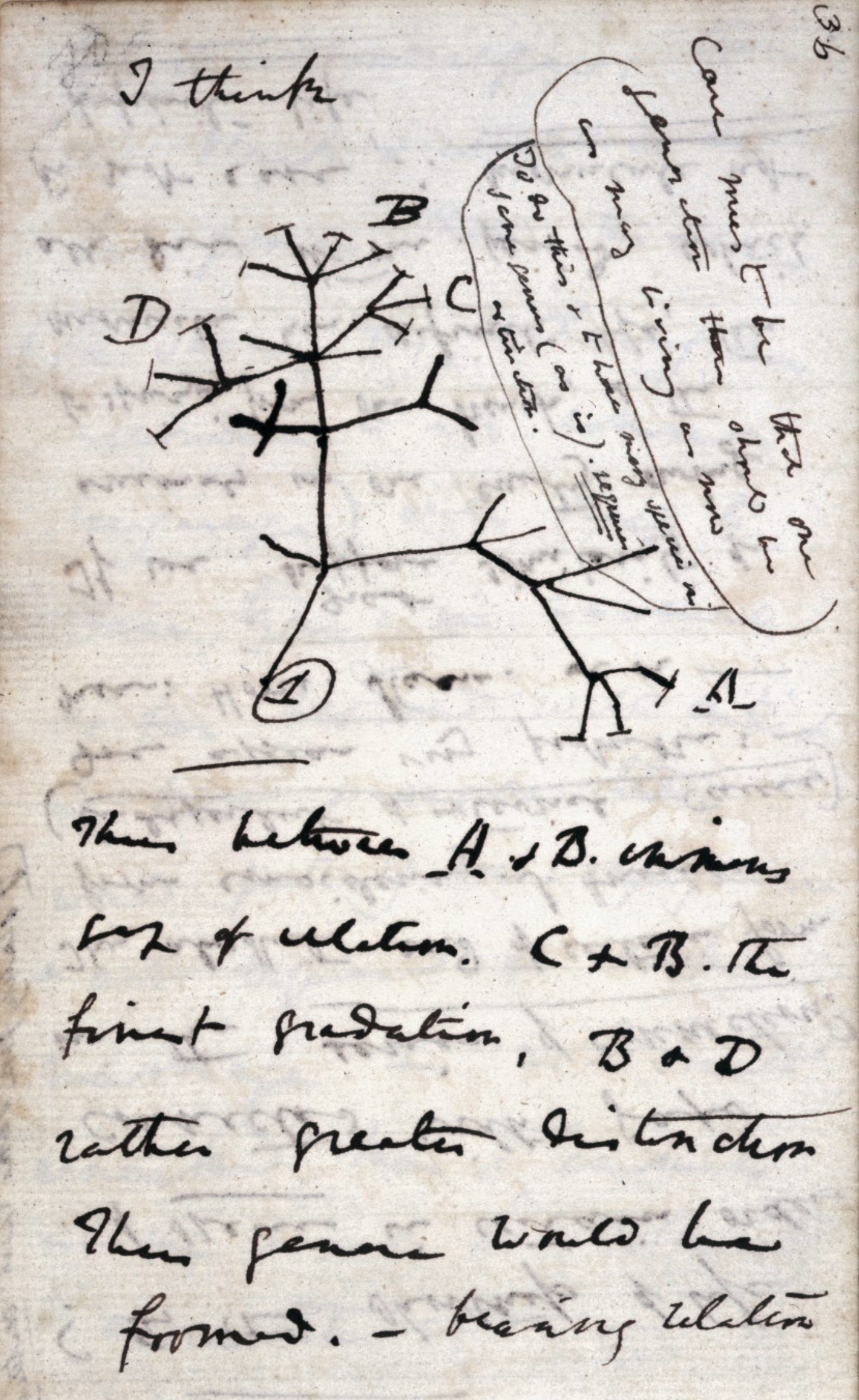 Theory
"In the development of intelligence nothing can be more "basic" than learning how to ask productive questions. Many years ago, in Teaching as a Subversive Activity, Charles Weingartner and I expressed our astonishment at the neglect shown in school toward this language art. ...The "back to the basics" philosophers rarely mention it, and practicing teachers usually do not find room for it in their curriculums. …all our knowledge results from questions, which is another way of saying that question-asking is our most important intellectual tool… There are at present no reading tests anywhere that measure the ability of students to address probing questions to the particular texts they are reading... What students need to know are the rules of discourse which comprise the subject, and among the most central of such rules are those which govern what is and what is not a legitimate question."