Quote
"If the mind loves solitude, it has thereby acquired a loftier character, and it becomes still more noble when the taste is indulged in."
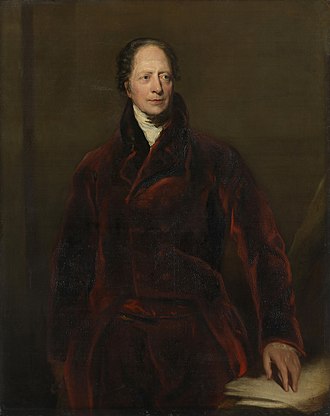 Wilhelm von Humboldt
"Time is only an empty space, first acquiring meaning from the events, thoughts, and feelings with which we fill it. But as we know that this meaning has come fraught with joy and sorrow to many sensitive natures, our own hearts cannot but be affected by it. Its quiet, secret power, too, has a magical charm. The day on which a great misfortune has befallen us is, after a long course of years, passed unnoticed, and then, too, unknown to us is the approach of one on which a calamity inevitably awaits us. If we reflect deeply on the consequences of time, we lose ourselves as in an abyss. There is neither beginning nor end. A great comfort lies, however, in contemplating the course of life, as it ever reminds us of a sublime law — an eternal controlling power — an immutable order. There is something very tranquillising in the knowledge of this order in all the affairs of the world, in the frailty of human nature, and in the apparently uncontrolled destructive power of the elements."
Friedrich Wilhelm Christian Karl Ferdinand von Humboldt was a Prussian philosopher, linguist, government functionary, diplomat, and founder of the Humboldt University of Berlin. In 1949, the university was named after him and his younger brother, Alexander von Humboldt, a naturalist.
"If the mind loves solitude, it has thereby acquired a loftier character, and it becomes still more noble when the taste is indulged in."
Wilhelm von Humboldt"If we would indicate an idea which, throughout the whole course of history, has ever more and more widely extended its empire, or which, more than any other, testifies to the much-contested and still more decidedly misunderstood perfectibility of the whole human race, it is that of establishing our common humanity — of striving to remove the barriers which prejudice and limited views of every kind have erected among men, and to treat all mankind, without reference to religion, nation, or color, as one fraternity, one great community, fitted for the attainment of one object, the unrestrained development of the physical powers. This is the ultimate and highest aim of society, identical with the direction implanted by nature in the mind of man toward the indefinite extension of his existence. He regards the earth in all its limits, and the heavens as far as his eye can scan their bright and starry depths, as inwardly his own, given to him as the objects of his contemplation, and as a field for the development of his energies. Even the child longs to pass the hills or the seas which inclose his narrow home; yet, when his eager steps have borne him beyond those limits, he pines, like the plant, for his native soil; and it is by this touching and beautiful attribute of man — this longing for that which is unknown, and this fond remembrance of that which is lost — that he is spared from an exclusive attachment to the present. Thus deeply rooted in the innermost nature of man, and even enjoined upon him by his highest tendencies, the recognition of the bond of humanity becomes one of the noblest leading principles in the history of mankind."
Wilhelm von Humboldt"A letter is a conversation between the present and the absent. Its fate is that it cannot last, but must pass away like the sound of the voice."
Wilhelm von Humboldt"It is certainly true that I am unable to forget or give up any one with whom I have been intimate; far from this, I follow up every trace that remains of the past. Every such tie, nay, every accidental meeting, unites so many things together, and life is such a medley and patchwork, that we can never sufficiently labour to join the connecting links more and more closely to each other."
Wilhelm von Humboldt"Durch die gegenseitige Abhängigkeit des Gedankens, und des Wortes von einander leuchtet es klar ein, daß die Sprachen nicht eigentlich Mittel sind, die schonerkannte Welt darzustellen, sondern weit mehr, die vorher unerkannte zu entdecken. Ihre Verschiedenheit ist nicht eine von Schällen und Zeichen, sondern eine Verschiedenheit der Weltansichten selbst. Hierin ist der Grund, und der letzte Zweck aller Sprachuntersuchung enthalten. Die Summe des Erkennbaren liegt, als das von dem menschlichen Geiste zu bearbeitende Feld, zwischen allen Sprachen, und unabhängig von ihnen, in der Mitte; der Mensch kann sich diesem rein objectiven Gebiet nicht anders, als nach seiner Erkennungs- und Empfindungsweise, also auf einem subjectiven Wege, nähern."
Wilhelm von Humboldt"The impetuous conquests of Alexander, the more politic and premeditated extension of territory made by the Romans, the wild and cruel incursions of the Mexicans, and the despotic acquisitions of the incas, have in both hemispheres contributed to put an end to the separate existence of many tribes as independent nations, and tended at the same time to establish more extended international amalgamation. Men of great and strong minds, as well as whole nations, acted under the influence of one idea, the purity of which was, however, utterly unknown to them. It was Christianity which first promulgated the truth of its exalted charity, although the seed sown yielded but a slow and scanty harvest. Before the religion of Christ manifested its form, its existence was only revealed by a faint foreshadowing presentiment. In recent times, the idea of civilization has acquired additional intensity, and has given rise to a desire of extending more widely the relations of national intercourse and of intellectual cultivation; even selfishness begins to learn that by such a course its interests will be better served than by violent and forced isolation. Language more than any other attribute of mankind, binds together the whole human race. By its idiomatic properties it certainly seems to separate nations, but the reciprocal understanding of foreign languages connects men together on the other hand without injuring individual national characteristics."
Wilhelm von Humboldt"Be the change that you wish to see in the world."
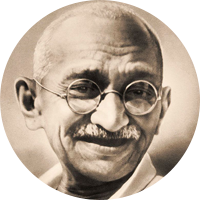 Mahatma Gandhi
"we are engaged in a grim experiment never before attempted. We are subjecting whole populations to exposure to chemicals which animal experiments have proved to be extremely poisonous and in many cases cumulative in their effect. These exposures now begin at or before birth and-unless we change our methods-will continue through the lifetime of those now living. No one knows what the result will be, because we have no previous experience to guide us."
"pity this busy monster, manunkind, not. Progress is a comfortable disease: your victim (death and life safely beyond) plays with the bigness of his littleness"
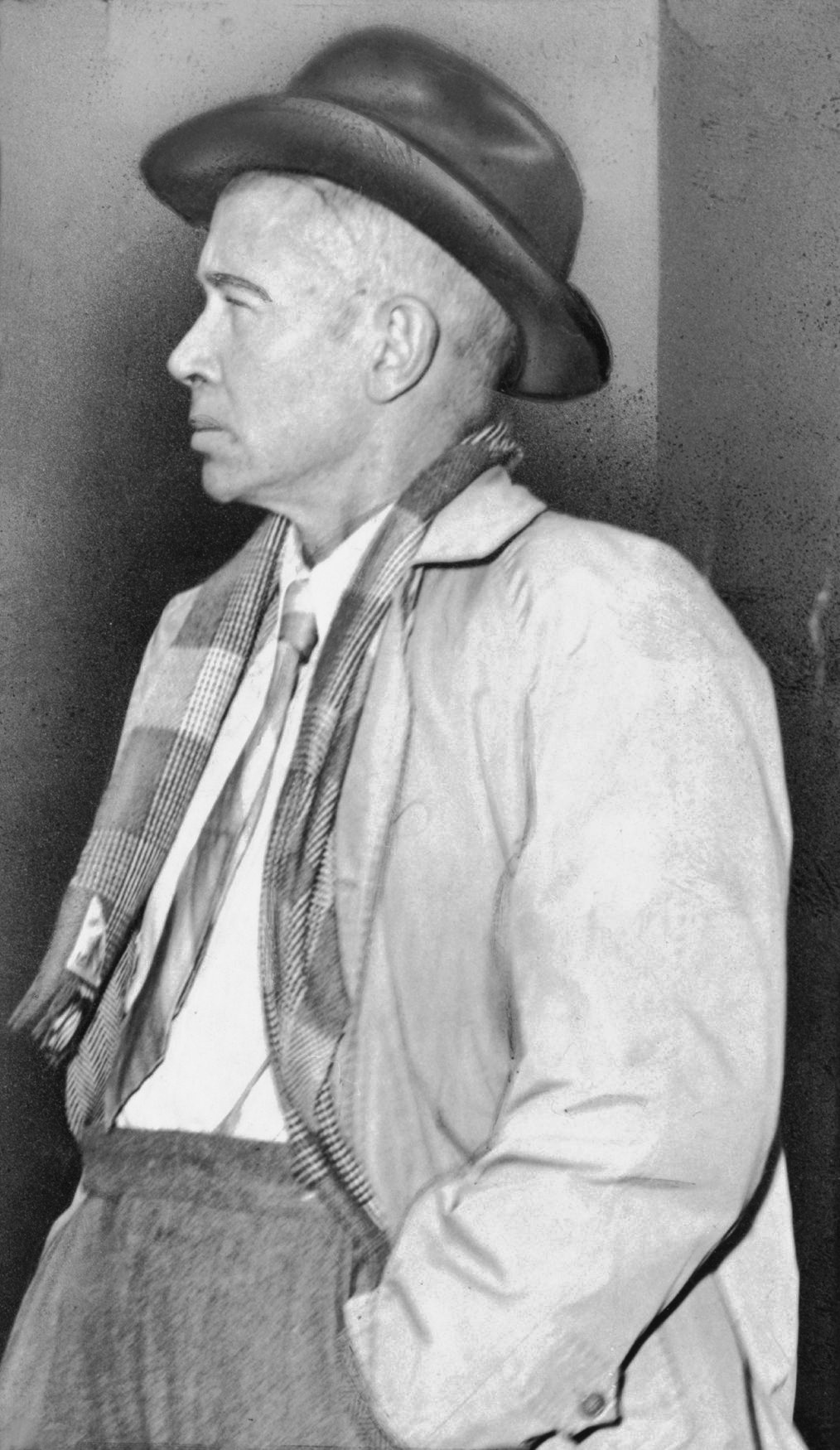 E. E. Cummings
"I believe that the unity of man as opposed to other living things derives from the fact that man is the conscious life of himself. Man is conscious of himself, of his future, which is death, of his smallness, of his impotence; he is aware of others as others; man is in nature, subject to its laws even if he transcends it with his thought."
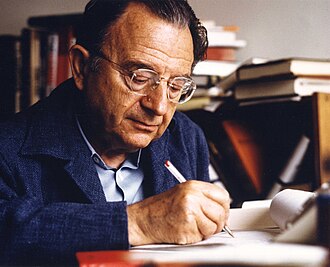 Erich Fromm
"“We need brains, is the bottom line,” Ivy said. “We’re not hunter-gatherers anymore. We’re all living like patients in the intensive care unit of a hospital. What keeps us alive isn’t bravery, or athleticism, or any of those other skills that were valuable in a caveman society. It’s our ability to master complex technological skills. It is our ability to be nerds. We need to breed nerds.”"
"I have been clinically depressed for most of my life. I once used drugs to fix it. Then I stopped. I stopped because I decided they were making me stupid, and Id rather be miserable than stupid. I am what I am."