Quote
"Dont you think your Corot [to Guilemet the painter] is a little short on temperament? Im painting a portrait of Vallabreque; the highlight on the nose is pure vermilion [remark of Cezanne ca. 1860]"
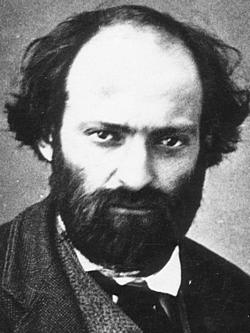 Paul Cézanne
"To my mind one does not put oneself in place of the past, one only adds a new link."
Paul Cézanne was a French Post-Impressionist painter whose work introduced new modes of representation, influenced avant-garde artistic movements of the early 20th century and formed the bridge between late 19th-century Impressionism and early 20th-century Cubism.
"Dont you think your Corot [to Guilemet the painter] is a little short on temperament? Im painting a portrait of Vallabreque; the highlight on the nose is pure vermilion [remark of Cezanne ca. 1860]"
Paul Cézanne"But there are motifs that would need three or four months work, which could be done, as the vegetation doesnt change here. There are the olive trees and the pines that always keep their leaves. The sun is so fierce that objects seem to be silhouetted, not only in black or white, but in blue, red, brown, violet. I may be wrong, but this seems to be the very opposite of modeling. How happy the gentle landscapists of Auvers would be here, and that [con, or bastard?] Guillemet."
Paul Cézanne"You wretch! [Cezanne is portraying the art dealer Vollard who changed his pose during the painter session] Youve spoiled the pose. Do I have to tell you again you must sit like an apple? Does an apple move?"
Paul Cézanne"Everybodys going crazy over the Impressionists; what art needs is a Poussin made over according to nature. There you have it in a nutshell."
Paul Cézanne"This is what happens, unquestionably – I am positive: an optical sensation is produced in our visual organ, which leads us classify as light, half-tone or quarter-tone, the planes represented by sensations of color. [Thus the light does not exist for the painter]. As long as, inevitably, one proceeds from black to white, the former of these abstractions being a kind of point of rest both for eye and brain, we flounder about, we cannot achieve self-mastery, get possession of ourselves. During this period (I tend to repeat myself, inevitably) we turn to the admirable works [of the five great Venetian painters a. o. Titian and Tintoretto] handed down to us through the ages, in which we find comfort and support..."
Paul Cézanne"At Aix () I am not free; whenever I want to return to Paris, I always have to put up a fight, and, although your (his father) opposition may not be absolute, I am always deeply affected by the resistance that I encounter from you. I sincerely want my liberty unfettered.. ..it would give me great pleasure to work in the Midi, some aspects of which offer many resources to the painter; there I would be able to attack some of the problems that I wish to solve."
Paul Cézanne"I should say that when people talk about capitalism its a bit of a joke. Theres no such thing. No country, no business class, has ever been willing to subject itself to the free market, free market discipline. Free markets are for others. Like, the Third World is the Third World because they had free markets rammed down their throat. Meanwhile, the enlightened states, England, the United States, others, resorted to massive state intervention to protect private power, and still do. Thats right up to the present. I mean, the Reagan administration for example was the most protectionist in post-war American history. Virtually the entire dynamic economy in the United States is based crucially on state initiative and intervention: computers, the internet, telecommunication, automation, pharmaceutical, you just name it. Run through it, and you find massive ripoffs of the public, meaning, a system in which under one guise or another the public pays the costs and takes the risks, and profit is privatized. Thats very remote from a free market. Free market is like what India had to suffer for a couple hundred years, and most of the rest of the Third World."
"He, who begins by loving Christianity better than Truth, will proceed by loving his own Sect or Church better than Christianity, and end in loving himself better than all."
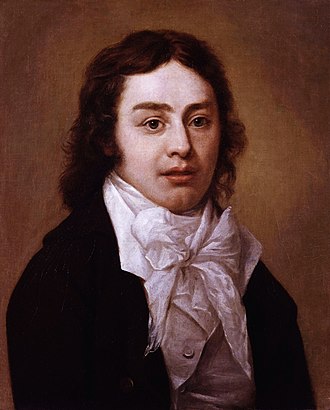 Samuel Taylor Coleridge
"I believe that the unity of man as opposed to other living things derives from the fact that man is the conscious life of himself. Man is conscious of himself, of his future, which is death, of his smallness, of his impotence; he is aware of others as others; man is in nature, subject to its laws even if he transcends it with his thought."
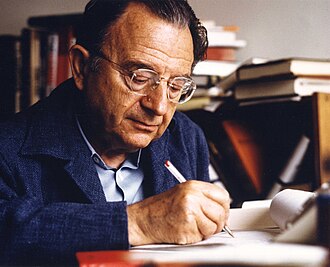 Erich Fromm
"You cant manage yourself, Root. How do you expect to manage others?"
"Do not try to make the brilliant pupil a replica of yourself."
"I believe that man is in the last resort so free a being that his right to be what he believes himself to be cannot be contested."