SHAWORDS

Trantor could win even such a war, but perhaps not without paying a pr — Isaac Asimov

HomeIsaac AsimovQuote
"Trantor could win even such a war, but perhaps not without paying a price that would make victory only a pleasanter name for defeat."
Isaac Asimov
Isaac Asimov
Isaac Asimov
author384 quotes

Isaac Asimov was an American writer and professor of biochemistry at Boston University. During his lifetime, Asimov was considered one of the "Big Three" science fiction writers, along with Robert A. Heinlein and Arthur C. Clarke. He wrote or edited more than 500 books. He also wrote an estimated 90,000 letters and postcards. Best known for his hard science fiction, Asimov also wrote mysteries and

More by Isaac Asimov

View all →
Quote
"We cannot afford enemies any more... Within a generation or two human society will be in total destructive disarray. Heaven knows how bad it will be. The most optimistic view I can take is this: Things will get so bad within a dozen years that it will become obvious ... that we must, whether were like each other or not, work together. We have no choice in the matter. ... Technologically, we can stop overpopulation, but we have to persuade people to accept the technology. ... Babies are the enemies of the human race ... Lets consider it this way: by the time the world doubles its population, the amount of energy we will be using will be increased sevenfold which means probably the amount of pollution that we are producing will also be increased sevenfold. If we are now threatened by pollution at the present rate, how will we be threatened with sevenfold pollution by, say, 2010 A.D., distributed among twice the population? Well be having to grow twice the food out of soil that is being poisoned at seven times the rate."
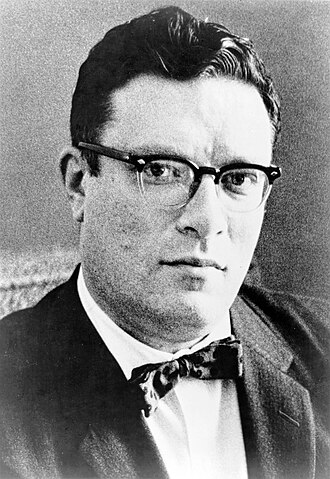
Isaac AsimovIsaac Asimov

More on Success

View all →
Quote
"One of the first major steps in the direction of modern skepticism came through the victory of Occam over Aquinas in a controversy about language. The statement that modi essendi were replaced by modi significandi et intelligendi, or that ontological referents were abandoned in favor of pragmatic significations, describes broadly the change in philosophy which continues to our time. From Occam to Bacon, from Bacon to Hobbes, and from Hobbes to contemporary semanticists, the progression is clear: ideas become psychological figments, words become useful signs. ... To one completely committed to this realm of becoming, as are the empiricists, the claim to apprehend verities is a sign of . Probably we have here but a highly sophisticated expression of the doctrine that ideals are hallucination and that the only normal, sane person is the healthy extrovert, making instant, instinctive adjustments to the stimuli of the material world."
O
Ontology
Quote
"I, too, believed it was impossible to change the existing society into one that would be for the benefit of all; neither could I espouse any given ideal for society. But [...] I felt that even if one did not have an ideal vision of society, one could have one’s work to do. Whether it was successful or not was not our concern; it was enough that we believed it to be a valid work. The accomplishment of that work, I believed, was what our real life was about. Yes. I want to carry out a work of my own; for I feel that by so doing our lives are rooted in the here and now, not in some far-off ideal goal."
P
Purpose
Quote
"The war was finished. It had lasted ten equivalent years and taken ten million lives. Thus it was neither of long duration nor of serious attrition. It hadnt any great significance; it was not intended to have. It did not prove a point, since all points had long ago been proven. What it did, perhaps, was to emphasize an aspect, sharpen a concept, underline a trend. On the whole it was a successful operation. Economically and ecologically it was of healthy effect, and who should grumble? And after wars, men go home. No, no, men start for home. Its not the same."
R
R. A. Lafferty