Quote
"A ship at sea is its own world. To be the captain of a ship is to be the unquestionable ruler of that world and requires all of the leadership skills of a prince or minister."
S
Sid Meier's Alpha Centauri"War is war; destruction is destruction. You think this is obvious. But war is not destruction, it is victory. To achieve victory, simply appear to give your opponent what he wants and he will go away, or join you in your quest for additional power."
Sid Meier's Alpha Centauri is a 4X video game, considered a spiritual sequel to the Civilization series. Set in a science fiction depiction of the 22nd century, the game begins as seven competing ideological factions land on the planet Chiron ("Planet") in the Alpha Centauri star system. As the game progresses, Planet's growing sentience becomes a formidable obstacle to the human colonists.
"A ship at sea is its own world. To be the captain of a ship is to be the unquestionable ruler of that world and requires all of the leadership skills of a prince or minister."
"Abort, Retry, Fail? was the phrase some wormdog scrawled next to the door of the Edit Universe project room. And when the new dataspinners started working, fabricating their worlds on the huge organic comp systems, wed remind them: if you see this message, always choose Retry."
"You waited so long to heed us, EarthDeirdre, Almost we pruned you, as we may yet prune your branches."
"This unusual specimen is not so much a classic particle as a connector--a kind of string attaching two particles. As distance increases the connective power becomes attenuated, but if it is cut the power vanishes: forever."
"Until now the battle had been proceeding smoothly. The enemy was outflanked and had been driven from the reactor housing, but against the reactor itself the matter cannons were strangely ineffective. Rounds simply... stopped. In mid-air."
"Planets atmosphere, though a gasping death to humans and most animals, is paradise for Earth plants. The high nitrate content of the soil and the rich yellow sunlight bring an abundant harvest wherever adjustments can be made for the unusual soil conditions."
"One of the first major steps in the direction of modern skepticism came through the victory of Occam over Aquinas in a controversy about language. The statement that modi essendi were replaced by modi significandi et intelligendi, or that ontological referents were abandoned in favor of pragmatic significations, describes broadly the change in philosophy which continues to our time. From Occam to Bacon, from Bacon to Hobbes, and from Hobbes to contemporary semanticists, the progression is clear: ideas become psychological figments, words become useful signs. ... To one completely committed to this realm of becoming, as are the empiricists, the claim to apprehend verities is a sign of . Probably we have here but a highly sophisticated expression of the doctrine that ideals are hallucination and that the only normal, sane person is the healthy extrovert, making instant, instinctive adjustments to the stimuli of the material world."
"To have success in science, you need some luck. But to succeed in science, you need a lot more than luck. And its not enough to be smart — lots of people are very bright and get nowhere in life. In my view, you have to combine intelligence with a willingness not to follow conventions when they block your path forward."
"I, too, believed it was impossible to change the existing society into one that would be for the benefit of all; neither could I espouse any given ideal for society. But [...] I felt that even if one did not have an ideal vision of society, one could have one’s work to do. Whether it was successful or not was not our concern; it was enough that we believed it to be a valid work. The accomplishment of that work, I believed, was what our real life was about. Yes. I want to carry out a work of my own; for I feel that by so doing our lives are rooted in the here and now, not in some far-off ideal goal."
"We have already mentioned what may, perhaps, appear paradoxical to some of our readers, — that the division of labour can be applied with equal success to mental as to mechanical operations, and that it ensures in both the same economy of time."
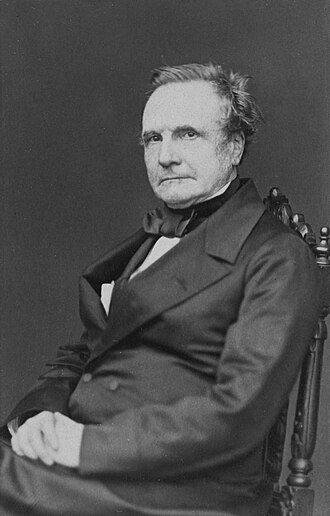 Charles Babbage
"The war was finished. It had lasted ten equivalent years and taken ten million lives. Thus it was neither of long duration nor of serious attrition. It hadnt any great significance; it was not intended to have. It did not prove a point, since all points had long ago been proven. What it did, perhaps, was to emphasize an aspect, sharpen a concept, underline a trend. On the whole it was a successful operation. Economically and ecologically it was of healthy effect, and who should grumble? And after wars, men go home. No, no, men start for home. Its not the same."
"The final test of a leader is that he leaves behind him in other men the conviction and the will to carry on. ... The genius of a good leader is to leave behind him a situation which common sense, without the grace of genius, can deal with successfully."
 Leadership