Quote
"The way is not made easy for those who would defend the public interest"
R
Rachel Carson"We know how to split the atom, and how to use its energy in peace and war, and so we proceed with preparations to do so, as if acting under some blind compulsion;"
Rachel Louise Carson was an American marine biologist, writer, and conservationist whose sea trilogy (1941–1955) and book Silent Spring (1962) are credited with advancing marine conservation and the global environmental movement.
"The way is not made easy for those who would defend the public interest"
"I criticize the present methods because they are based on a rather low level of scientific thinking. We are capable of much greater sophistication in our solution of the problem."
"As human beings, we are part of the whole stream of life."
"we are engaged in a grim experiment never before attempted. We are subjecting whole populations to exposure to chemicals which animal experiments have proved to be extremely poisonous and in many cases cumulative in their effect. These exposures now begin at or before birth and-unless we change our methods-will continue through the lifetime of those now living. No one knows what the result will be, because we have no previous experience to guide us."
"In our own lifetime we are witnessing a startling alteration of climate."
"Over the decades and the centuries, the scenes and the actors change. Yet the central theme remains-the greed and the shortsightedness of the few who would deprive the many of their rightful heritage. It is a theme supported by the false assurances that whatever is financially profitable is good for the nation and for mankind. These assurances were offered in the days of the timber barons and the land grabbers; they are heard today."
"If it fulfills our hopes, this center will be, at once, a symbol and a reflection and a hope. It will symbolize our belief that the world of creation and thought are at the core of all civilization. Only recently in the White House we helped commemorate the 400th anniversary of Shakespeare. The political conflicts and ambitions of his England are known to the scholar and to the specialist. But his plays will forever move men in every corner of the world. The leaders that he wrote about live far more vividly in his words than in the almost forgotten facts of their own rule. Our civilization, too, will largely survive in the works of our creation. There is a quality in art which speaks across the gulf dividing man from man and nation from nation, and century from century. That quality confirms the faith that our common hopes may be more enduring than our conflicting hostilities. Even now men of affairs are struggling to catch up with the insights of great art. The stakes may well be the survival of civilization. The personal preferences of men in government are not important--except to themselves. However, it is important to know that the opportunity we give to the arts is a measure of the quality of our civilization. It is important to be aware that artistic activity can enrich the life of our people, which really is the central object of Government. It is important that our material prosperity liberate and not confine the creative spirit."
"The last place I wanted to return to was the music business. But its the people and the cause that matter and right now theres an important need, which is bridge-building. I wanted to support the cause of humanity, because thats what I always sang about. Music can be healing, and with my history and my knowledge of both sides of what looks like a gigantic divide in the world, I feel I can point a way forward to our common humanity again. Its a big step for me but its a natural step. I dont feel at all irked by the responsibility — I feel inspired."
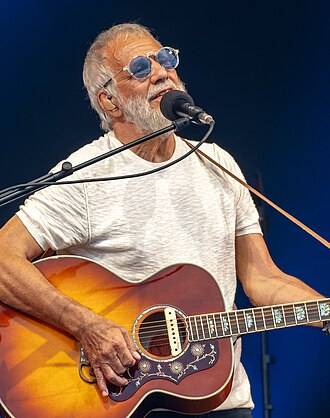 Cat Stevens
"Going up that river was like traveling back to the earliest beginnings of the world, when vegetation rioted on the earth and the big trees were kings. An empty stream, a great silence, an impenetrable forest. The air was warm, thick, heavy, sluggish. There was no joy in the brilliance of sunshine. The long stretches of the waterway ran on, deserted, into the gloom of overshadowed distances."
"My very photogenic mother died in a freak accident (picnic, lightning) when I was three, and, save for a pocket of warmth in the darkest past, nothing of her subsists within the hollows and dells of memory, over which, if you can still stand my style (I am writing under observation), the sun of my infancy had set..."
 Lolita
"Just as we preach a "black peril" so they will begin to speak of a "white peril" and of the hostility the white men have toward them."
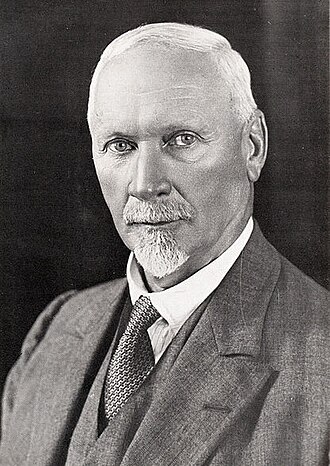 Jan Smuts
"The groans of the dying and the blanched set faces of the dead ... were enough to drive away all unwholesome feelings of exultation, and to remind one of the grim reality that war is. And even though these were the faces and the sufferings of our enemy, one had ... a deeper sense of the common humanity which knows no racial distinctions."
Jan Smuts