Quote
"It is curious to see how the descendants of the same race, to which the first conquerors and masters of India belonged, return . . . to accomplish the glorious work of civilization, which had been left unfinished by their Arian bretheren."
"We shall then learn that the history of mankind is the best philosophy, and that not only in Christianity and Judaism, but that in all religions of the world, God has at divers times spoken through the prophets in divers manners, and still speaks."

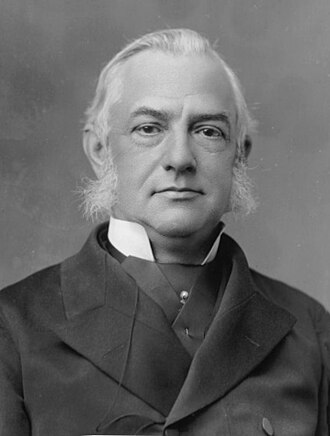
Friedrich Max Müller was a German-born British comparative philologist and Orientalist. He was one of the founders of the Western academic disciplines of Indology and religious studies. Müller wrote both scholarly and popular works on the subject of Indology. He directed the preparation of the Sacred Books of the East, a 50-volume set of English translations which continued after his death.
"It is curious to see how the descendants of the same race, to which the first conquerors and masters of India belonged, return . . . to accomplish the glorious work of civilization, which had been left unfinished by their Arian bretheren."
"We all come from the East—all that we value most has come to us from the East, and in going to the East, not only those who have received a special Oriental training, but everybody who has enjoyed the advantages of a liberal, that is, of a truly historical education, ought to feel that he is going to his “old home”."
"The Veda may be called primitive, because there is no other literary document more primitive than it; but the language, the mythology, the religion and philosophy that meet us in the Veda open vistas of the past which no one would venture to measure in years. Nay, they contain, by the side of simple, natural, childish thoughts, many ideas which to us sound modern, or secondary and tertiary, as I called them, but which nevertheless are older than any other literary document, and give us trustworthy information of a period in the history of human thought of which we knew absolutely nothing before the discovery of the Vedas."
"India must be conquered again, and that second conquest should be a conquest by education."
"The worship of Shiva, Vishnu, and other popular deities was of the same and in many cases of a more degraded and savage character than the worship of Jupiter, Apollo or Minerva. ... A religion may linger on for a long time, it may be accepted by large masses of the people, because it is there, and there is nothing better. But when a religion has ceased to produce defenders of the faith, prophets, champions, martyrs, it has ceased to live, in the true sense of the word; and in that sense the old orthodox Brahmanism has ceased to live for more than a thousand years."
"Whether listening to the shrieks of the Shaman sorcerers of Tatary, or to the odes of Pindar, or to the sacred songs of Paul Gerhard: whether looking at the pagodas of China, or the Parthenon of Athens, or the cathedral of Cologne: whether reading the sacred books of the Buddhists, of the Jews, or of those who worship God in spirit and in truth, we ought to be able to say, like the Emperor Maximilian, Homo sum, humani nihil a me alienum puto, or, translating his words somewhat freely, I am a man, nothing pertaining to man I deem foreign to myself."
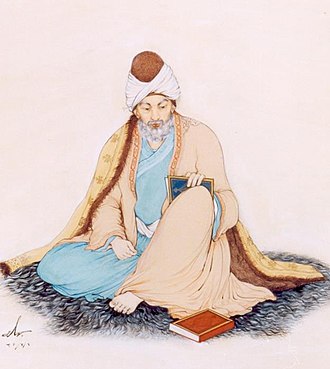
"The wound is the place where the Light enters you."
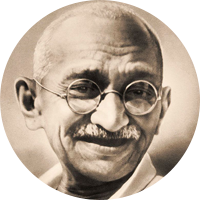
"Be the change that you wish to see in the world."
"In philosophy equally as in poetry it is the highest and most useful prerogative of genius to produce the strongest impressions of novelty, while it rescues admitted truths from the neglect caused by the very circumstance of their universal admission."
"An [hypertext] encyclopaedia will be an overall attempt by the knowledgeable, the learned societies or anyone else, to represent the state-of-the-art in their field. An encyclopaedia will be a living document, as up to date as it can be, instantly accessible at any time. It will contain carefully authored explanations and summaries of the subject, as well as computer-generated indexes of literature. A reference to a paper from the encyclopaedia conveys authority and acceptance by academic society. A measure of a paper’s standing may be conveyed by the number of links it is away from an encyclopaedia."
"The British intellectual tradition is empirical and liberal, the French is rationalist and aristocratic, and the German is idealist and conservative. ...In the great ontological debate between mind and matter, German philosophy comes down solidly on the side of mind. Its emphasis is intuition as opposed to reason, ideas as opposed to facts."
"To know the mighty works of God, to comprehend His wisdom and majesty and power; to appreciate, in degree, the wonderful workings of His laws, surely all this must be a pleasing and acceptable mode of worship to the Most High, to whom ignorance cannot be more grateful than knowledge."