SHAWORDS
Max Müller

Max Müller

Max Müller

Max Müller

author
38Quotes

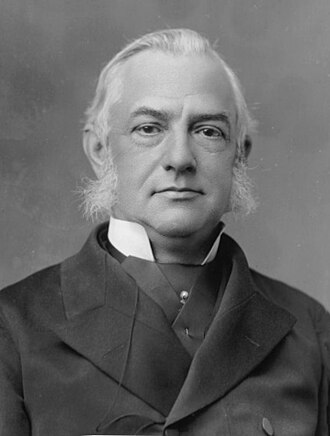
Friedrich Max Müller was a German-born British comparative philologist and Orientalist. He was one of the founders of the Western academic disciplines of Indology and religious studies. Müller wrote both scholarly and popular works on the subject of Indology. He directed the preparation of the Sacred Books of the East, a 50-volume set of English translations which continued after his death.

Popular Quotes

38 total
Quote
"The Veda may be called primitive, because there is no other literary document more primitive than it; but the language, the mythology, the religion and philosophy that meet us in the Veda open vistas of the past which no one would venture to measure in years. Nay, they contain, by the side of simple, natural, childish thoughts, many ideas which to us sound modern, or secondary and tertiary, as I called them, but which nevertheless are older than any other literary document, and give us trustworthy information of a period in the history of human thought of which we knew absolutely nothing before the discovery of the Vedas."
Max MüllerMax Müller
Quote
"I need hardly say that I agree with almost every word of my critics. I have repeatedly dwelt on the merely hypothetical character of the dates, which I have ventured to assign to first periods of Vedic literature. All I have claimed for them has been that they are minimum dates, and that the literary productions of each period which either still exist or which formerly existed could hardly be accounted for within shorter limits of time than those suggested. ... If now we ask as to how we can fix the dates of these periods, it is quite clear that we cannot hope to fix a terminum a qua [sic]. Whether the Vedic hymns were composed [in] 1000 or 2000 or 3000 years BC, no power on earth will ever determine."
Max MüllerMax Müller
Quote
"The worship of Shiva, Vishnu, and other popular deities was of the same and in many cases of a more degraded and savage character than the worship of Jupiter, Apollo or Minerva. ... A religion may linger on for a long time, it may be accepted by large masses of the people, because it is there, and there is nothing better. But when a religion has ceased to produce defenders of the faith, prophets, champions, martyrs, it has ceased to live, in the true sense of the word; and in that sense the old orthodox Brahmanism has ceased to live for more than a thousand years."
Max MüllerMax Müller
Quote
"Tell me some of your chief difficulties that prevent you and your countrymen from openly following Christ, and when I write to you I shall do my best to explain how I and many who agree with me have met them and solved them... From my point of view, India, at least the best part of it, is already converted to Christianity. You want no persuasion to become a follower of Christ. Then make up your mind to act for yourselves. Unite your flock, and put up a few folds to hold them together. The bridge has been built by you for those who came before you. Step boldly forward, it will not break under you, and you will find many friends to welcome you on the other shore, and among them none more delighted that you old friend and fellow labourer."
Max MüllerMax Müller
Quote
"My own experience with regard to the native character has been, of course, very limited. Those Hindus whom I have had the pleasure to know personally in Europe may be looked upon as exceptional, as the best specimens, it may be, that India could produce. Also, my intercourse with them has naturally been such that it could hardly have brought out the darker sides of human nature. During the last twenty years, however, I have had some excellent opportunities of watching a number of native scholars under circumstances where it is not difficult to detect a mans true character — I mean in literary work and, more particularly, in literary controversy. I have watched them carrying on such controversies both among themselves and with certain European scholars, and I feel bound to say that, with hardly one exception, they have displayed a far greater respect for truth and a far more manly and generous spirit than we are accustomed to even in Europe and America. They have shown strength, but no rudeness; nay, I know that nothing has surprised them so much as the coarse invective to which certain Sanskrit scholars have condescended, rudeness of speech being, according to their view of human nature, a safe sign not only of bad breeding, but of want of knowledge. When they were wrong, they have readily admitted their mistakes; when they were right, they have never sneered at their European adversaries. There has been, with few exceptions, no quibbling, no special pleading, no untruthfulness on their part, and certainly none of that low cunning of the scholar who writes down and publishes what he knows perfectly well to be false, and snaps his fingers at those who still value truth and self-respect more highly than victory or applause at any price. Here, too, we might possibly gain by the import cargo."
Max MüllerMax Müller
Quote
"Whether listening to the shrieks of the Shaman sorcerers of Tatary, or to the odes of Pindar, or to the sacred songs of Paul Gerhard: whether looking at the pagodas of China, or the Parthenon of Athens, or the cathedral of Cologne: whether reading the sacred books of the Buddhists, of the Jews, or of those who worship God in spirit and in truth, we ought to be able to say, like the Emperor Maximilian, Homo sum, humani nihil a me alienum puto, or, translating his words somewhat freely, I am a man, nothing pertaining to man I deem foreign to myself."
Max MüllerMax Müller

Similar Authors & Thinkers