Quote
"The only method of learning to bear with dignity the vicissitudes of fortune is to recall the catastrophes of others."
P
Polybius"When a state after having passed with safety through many and great dangers arrives at the higher degree of power, and possesses an entire and undisputed sovereignty, it is manifest that the long continuance of prosperity must give birth to costly and luxurious manners, and that the minds of men will be heated with ambitious contests, and become too eager and aspiring in the pursuit of dignities. And as those evils are continually increased, the desire of power and rule, along with the imagined ignominy of remaining in a subject state, will first begin to work the ruin of the republic; arroagance and luxury will afterwards advance it; and in the end the change will be completed by the people; when the avarice of some is found to injure and oppress them, and the ambition of others swells their vanity, and poisons them with flattering hopes. For then, being inflamed with rage, and following only the dictates of their passions, they no longer will submit to any control, or be contented with an equal share of the administration, in conjunction with their rules; but will draw to themselves the entire sovereignty and supreme direction of all affairs. When this is done, the government will assume indeed the fairest of a ll names, that of a free and popular state; but will in truth be the greatest of all evils, the government of the multitude."
Polybius was an ancient Greek historian of the middle Hellenistic period. He is noted for his Histories, a universal history documenting the rise of Rome in the Mediterranean in the third and second centuries BC. It covers the period 264–146, recording in detail events in Italy, Iberia, Greece, Macedonia, Syria, Egypt, and Africa, and documents the Punic Wars and Macedonian Wars among many others.
"The only method of learning to bear with dignity the vicissitudes of fortune is to recall the catastrophes of others."
"We can get some idea of a whole from a part, but never knowledge or exact opinion. Special histories therefore contribute very little to the knowledge of the whole and conviction of its truth. It is only indeed by study of the interconnexion of all the particulars, their resemblances and differences, that we are enabled at least to make a general survey, and thus derive both benefit and pleasure from history."
"How highly should we honor the Macedonians, who for the greater part of their lives never cease from fighting with the barbarians for the sake of the security of Greece? For who is not aware that Greece would have constantly stood in the greater danger, had we not been fenced by the Macedonians and the honorable ambition of their kings?"
"The date from which I propose to begin my history is the 140th Olympiad [220 - 216 B.C.], and the events are the following: (1) in Greece the so‑called Social War, the first waged against the Aetolians by the Achaeans in league with and under the leadership of Philip of Macedon, the son of Demetrius and father of Perseus, (2) in Asia the war for Coele-Syria between Antiochus and Ptolemy Philopator, (3) in Italy, Libya, and the adjacent regions, the war between Rome and Carthage, usually known as the Hannibalic War. These events immediately succeed those related at the end of the work of Aratus of Sicyon. Previously the doings of the world had been, so to say, dispersed, as they were held together by no unity of initiative, results, or locality; but ever since this date history has been an organic whole, and the affairs of Italy and Libya have been interlinked with those of Greece and Asia, all leading up to one end. And this is my reason for beginning their systematic history from that date."
"I observe that while several modern writers deal with particular wars and certain matters connected with them, no one, as far as I am aware, has even attempted to inquire critically when and whence the general and comprehensive scheme of events originated and how it led up to the end. I therefore thought it quite necessary not to leave unnoticed or allow to pass into oblivion this the finest and most beneficent of the performances of Fortune. For though she is ever producing something new and ever playing a part in the lives of men, she has not in a single instance ever accomplished such a work, ever achieved such a triumph, as in our own times. We can no more hope to perceive this from histories dealing with particular events than to get at once a notion of the form of the whole world, its disposition and order, by visiting, each in turn, the most famous cities, or indeed by looking at separate plans of each: a result by no means likely. He indeed who believes that by studying isolated histories he can acquire a fairly just view of history as a whole, is, as it seems to me, much in the case of one, who, after having looked at the dissevered limbs of an animal once alive and beautiful, fancies he has been as good as an eyewitness of the creature itself in all its action and grace."
"In the past you rivalled the Achaians and the Macedonians, peoples of your own race, and Philip, their commander, for the hegemony and glory, but now that the freedom of the Hellenes is at stake at a war against an alien people (Romans), ...And does it worth to ally with the barbarians, to take the field with them against the Epeirotans, the Achaians, the Akarnanians, the Boiotians, the Thessalians, in fact with almost all the Hellenes with the exception of the Aitolians who are a wicked nation... ...So Lakedaimonians it is good to remember your ancestors,... be afraid of the Romans... and do ally yourselves with the Achaians and Macedonians. But if some the most powerful citizens are opposed to this policy at least stay neutral and do not side with the unjust."
"One of the first major steps in the direction of modern skepticism came through the victory of Occam over Aquinas in a controversy about language. The statement that modi essendi were replaced by modi significandi et intelligendi, or that ontological referents were abandoned in favor of pragmatic significations, describes broadly the change in philosophy which continues to our time. From Occam to Bacon, from Bacon to Hobbes, and from Hobbes to contemporary semanticists, the progression is clear: ideas become psychological figments, words become useful signs. ... To one completely committed to this realm of becoming, as are the empiricists, the claim to apprehend verities is a sign of . Probably we have here but a highly sophisticated expression of the doctrine that ideals are hallucination and that the only normal, sane person is the healthy extrovert, making instant, instinctive adjustments to the stimuli of the material world."
"To have success in science, you need some luck. But to succeed in science, you need a lot more than luck. And its not enough to be smart — lots of people are very bright and get nowhere in life. In my view, you have to combine intelligence with a willingness not to follow conventions when they block your path forward."
"I, too, believed it was impossible to change the existing society into one that would be for the benefit of all; neither could I espouse any given ideal for society. But [...] I felt that even if one did not have an ideal vision of society, one could have one’s work to do. Whether it was successful or not was not our concern; it was enough that we believed it to be a valid work. The accomplishment of that work, I believed, was what our real life was about. Yes. I want to carry out a work of my own; for I feel that by so doing our lives are rooted in the here and now, not in some far-off ideal goal."
"We have already mentioned what may, perhaps, appear paradoxical to some of our readers, — that the division of labour can be applied with equal success to mental as to mechanical operations, and that it ensures in both the same economy of time."
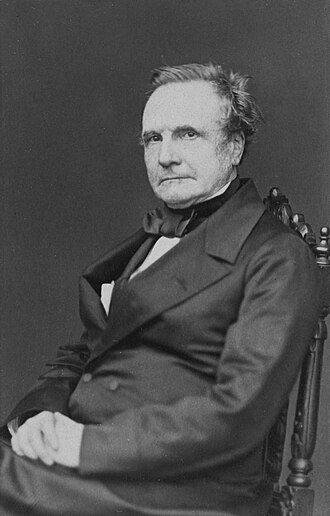 Charles Babbage
"The war was finished. It had lasted ten equivalent years and taken ten million lives. Thus it was neither of long duration nor of serious attrition. It hadnt any great significance; it was not intended to have. It did not prove a point, since all points had long ago been proven. What it did, perhaps, was to emphasize an aspect, sharpen a concept, underline a trend. On the whole it was a successful operation. Economically and ecologically it was of healthy effect, and who should grumble? And after wars, men go home. No, no, men start for home. Its not the same."
"The final test of a leader is that he leaves behind him in other men the conviction and the will to carry on. ... The genius of a good leader is to leave behind him a situation which common sense, without the grace of genius, can deal with successfully."
 Leadership