Quote
"The important thing is to know how to take all things quietly."
M
Michael Faraday"When his faculties were fading fast, he would sit long at the western window, watching the glories of the sunset; and one day, when his wife drew his attention to a beautiful rainbow that spanned the sky, he looked beyond the falling shower and the many-colored arch, and observed, "He hath set his testimony in the heavens." On August 25, 1867, quietly, almost imperceptively, came the release. There was a philosopher less on earth, and a saint more in heaven."
Michael Faraday was an English chemist and physicist who contributed vastly to the study of electrochemistry and electromagnetism. His main discoveries include the principles underlying electromagnetic induction, diamagnetism, and electrolysis. Although Faraday received little formal education, as a self-made man, he was one of the most influential scientists in history. It was by his research on
"The important thing is to know how to take all things quietly."
"I shall be with Christ, and that is enough."
"He was little interested mathematics or theory; for example, when his ideas on magnetic fields were extensively developed later by James Clerk Maxwell (1831-1879), Faraday was little concerned with the results. His own scientific career was characterized by simple ideas and simple experiments."
"But still try, for who knows what is possible..."
"Whereas, according to the declaration of that true man of the world Talleyrand, the use of language is to conceal the thoughts; this is to declare in the present instance, when I say I am not able to bear much talking, it means really, and without any mistake, or equivocation, or oblique meaning, or implication, or subterfuge, or omission, that I am not able; being at present rather weak in the head, and able to work no more."
"To estimate the intensity of Faradays scientific power, we cannot do better than read the first and second series of his Researches and compare them...with the whole course of electro-magnetic science since, which has added no new idea to those set forth, but has only verified the truth and scientific value of every one of them."
"Now Art, used collectively for painting, sculpture, architecture and music, is the mediatress between, and reconciler of, nature and man. It is, therefore, the power of humanizing nature, of infusing the thoughts and passions of man into everything which is the object of his contemplation."
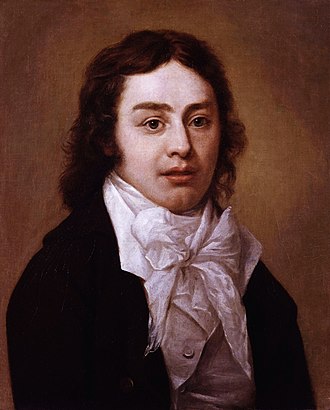 Samuel Taylor Coleridge
"The Good consists in the congruity of a thing with the laws of the reason and the nature of the will, and in its fitness to determine the latter to actualize the former: and it is always discursive. The Beautiful arises from the perceived harmony of an object, whether sight or sound, with the inborn and constitutive rules of the judgment and imagination: and it is always intuitive."
Samuel Taylor Coleridge"I believe that the unity of man as opposed to other living things derives from the fact that man is the conscious life of himself. Man is conscious of himself, of his future, which is death, of his smallness, of his impotence; he is aware of others as others; man is in nature, subject to its laws even if he transcends it with his thought."
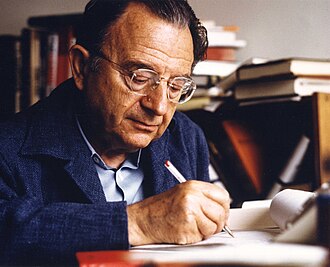 Erich Fromm
"Who made you glorious as the gates of heaven Beneath the keen full moon? Who bade the sun Clothe you with rainbows? Who, with living flower Of loveliest blue, spread garlands at your feet? God! let the torrents, like a shout of nations, Answer! and let the ice-plains echo, God! God! sing, ye meadow-streams, with gladsome voice! Ye pine-groves, with your soft and soul-like sounds! And they too have a voice, yon piles of snow, And in their perilous fall shall thunder, God!"
Samuel Taylor Coleridge"All Nature seems at work. Slugs leave their lair — The bees are stirring — birds are on the wing — And Winter slumbering in the open air, Wears on his smiling face a dream of Spring! And I the while, the sole unbusy thing, Nor honey make, nor pair, nor build, nor sing."
Samuel Taylor Coleridge"Taste is the intermediate faculty which connects the active with the passive powers of our nature, the intellect with the senses; and its appointed function is to elevate the images of the latter, while it realizes the ideas of the former."
Samuel Taylor Coleridge