Quote
"Unless the Security Council is restored to its pre-eminent position as the sole source of legitimacy on the use of force, we are on a dangerous path to anarchy."
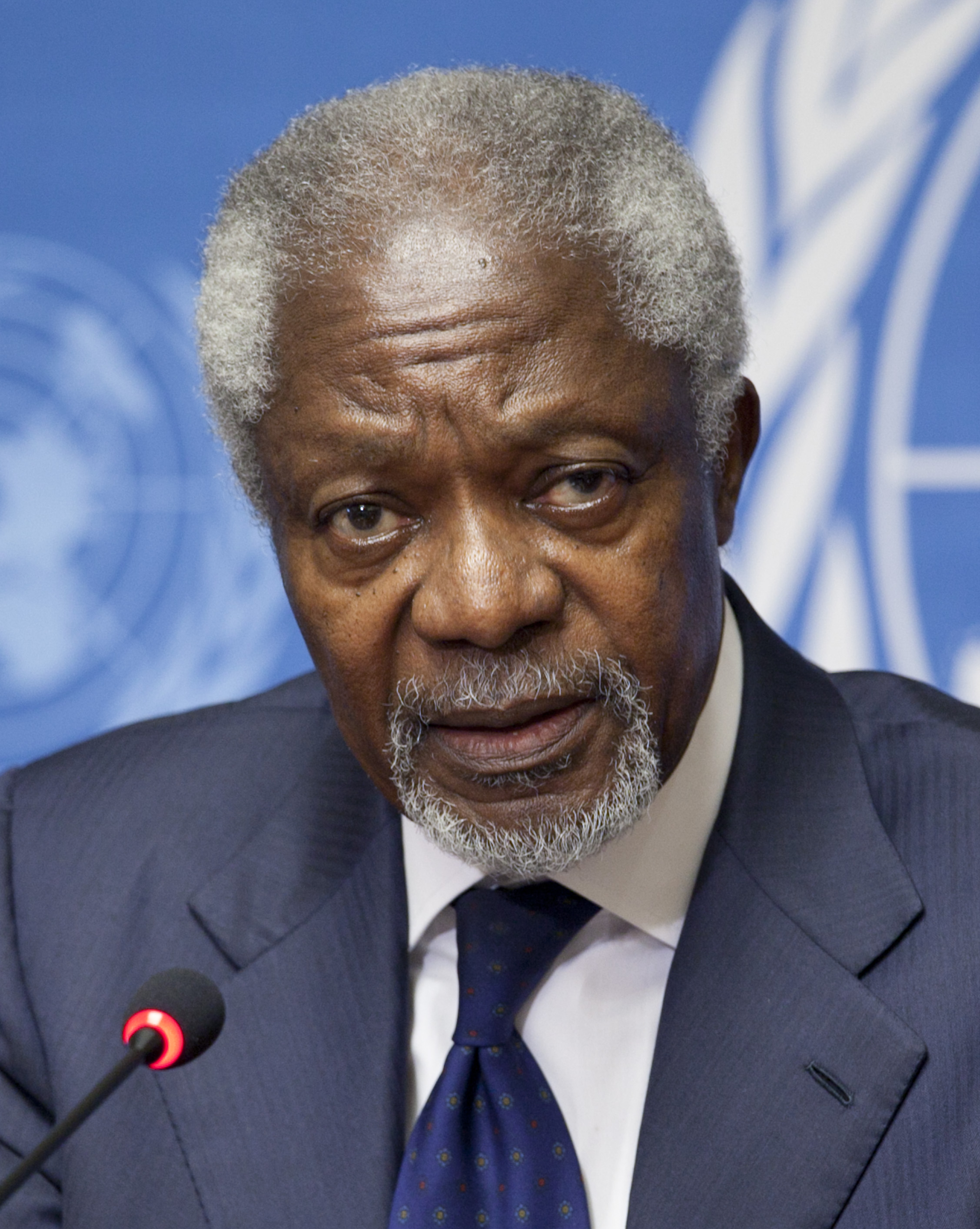 Kofi Annan
"When I look at the murder, rape and starvation to which the people of Darfur are being subjected, I fear that we have not got far beyond “lip service”. The lesson here is that high-sounding doctrines like the “responsibility to protect” will remain pure rhetoric unless and until those with the power to intervene effectively — by exerting political, economic or, in the last resort, military muscle — are prepared to take the lead."
Kofi Atta Annan was a Ghanaian diplomat and statesman who served as the seventh secretary-general of the United Nations from 1997 to 2006. Annan and the UN were the co-recipients of the 2001 Nobel Peace Prize. He was the founder and chairman of the Kofi Annan Foundation, as well as chairman of The Elders, an international organisation founded by Nelson Mandela.
"Unless the Security Council is restored to its pre-eminent position as the sole source of legitimacy on the use of force, we are on a dangerous path to anarchy."
Kofi Annan"These values: compassion; solidarity; respect for each other - already exist in all our great religions. We can begin by reaffirming and demonstrating that the problem is not the Koran, nor the Torah nor the Bible. As I have often said, the problem is never the faith. It is the faithful, and how we behave towards each other. It is these great, enduring and universal principles which are also enshrined in the Charter of the United Nations and the Universal Declaration of Human Rights. We can use these values – and the frameworks and tools we have based on them - to bridge divides and make people feel more secure and confident of the future."
Kofi Annan"There are a great number of peoples who need more than just words of sympathy from the international community. They need a real and sustained commitment to help end their cycles of violence, and launch them on a safe passage to prosperity."
Kofi Annan"I humbly accept the Centennial Nobel Peace Prize. Forty years ago today, the Prize for 1961 was awarded for the first time to a Secretary-General of the United Nations — posthumously, because Dag Hammarskjöld had already given his life for peace in Central Africa. And on the same day, the Prize for 1960 was awarded for the first time to an African — Albert Luthuli, one of the earliest leaders of the struggle against apartheid in South Africa. For me, as a young African beginning his career in the United Nations a few months later, those two men set a standard that I have sought to follow throughout my working life."
Kofi Annan"The rights of the individual are of no less importance to immigrants and minorities in Europe and the Americas than to women in Afghanistan or children in Africa. They are as fundamental to the poor as to the rich; they are as necessary to the security of the developed world as to that of the developing world. From this vision of the role of the United Nations in the next century flow three key priorities for the future: eradicating poverty, preventing conflict, and promoting democracy. Only in a world that is rid of poverty can all men and women make the most of their abilities. Only where individual rights are respected can differences be channelled politically and resolved peacefully. Only in a democratic environment, based on respect for diversity and dialogue, can individual self-expression and self-government be secured, and freedom of association be upheld."
Kofi Annan"Gender equality is critical for the development and peace of every nation."
Kofi Annan"I say this to you because we Spaniards are a forgetful people, because we are used to living for the moment, because we do not look back, because we do not know how to see the chain of heroes, because we do not contemplate the sum of sacrifices."
 Francisco Franco
"If it fulfills our hopes, this center will be, at once, a symbol and a reflection and a hope. It will symbolize our belief that the world of creation and thought are at the core of all civilization. Only recently in the White House we helped commemorate the 400th anniversary of Shakespeare. The political conflicts and ambitions of his England are known to the scholar and to the specialist. But his plays will forever move men in every corner of the world. The leaders that he wrote about live far more vividly in his words than in the almost forgotten facts of their own rule. Our civilization, too, will largely survive in the works of our creation. There is a quality in art which speaks across the gulf dividing man from man and nation from nation, and century from century. That quality confirms the faith that our common hopes may be more enduring than our conflicting hostilities. Even now men of affairs are struggling to catch up with the insights of great art. The stakes may well be the survival of civilization. The personal preferences of men in government are not important--except to themselves. However, it is important to know that the opportunity we give to the arts is a measure of the quality of our civilization. It is important to be aware that artistic activity can enrich the life of our people, which really is the central object of Government. It is important that our material prosperity liberate and not confine the creative spirit."
"There was a man and he had eight sons. Apart from that, he was nothing more than a comma on the page of History. Its sad, but thats all you can say about some people."
"Children must be free to think in all directions irrespective of the peculiar ideas of parents who often seal their childrens minds with preconceived prejudices and false concepts of past generations. Unless we are very careful, very careful indeed, and very conscientious, there is still great danger that our children may turn out to be the same kind of people we are."
"I hear people say I swing at bad pitches. What is a bad pitch? If I can hit it, its not a bad pitch."
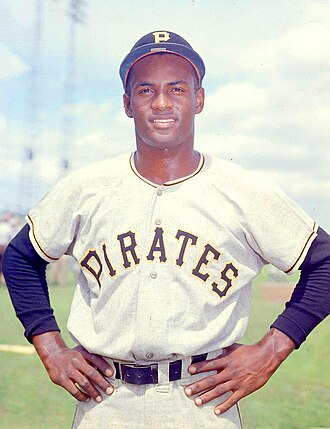 Roberto Clemente
"A free people will always refuse to put up with preventable poverty. If freedom is to be saved and enlarged, poverty must be ended. There is no other solution. The problem of how to prevent these three forces from coming into head-on collision is the principal study of the more politically conscious Conservative leaders. How can wealth persuade poverty to use its political freedom to keep wealth in power? Here lies the whole art of Conservative politics in the twentieth century."