SHAWORDS

When one learns something one first performs an act of will, because o — Edward Said

HomeEdward SaidQuote
"When one learns something one first performs an act of will, because only by willing to learn can one learn."
Edward Said
Edward Said
Edward Said
author39 quotes

Edward Wadie Said was a Palestinian and American academic, literary critic, and political activist. As a professor of literature at Columbia University, he was among the founders of post-colonial studies. As a cultural critic, Said is best known for his book Orientalism (1978), a foundational text which critiques the cultural representations that are the bases of Orientalism—how the Western world

More by Edward Said

View all →
Quote
"Lewis was an Orientalist before Edward Said made that a term of abuse. Said was not a scholar of the Middle East, but a polemicist from the Middle East. He was also an intellectual impostor. Ever since Orientalism came out in 1978, proper historians have concluded that it would be a masterpiece, if only it were true. The only people who take Edward Said’s books seriously are, in no particular order of irrelevance, academic poseurs, chippy lefties, and the legions of chippy academic lefty poseurs churned out by the departments of Middle Eastern Studies."
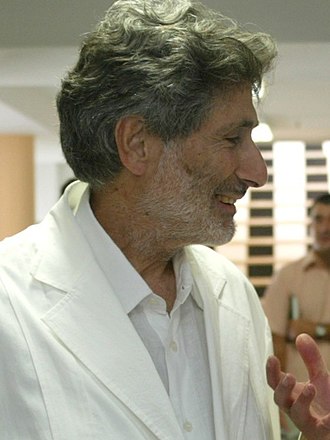
Edward SaidEdward Said
Quote
"Everything I have written in these lectures underlines the importance to the intellectual of passionate engagement, risk, exposure, commitment to principles, vulnerability in debating and being involved in worldly causes. For example, the difference I drew earlier between a professional and an amateur intellectual rests precisely on this, that the professional claims detachment on the basis of a profession and pretends to objectivity, whereas the amateur is moved neither by reward nor by the fulfillment of an immediate career plan but by a committed engagement with ideas and values in the public sphere."
Edward SaidEdward Said
Quote
"I’ve always been interested in what gets left out. That’s why I’m interested in the figure from the “Ode on a Grecian Urn,” the “silent form” that “dost tease us out of thought.” That’s why I’m interested in Raymond Williams’s discussion of the country house poems, where the representation of the country house necessarily excludes the silence of the peasants who have been driven off the land; or the fields that have been manicured to produce the beautiful spaces that Jane Austen exploits in her novels, where livelihood is transformed into property. I’m interested in the tension between what is represented and what isn’t represented, between the articulate and the silent. For me, it has a very particular background in the questioning of the document. What does the document include? What doesn’t it include? That’s why I have been very interested in attempts of the Subaltern Studies Collective, and others, to talk about excluded voices."
Edward SaidEdward Said