SHAWORDS

I’ve always been interested in what gets left out. That’s why I’m inte — Edward Said

HomeEdward SaidQuote
"I’ve always been interested in what gets left out. That’s why I’m interested in the figure from the “Ode on a Grecian Urn,” the “silent form” that “dost tease us out of thought.” That’s why I’m interested in Raymond Williams’s discussion of the country house poems, where the representation of the country house necessarily excludes the silence of the peasants who have been driven off the land; or the fields that have been manicured to produce the beautiful spaces that Jane Austen exploits in her novels, where livelihood is transformed into property. I’m interested in the tension between what is represented and what isn’t represented, between the articulate and the silent. For me, it has a very particular background in the questioning of the document. What does the document include? What doesn’t it include? That’s why I have been very interested in attempts of the Subaltern Studies Collective, and others, to talk about excluded voices."
Edward Said
Edward Said
Edward Said
author39 quotes

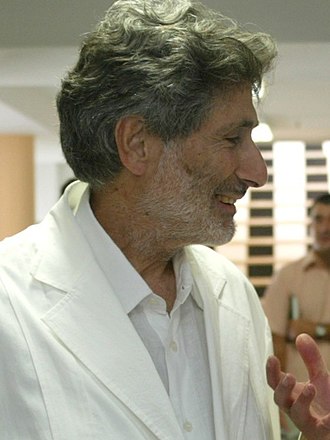
Edward Wadie Said was a Palestinian and American academic, literary critic, and political activist. As a professor of literature at Columbia University, he was among the founders of post-colonial studies. As a cultural critic, Said is best known for his book Orientalism (1978), a foundational text which critiques the cultural representations that are the bases of Orientalism—how the Western world

More by Edward Said

View all →
Quote
"There are two contradictory realities on the ground on which Clinton’s Washington talks will founder. One is that the energies released by the intifada are not easily containable in any available form for the foreseeable future: Palestinian protest at what Oslo has wrought is a protest against all aspects of the status quo. The second reality is that whether we like it or not, historical Palestine is now a binational reality suffering the devastation of apartheid. That must end and an era of freedom for Arabs and Jews must soon begin. It falls to us to try now to provide the signposts for a new era. Otherwise it is easy to foresee years more of fruitless and costly struggle."
Edward SaidEdward Said
Quote
"Never has the media been so influential in determining the course of war as during the Al-Aqsa Intifada, which, as far as the Western media are concerned, has essentially become a battle over images and ideas. Israel has already poured hundreds of millions of dollars into what in Hebrew is called hasbara, or information for the outside world (hence, propaganda). This has included an entire range of efforts: lunches and free trips for influential journalists; seminars for Jewish university students who, over a week in a secluded country estate, can be primed to “defend” Israel on the campus; bombarding congressmen and women with invitations and visits; pamphlets and, most important, money for election campaigns; directing (or, as the case requires, harassing) photographers and writers of the current intifada into producing certain images and not others; lecture and concert tours by prominent Israelis; training commentators to make frequent references to the Holocaust and Israel’s predicament today; many advertisements in the newspapers attacking Arabs and praising Israel; and on and on. Because so many powerful people in the media and publishing business are strong supporters of Israel, the task is made vastly easier."
Edward SaidEdward Said
Quote
"Every single empire in its official discourse has said that it is not like all the others, that its circumstances are special, that it has a mission to enlighten, civilize, bring order and democracy, and that it uses force only as a last resort. And, sadder still, there always is a chorus of willing intellectuals to say calming words about benign or altruistic empires, as if one shouldnt trust the evidence of ones eyes watching the destruction and the misery and death brought by the latest mission civilizatrice."
Edward SaidEdward Said
Quote
"I shall conclude with a concrete example of what I mean. Amid all the din about normalization, I have noticed one startling absence, namely, the current status of the Palestinian refugees living in every major Arab country, whose condition everywhere—there are no exceptions—is unacceptably miserable. Wherever there are Palestinians in the Arab world, there are rules and regulations forbidding them full status as residents, forbidding them work and travel, requiring them to register with the police on a monthly basis, and so on. It’s not only Israel that treats Palestinians badly, it is the Arab countries who do so also. Now see if there is a sustained campaign by Arab intellectuals against this invidious local treatment of the Palestinian refugees: you won’t see or hear one. What excuse is there for the horrible refugee camps in which so many of them live, even in places like Gaza and the West Bank; what right do local mokhabarat forces have to harass them and generally make their lives miserable? And why is there no protracted press campaign to end this appalling state of affairs? Why, because it is much easier (and less risky) to rail against normalization and Hebrew translations than it is to dramatize the unacceptable condition of Palestinian refugees in the Arab world, who are always being told that they cannot be “normalized” because it would implement Israel’s design. What rubbish!"
Edward SaidEdward Said