SHAWORDS
Edward Said

Edward Said

Edward Said

Edward Said

author
39Quotes

Edward Wadie Said was a Palestinian and American academic, literary critic, and political activist. As a professor of literature at Columbia University, he was among the founders of post-colonial studies. As a cultural critic, Said is best known for his book Orientalism (1978), a foundational text which critiques the cultural representations that are the bases of Orientalism—how the Western world

Popular Quotes

39 total
Quote
"I’ve always been interested in what gets left out. That’s why I’m interested in the figure from the “Ode on a Grecian Urn,” the “silent form” that “dost tease us out of thought.” That’s why I’m interested in Raymond Williams’s discussion of the country house poems, where the representation of the country house necessarily excludes the silence of the peasants who have been driven off the land; or the fields that have been manicured to produce the beautiful spaces that Jane Austen exploits in her novels, where livelihood is transformed into property. I’m interested in the tension between what is represented and what isn’t represented, between the articulate and the silent. For me, it has a very particular background in the questioning of the document. What does the document include? What doesn’t it include? That’s why I have been very interested in attempts of the Subaltern Studies Collective, and others, to talk about excluded voices."
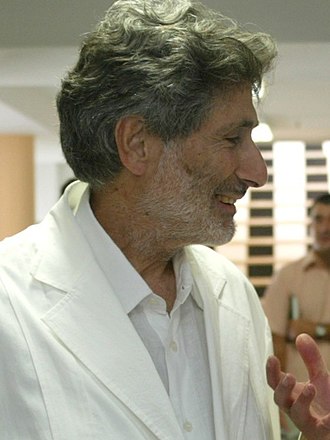
Edward SaidEdward Said
Quote
"There are two contradictory realities on the ground on which Clinton’s Washington talks will founder. One is that the energies released by the intifada are not easily containable in any available form for the foreseeable future: Palestinian protest at what Oslo has wrought is a protest against all aspects of the status quo. The second reality is that whether we like it or not, historical Palestine is now a binational reality suffering the devastation of apartheid. That must end and an era of freedom for Arabs and Jews must soon begin. It falls to us to try now to provide the signposts for a new era. Otherwise it is easy to foresee years more of fruitless and costly struggle."
Edward SaidEdward Said
Quote
"Every single empire in its official discourse has said that it is not like all the others, that its circumstances are special, that it has a mission to enlighten, civilize, bring order and democracy, and that it uses force only as a last resort. And, sadder still, there always is a chorus of willing intellectuals to say calming words about benign or altruistic empires, as if one shouldnt trust the evidence of ones eyes watching the destruction and the misery and death brought by the latest mission civilizatrice."
Edward SaidEdward Said
Quote
"Whatever the case, the publication of “What Are American Values?” augurs a new and degraded era in the production of intellectual discourse. For when the intellectuals of the most powerful country in the history of the world align themselves so flagrantly with that power, pressing that power’s case instead of urging restraint, reflection, genuine communication, and understanding, we are back to the bad old days of the intellectual war against communism, which we now know brought far too many compromises, collaborations, and fabrications on the part of intellectuals and artists who should have played an altogether different role. Subsidized and underwritten by the government (the CIA especially, which went so far as to provide for the subvention of magazines like Encounter, underwrote scholarly research, travel, and concerts as well as artistic exhibitions), those militantly unreflective and uncritical intellectuals and artists in the 1950s and 1960s brought the whole notion of intellectual honesty and complicity a new and disastrous dimension. For along with that effort went also the domestic campaign to stifle debate, intimidate critics, and restrict thought. For many Americans, like myself, this is a shameful episode in our history, and we must be on our guard against and resist its return."
Edward SaidEdward Said
Quote
"Never has the media been so influential in determining the course of war as during the Al-Aqsa Intifada, which, as far as the Western media are concerned, has essentially become a battle over images and ideas. Israel has already poured hundreds of millions of dollars into what in Hebrew is called hasbara, or information for the outside world (hence, propaganda). This has included an entire range of efforts: lunches and free trips for influential journalists; seminars for Jewish university students who, over a week in a secluded country estate, can be primed to “defend” Israel on the campus; bombarding congressmen and women with invitations and visits; pamphlets and, most important, money for election campaigns; directing (or, as the case requires, harassing) photographers and writers of the current intifada into producing certain images and not others; lecture and concert tours by prominent Israelis; training commentators to make frequent references to the Holocaust and Israel’s predicament today; many advertisements in the newspapers attacking Arabs and praising Israel; and on and on. Because so many powerful people in the media and publishing business are strong supporters of Israel, the task is made vastly easier."
Edward SaidEdward Said
Quote
"Israeli Jews and Palestinian Arabs are locked in Sartre’s vision of hell, that of “other people.” There is no escape. Separation can’t work in so tiny a land, any more than apartheid did. Israeli military and economic power insulates Israelis from having to face reality. This is the meaning of Sharon’s election, an antediluvian war criminal summoned out of the mists of time to do what: put the Arabs in their place? Hopeless. Therefore it is up to us to provide the answer that power and paranoia cannot. It isn’t enough to speak generally of peace. One must provide the concrete grounds for it, and those can only come from moral vision, and neither from “pragmatism” nor “practicality.” If we are all to live—this is our imperative—we must capture the imagination not just of our people but of our oppressors. And we have to abide by humane democratic values. Is the current Palestinian leadership listening? Can it suggest anything better than this, given its abysmal record in a “peace process” that has led to the present horrors?"
Edward SaidEdward Said
Quote
"The prevailing situation of criticism ... has given rise to a cult of professional expertise whose effect in general is pernicious. For the intellectual class, expertise has usually been a service rendered, and sold, to the central authority of society. This is the trahison des clercs of which Julien Benda spoke in the 1920s. Expertise in foreign affairs, for example, has usually meant the legitimization of the conduct of foreign policy and, what is more to the point, a sustained investment in revalidating the role of experts in foreign affairs. The same sort of thing is true of literary critics and professional humanists, except that their expertise is based upon noninterference in what Vico grandly calls the world of nations but which prosaically might just as well be called “the world.” We tell our students and our general constituency that we defend the classics, the virtues of a liberal education, and the precious pleasures of literature even as we also show ourselves to be silent (perhaps incompetent) about the historical and social world in which all these things take place. ... Humanists and intellectuals accept the idea that ... cultural types are not supposed to interfere in matters for which the social system has not certified them."
Edward SaidEdward Said
Quote
"Remember that CNN, Time Warner, Disney, NBC, Fox News, and the rest are part of the same ideological system, serve the same clientele, and are owned by the same relatively tiny group of people whose interest is to keep things as they are. Memory is an inhibition, a possible threat to their hegemony, just as it is very dangerous for a critic to keep making connections between supposedly un- or nonpolitical institutions like the Supreme Court and the Constitution, and on the other hand, base commercial interests."
Edward SaidEdward Said

Similar Authors & Thinkers



