Quote
"You have no respect for excessive authority or obsolete traditions. Youre dangerous and depraved, and you ought to be taken outside and shot!"
 Catch-22
"Who is Spain?" "Why is Hitler?" "When is right?" "Where was that stooped and mealy-colored old man I used to call Poppa when the merry-go-round broke down?" "Ho-ho beriberi." and "Balls!" all rang out in rapid succession, and then there was Yossarian with the question that had no answer: "Where are the Snowdens of yesteryear?"
Catch-22 is a satirical war novel by American author Joseph Heller. It was his debut novel. He began writing it in 1953; the novel was first published in 1961. Often cited as one of the most significant novels of the 20th century, it uses a distinctive non-chronological third-person omniscient narration, describing events from the points of view of different characters. The separate storylines are
"You have no respect for excessive authority or obsolete traditions. Youre dangerous and depraved, and you ought to be taken outside and shot!"
Catch-22"To die or not to die, that was the question, and Clevinger grew limp trying to answer it. History did not demand Yossarians premature demise, justice could be satisfied without it, progress did not hinge upon it, victory did not depend on it. That men would die was a matter of necessity; which men would die, though, was a matter of circumstance, and Yossarian was willing to be the victim of anything but circumstance. But that was war. Just about all he could find in its favor was that it paid well and liberated children from the pernicious influence of their parents."
Catch-22"The best squadron in each wing won a yellow pennant on a pole that was utterly worthless. The best squadron on the base won a red pennant on a longer pole that was worth even less, since the pole was heavier and was that much more of a nuisance to lug around all week until some other squadron won it the following Sunday. To Yossarian, the idea of pennants as prizes was absurd. No money went with them, no class privileges. Like Olympic medals and tennis trophies, all they signified was that the owner had done something of no benefit to anyone more capably than everyone else."
Catch-22"Captain Piltchard and Captain Wren, the inoffensive joint squadron operations officers, were both mild, soft-spoken men of less than middle height who enjoyed flying combat missions and begged nothing more of life and Colonel Cathcart than the opportunity to continue flying them. They had flown hundreds of combat missions and wanted to fly hundreds more. They assigned themselves to every one. Nothing so wonderful as war had ever happened to them before; and they were afraid it might never happen to them again."
Catch-22"Milo was not only the Vice-Shah or Oran, as it turned out, but also the Caliph of Baghdad, the Imam of Damascus, and the Sheik of Araby. Milo was the corn god, the rain god and the rice god in backward regions where such crude gods were still worshipped by ignorant and superstitious people, and deep inside the jungles of Africa, he intimated with becoming modesty, large graven images of his mustached face could be found overlooking primitive stone altars red with human blood. Everywhere they touched he was acclaimed with honor, and it was one triumphal ovation after another for him in city after city."
Catch-22"All Colonel Cathcart knew about his house in the hills was that he had such a house and hated it. He was never so bored as when spending there the two or three days every other week necessary to sustain the illusion that his damp and drafty stone farmhouse in the hills was a golden palace of carnal delights. Officers’ clubs everywhere pulsated with blurred but knowing accounts of lavish, hushed-up drinking and sex orgies there and of secret, intimate nights of ecstasy with the most beautiful, the most tantalizing, the most readily aroused and most easily satisfied Italian courtesans, film actresses, models and countesses. No such private nights of ecstasy or hushed-up drinking and sex orgies ever occurred. They might have occurred if either General Dreedle or General Peckem had once evinced an interest in taking part in orgies with him, but neither ever did, and the colonel was certainly not going to waste his time and energy making love to beautiful women unless there was something in it for him."
Catch-22"One of the first major steps in the direction of modern skepticism came through the victory of Occam over Aquinas in a controversy about language. The statement that modi essendi were replaced by modi significandi et intelligendi, or that ontological referents were abandoned in favor of pragmatic significations, describes broadly the change in philosophy which continues to our time. From Occam to Bacon, from Bacon to Hobbes, and from Hobbes to contemporary semanticists, the progression is clear: ideas become psychological figments, words become useful signs. ... To one completely committed to this realm of becoming, as are the empiricists, the claim to apprehend verities is a sign of . Probably we have here but a highly sophisticated expression of the doctrine that ideals are hallucination and that the only normal, sane person is the healthy extrovert, making instant, instinctive adjustments to the stimuli of the material world."
"To have success in science, you need some luck. But to succeed in science, you need a lot more than luck. And its not enough to be smart — lots of people are very bright and get nowhere in life. In my view, you have to combine intelligence with a willingness not to follow conventions when they block your path forward."
"I, too, believed it was impossible to change the existing society into one that would be for the benefit of all; neither could I espouse any given ideal for society. But [...] I felt that even if one did not have an ideal vision of society, one could have one’s work to do. Whether it was successful or not was not our concern; it was enough that we believed it to be a valid work. The accomplishment of that work, I believed, was what our real life was about. Yes. I want to carry out a work of my own; for I feel that by so doing our lives are rooted in the here and now, not in some far-off ideal goal."
"We have already mentioned what may, perhaps, appear paradoxical to some of our readers, — that the division of labour can be applied with equal success to mental as to mechanical operations, and that it ensures in both the same economy of time."
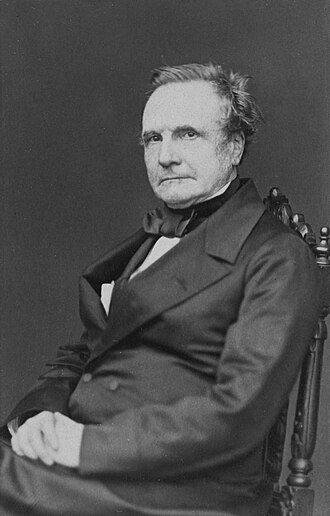 Charles Babbage
"The war was finished. It had lasted ten equivalent years and taken ten million lives. Thus it was neither of long duration nor of serious attrition. It hadnt any great significance; it was not intended to have. It did not prove a point, since all points had long ago been proven. What it did, perhaps, was to emphasize an aspect, sharpen a concept, underline a trend. On the whole it was a successful operation. Economically and ecologically it was of healthy effect, and who should grumble? And after wars, men go home. No, no, men start for home. Its not the same."
"The final test of a leader is that he leaves behind him in other men the conviction and the will to carry on. ... The genius of a good leader is to leave behind him a situation which common sense, without the grace of genius, can deal with successfully."
 Leadership