Quote
"Though mans feeling for the other-worldly often has recourse to solitude, solitude does not foster its development; rather, it is nourished by communion, to which the church is more propitious than the cemetery."
A
André Malraux"Why do you fight?" ... He kept his wife, his kid, from dying. That was nothing. Less than nothing. If he had had money, if he could have left it to them, he would have been free to go and get killed. As if the universe had not treated him all his life with kicks in the belly, it now despoiled him of the only dignity he could ever possess — his death."
Georges André Malraux was a French novelist, member of the French Resistance, art theorist, and minister of cultural affairs. Malraux's novel La Condition Humaine (1933) is set during the 1927 Shanghai uprising and won the Prix Goncourt; L'Espoir arose from his experiences during the Spanish Civil War. After the Second World War he abandoned fiction and wrote several works on art history, collecte
"Though mans feeling for the other-worldly often has recourse to solitude, solitude does not foster its development; rather, it is nourished by communion, to which the church is more propitious than the cemetery."
"The ordinary man puts up a struggle against all that is not himself, whereas it is against himself, in a limited but all-essential field, that the artist has to battle."
"The present age delights in unearthing a great mans secrets; for one thing because we like to temper our admiration and also perhaps we have a vague hope of finding a clue to genius in such "revelations."
"Surely that little pseudo-gothic church on Broadway, hidden amongst the skyscrapers, is symbolic of the age! On the whole face of the globe the civilization that has conquered it has failed to build a temple or a tomb."
"Each form of the sacrosanct was regarded by members of the culture which gave rise to it as a revelation of the Truth; at Byzantium it was not a mere hypothesis that was sponsored by the majesty of the Byzantine style. To us, however, these forms make their appeal as forms alone — in other words, as they would be were they the work of a contemporary (and, since this actually is unthinkable, they affect us in a puzzling manner); or else as so many grandiose vestiges of a faith that has died out. We look at them from outside; they are still emotive, but they are no longer true. Thus we deprive them of what was their most vital element; for a religious civilization that regarded what it revered as a mere hypothesis is inconceivable."
"The West regards as truth what the Hindu regards as appearance (for if human life, in the age of Christendom, was doubtless an ordeal it was certainly truth and not illusion), and the Westerner can regard knowledge of the the universe as the supreme value, while for the Hindu the supreme value is accession to the divine Absolute.... But the most profound difference is based on the fact that the fundamental reality for the West, Christian or athiest, is death, in whatever sense it may be interpreted --- while the fundamental reality for India is the endlessness of life in the endlessness of time: Who can kill immortality?"
"Be the change that you wish to see in the world."
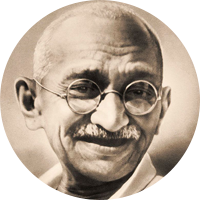 Mahatma Gandhi
"we are engaged in a grim experiment never before attempted. We are subjecting whole populations to exposure to chemicals which animal experiments have proved to be extremely poisonous and in many cases cumulative in their effect. These exposures now begin at or before birth and-unless we change our methods-will continue through the lifetime of those now living. No one knows what the result will be, because we have no previous experience to guide us."
"pity this busy monster, manunkind, not. Progress is a comfortable disease: your victim (death and life safely beyond) plays with the bigness of his littleness"
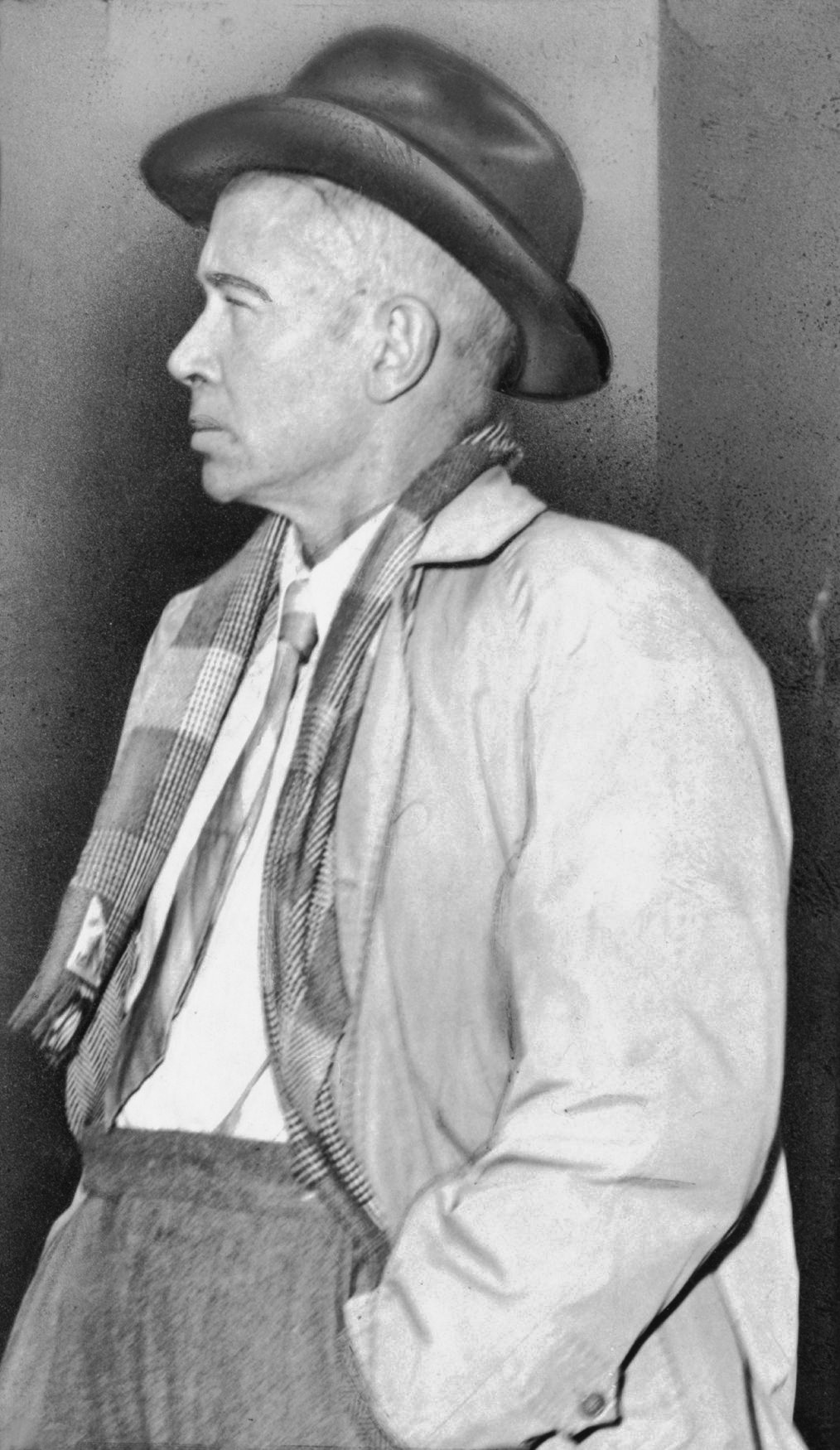 E. E. Cummings
"I believe that the unity of man as opposed to other living things derives from the fact that man is the conscious life of himself. Man is conscious of himself, of his future, which is death, of his smallness, of his impotence; he is aware of others as others; man is in nature, subject to its laws even if he transcends it with his thought."
 Erich Fromm
"“We need brains, is the bottom line,” Ivy said. “We’re not hunter-gatherers anymore. We’re all living like patients in the intensive care unit of a hospital. What keeps us alive isn’t bravery, or athleticism, or any of those other skills that were valuable in a caveman society. It’s our ability to master complex technological skills. It is our ability to be nerds. We need to breed nerds.”"
"I have been clinically depressed for most of my life. I once used drugs to fix it. Then I stopped. I stopped because I decided they were making me stupid, and Id rather be miserable than stupid. I am what I am."