Quote
"A good rotation. A rotation I define as the experiencing of the new beyond the expectation of the experiencing of the new."
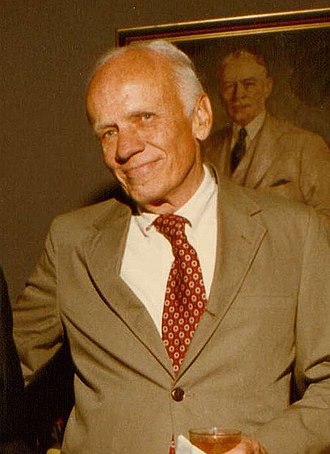 Walker Percy
"Why is there such a gap between nonspeaking animals and speaking man, when there is no other such gap in nature? Is it possible that a theory of man is nothing more nor less than a theory of the speaking creatures?"
Walker Percy, OblSB was an American writer whose interests included philosophy and semiotics. Percy is noted for his philosophical novels set in and around New Orleans; his first, The Moviegoer, won the National Book Award for Fiction.
"A good rotation. A rotation I define as the experiencing of the new beyond the expectation of the experiencing of the new."
Walker Percy"Hatred strikes me as one of the few signs of life remaining in the world. This is another thing about the world which is upsidedown: all the friendly and likable people seem dead to me; only the haters seem alive. (2.9)."
Walker Percy"I have discovered that most people have no one to talk to, no one, that is, who really wants to listen. When it does at last dawn on a man that you really want to hear about his business, the look that comes over his face is something to see."
Walker Percy"Not a single thing do I remember from the first trip but this: the sense of the place, the savor of the genie-soul of the place which every place has or else is not a place...there it is as big as life, the genie-soul of the place which, wherever you go, you must meet and master first thing or be met and mastered. (4.3)."
Walker Percy"Christians talk about the horror of sin, but they have overlooked something. They keep talking as if everyone were a great sinner, when the truth is that nowadays one is hardly up to it. There is very little sin in the depths of the malaise. The highest moment of a malaisians life can be the moment when he manages to sin like a proper human (Look at us, Binx — my vagabond friends as good as cried out to me — were sinning! Were succeeding! Were human after all!)."
Walker Percy"The search is what anyone would undertake if he were not sunk in the everydayness of his own life."
Walker Percy"Now Art, used collectively for painting, sculpture, architecture and music, is the mediatress between, and reconciler of, nature and man. It is, therefore, the power of humanizing nature, of infusing the thoughts and passions of man into everything which is the object of his contemplation."
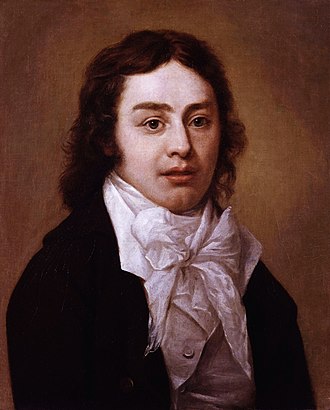 Samuel Taylor Coleridge
"The Good consists in the congruity of a thing with the laws of the reason and the nature of the will, and in its fitness to determine the latter to actualize the former: and it is always discursive. The Beautiful arises from the perceived harmony of an object, whether sight or sound, with the inborn and constitutive rules of the judgment and imagination: and it is always intuitive."
Samuel Taylor Coleridge"I believe that the unity of man as opposed to other living things derives from the fact that man is the conscious life of himself. Man is conscious of himself, of his future, which is death, of his smallness, of his impotence; he is aware of others as others; man is in nature, subject to its laws even if he transcends it with his thought."
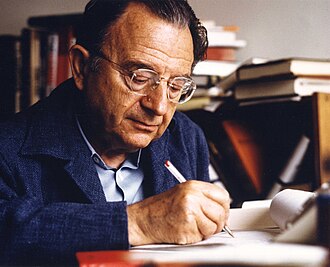 Erich Fromm
"Who made you glorious as the gates of heaven Beneath the keen full moon? Who bade the sun Clothe you with rainbows? Who, with living flower Of loveliest blue, spread garlands at your feet? God! let the torrents, like a shout of nations, Answer! and let the ice-plains echo, God! God! sing, ye meadow-streams, with gladsome voice! Ye pine-groves, with your soft and soul-like sounds! And they too have a voice, yon piles of snow, And in their perilous fall shall thunder, God!"
Samuel Taylor Coleridge"All Nature seems at work. Slugs leave their lair — The bees are stirring — birds are on the wing — And Winter slumbering in the open air, Wears on his smiling face a dream of Spring! And I the while, the sole unbusy thing, Nor honey make, nor pair, nor build, nor sing."
Samuel Taylor Coleridge"Taste is the intermediate faculty which connects the active with the passive powers of our nature, the intellect with the senses; and its appointed function is to elevate the images of the latter, while it realizes the ideas of the former."
Samuel Taylor Coleridge