Quote
"Then all you lovers have good heed Vex not young Love in word or deed: Love never leaves an unpaid debt, He will not pardon nor forget."
R
Robert Graves"Wisdom made him old and wary Banishing the Lords of Faery. Wisdom made a breach and battered Babylon to bits: she scattered To the hedges and ditches All our nursery gnomes and witches."
Robert Ranke Graves, whose second name is sometimes given as von Ranke, was an English poet, novelist and critic. His father was Alfred Perceval Graves, a celebrated Irish poet and figure in the Gaelic revival; they were both Celticists and students of Irish mythology.
"Then all you lovers have good heed Vex not young Love in word or deed: Love never leaves an unpaid debt, He will not pardon nor forget."
"I, Tiberius Claudius Drusus Nero Germanicus … this, that and the other (for I shall not trouble you yet with all my titles), who was once, and not so long ago either, known to my friends and relatives and associates as ‘Claudius the Idiot’, or ‘That Claudius’, or ‘Claudius the Stammerer’, or ‘Clau-Clau-Claudius’, or at best as ‘Poor Uncle Claudius’, am now about to write this strange history of my life; starting from my earliest childhood and continuing year by year until I reach the fateful point of change where, some eight years ago, at the age of fifty-one, I suddenly found myself caught in what I may call the ‘golden predicament’ from which I have never since become disentangled."
"Where nature with accustomed round Sweeps and garnishes the ground With kindly beauty, warm or cold — Alternate seasons never old: Heathen, how furiously you rage, Cursing this blood and brimstone age, How furiously against your will You kill and kill again, and kill: All thought of peace behind you cast, Till like small boys with fear aghast, Each cries for God to understand, I could not help it, it was my hand."
"Even nowadays an archaic sense of love-innocence recurs, however briefly, among most young men and women. Some few of these, who become poets, remain in love for the rest of their lives, watching the world with a detachment unknown to lawyers, politicians, financiers, and all other ministers of that blind and irresponsible successor to matriarchy and patriarchy — the mechanarchy."
"Trench stinks of shallow buried dead Where Tom stands at the periscope, Tired out. After nine months he’s shed All fear, all faith, all hate, all hope."
"Abstract reason, formerly the servant of practical human reasons, has everywhere become its master, and denies poetry any excuse for existence. Though philosophers like to define poetry as irrational fancy, for us it is practical, humorous, reasonable way of being ourselves. Of never acquiescing in a fraud; of never accepting the secondary-rate in poetry, painting, music, love, friends. Of safeguarding our poetic institutions against the encroachments of mechanized, insensate, inhumane, abstract rationality."
"The wound is the place where the Light enters you."
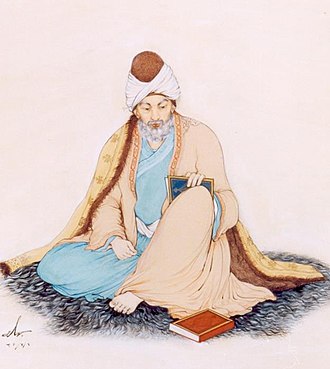 Rumi
Rumi"Be the change that you wish to see in the world."
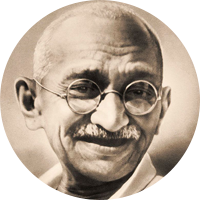 Mahatma Gandhi
"In philosophy equally as in poetry it is the highest and most useful prerogative of genius to produce the strongest impressions of novelty, while it rescues admitted truths from the neglect caused by the very circumstance of their universal admission."
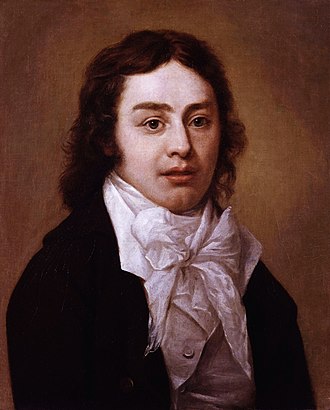 Samuel Taylor Coleridge
"An [hypertext] encyclopaedia will be an overall attempt by the knowledgeable, the learned societies or anyone else, to represent the state-of-the-art in their field. An encyclopaedia will be a living document, as up to date as it can be, instantly accessible at any time. It will contain carefully authored explanations and summaries of the subject, as well as computer-generated indexes of literature. A reference to a paper from the encyclopaedia conveys authority and acceptance by academic society. A measure of a paper’s standing may be conveyed by the number of links it is away from an encyclopaedia."
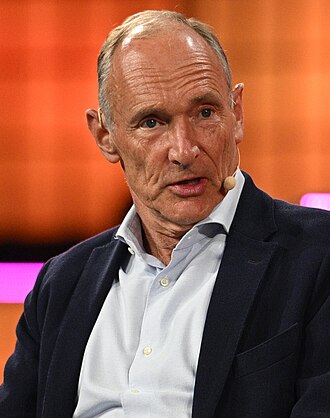 Tim Berners-Lee
"The British intellectual tradition is empirical and liberal, the French is rationalist and aristocratic, and the German is idealist and conservative. ...In the great ontological debate between mind and matter, German philosophy comes down solidly on the side of mind. Its emphasis is intuition as opposed to reason, ideas as opposed to facts."
"To know the mighty works of God, to comprehend His wisdom and majesty and power; to appreciate, in degree, the wonderful workings of His laws, surely all this must be a pleasing and acceptable mode of worship to the Most High, to whom ignorance cannot be more grateful than knowledge."