Quote
"When the Turks and the Bulgarians left, Macedonia remained a purely Greek region."
 Henry Morgenthau, Sr.
Henry Morgenthau, Sr.
Henry Morgenthau, Sr.
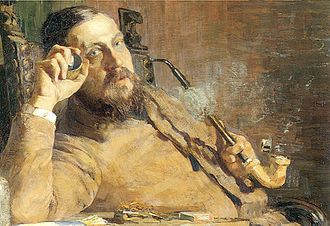
Henry Morgenthau was a German-born American lawyer and businessman, best known for his role as the ambassador to the Ottoman Empire during World War I. Morgenthau was one of the most prominent Americans who spoke about the Greek genocide and the Armenian genocide of which he stated, "I am firmly convinced that this is the greatest crime of the ages."
"When the Turks and the Bulgarians left, Macedonia remained a purely Greek region."
Henry Morgenthau, Sr."….The Greek War of Independence, which came to a successful conclusion in 1832, affected less than one half of the Greeks in the Turkish Empire. It did not bring freedom to the Greeks of Macedonia and Thrace, of Crete and the Aegean Islands, nor to the more than two million Greeks in Asia Minor and Constantinople."
Henry Morgenthau, Sr."Soon after Athens had reached the height of its glory under Pericles in the Fifth Century, B. C., and had started on its decline, the rise of Macedon under Philip carried Greek influence into new regions. The glory of Athens had been based upon sea power, but the conquests of Macedon were the work of land armies— Philip invented the invincible phalanx. Upon Philips death his son, Alexander the Great, set forth to conquer the whole of the then known world, and as that world in his day lay to the east, his marches were in that direction. In a few years he had overrun the fertile plains and opulent cities of Asia Minor, Syria, Mesopotamia, and Persia, and had carried his conquests to the gates of Delhi. In all the cities in the intervening countries he left large garrisons of Greek soldiers. In many of these countries he founded flourishing new cities. In every place his soldiers were followed by large colonies of Greek civilians. The result was that the whole of western Asia, and of what we call the Near East, including Asia Minor, Egypt, Palestine, Syria, Babylonia, Mesopotamia, Persia, and northwestern India, was saturated with the Greek influence and with Greek colonies."
Henry Morgenthau, Sr."The imagination of these conquered peoples was dazzled by the introduction of Greek art, literature, philosophy, and public works. Though the successors of Alexander were unable to maintain the political control of the lands he conquered, and though successive waves of Roman, Arabian, and Tartar conquests swept over these lands in succeeding centuries, none of the later conquerors has been able wholly to eradicate the influence of Greek culture, nor to exterminate that element of population which was of Greek blood."
Henry Morgenthau, Sr."To this day, the Turkish government refuses to acknowledge the Armenian genocide. This is strange, since the historical evidence of what happened is plentiful. Western observers like the US ambassador in Constantinople, Henry Morgenthau, wrote detailed reports about what was being done - including the telling statement of Mehmed Talaat Pasha, the Interior Minister, that all the Armenians had to perish because those who were innocent today might be guilty tomorrow. Western missionaries too wrote harrowing accounts of what they witnessed. Their testimony formed an important part of the wartime report on The Treatment of the Armenians compiled by Viscount Bryce, who had also investigated the German atrocities in Belgium in 1914."
Henry Morgenthau, Sr.