SHAWORDS
Pauline Kael

Pauline Kael

Pauline Kael

Pauline Kael

author
68Quotes

Pauline Kael was an American film critic who wrote for The New Yorker from 1968 to 1991. Known for her "witty, biting, highly opinionated and sharply focused" reviews, Kael often defied the consensus of her contemporaries.

Popular Quotes

68 total
Quote
"[T]his film offers a nightmare image: the "Black Rebels," an outlaw motorcycle gang — a leather-jacketed pack who resemble storm troopers — terrorize a town. Their emblem is a deaths head and crossed pistons and rods, and Marlon Brando, in his magnetic, soft-eyed youth, is their moody leader. The picture seemed to be frightened of its subject — the young nihilists who say "no" to American blandness and conformity — and reduced it as quickly as possible to the trivial meaninglessness of misunderstood boy meets understanding girl (Mary Murphy), but the audience savored the possibilities, and this clumsy, naive film was banned and argued about in so many countries that it developed a near-legendary status."
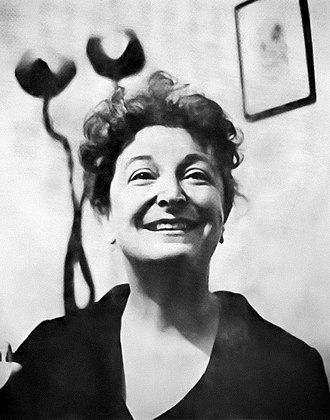
Pauline KaelPauline Kael
Quote
"After one of those terrible lovers quarrels that leave one in a state of incomprehensible despair. I came out of the theater, tears streaming, and overheard the petulant voice of a college girl complaining to her boyfriend, "Well I dont see what was so special about that movie." I walked up the street, crying blindly, no longer certain whether my tears were for the tragedy on the screen, the hopelessness I felt for myself, or the alienation I felt from those who could not experience the radiance of Shoeshine. For if people cannot feel Shoeshine, what can they feel?... Later I learned that the man with whom I had quarreled had gone the same night and had also emerged in tears. Yet our tears for each other, and for Shoeshine did not bring us together. Life, as Shoeshine demonstrates, is too complex for facile endings."
Pauline KaelPauline Kael
Quote
"October 14, 1972: that date should become a landmark in movie history comparable to May 29, 1913 — the night Le Sacre du Printemps was first performed — in music history. There was no riot, and no one threw anything at the screen, but I think it’s fair to say that the audience was in a state of shock, because Last Tango in Paris has the same kind of hypnotic excitement as the Sacre, the same primitive force, and the same thrusting, jabbing eroticism. [...] Bertolucci and Brando have altered the face of an art form. Who was prepared for that?"
Pauline KaelPauline Kael
Quote
"In movies, the balance between art and business has always been precarious, with business outweighing art, but the business was, at least, in the hands of businessmen who loved movies. As popular entertainment, movies need something of what the vulgarian moguls had — zest, a belief in their own instincts, a sentimental dedication to producing pictures that would make their country proud of their contribution, a respect for quality, and the biggest thing: a willingness to take chances. The cool managerial sharks don’t have that; neither do the academics. But the vulgarians also did more than their share of damage, and they’re gone forever anyway. They were part of a different America. They were, more often than not, men who paid only lip service to high ideals, while gouging everyone for profits. The big change in the country is reflected in the fact that people in the movie business no longer feel it necessary to talk about principles at all."
Pauline KaelPauline Kael
Quote
"And for the greatest movie artists where there is a unity of technique and subject, one doesn’t need to talk about technique much because it has been subsumed in the art. One doesn’t want to talk about how Tolstoi got his effects but about the work itself. One doesn’t want to talk about how Jean Renoir does it; one wants to talk about what he has done. One can try to separate it all out, of course, distinguish form and content for purposes of analysis. But that is a secondary, analytic function, a scholarly function, and hardly needs to be done explicitly in criticism. Taking it apart is far less important than trying to see it whole. The critic shouldn’t need to tear a work apart to demonstrate that he knows how it was put together. The important thing is to convey what is new and beautiful in the work, not how it was made — which is more or less implicit."
Pauline KaelPauline Kael
Quote
"The recurrence of certain themes in movies suggests that each generation wants romance restated in slightly new terms, and of course it’s one of the pleasures of movies as a popular art that they can answer this need. And yet, and yet — one doesn’t expect an educated generation to be so soft on itself, much softer than the factory workers of the past who didn’t go back over and over to the same movies, mooning away in fixation on themselves and thinking this fixation meant movies had suddenly become an art, and their art."
Pauline KaelPauline Kael
Quote
"Hilariously florid — sometimes referred to as "Lust in the Dust." This Wagnerian western features Gregory Peck and Jennifer Jones as lovers so passionate they kill each other. Shes Pearl Chavez, a half-breed wench, and so, by Hollywood convention, uncontrollably sexy, and Peck actually manages to bestir himself enough to play a hunk of egotistical hot stuff — maybe the name Lewt McCanles got to him, or maybe the producer, David O. Selznick, used electric prods. Peck clangs his spurs and leers, while Jones heaves her chest; when they kiss, lightning blazes."
Pauline KaelPauline Kael
Quote
"If we make any kind of decent, useful life for ourselves we have less need to run from it to those diminishing pleasures of the movies. When we go to the movies we want something good, something sustained, we don’t want to settle for just a bit of something, because we have other things to do. If life at home is more interesting, why go to the movies? And the theatres frequented by true moviegoers — those perennial displaced persons in each city, the loners and the losers — depress us. Listening to them — and they are often more audible than the sound track — as they cheer the cons and jeer the cops, we may still share their disaffection, but it’s not enough to keep us interested in cops and robbers. A little nose-thumbing isn’t enough. If we’ve grown up at the movies we know that good work is continuous not with the academic, respectable tradition but with the glimpses of something good in trash, but we want the subversive gesture carried to the domain of discovery. Trash has given us an appetite for art."
Pauline KaelPauline Kael
Quote
"Apparently, Lillian Hellman couldnt shake off the predatory Hubbards after The Little Foxes; she wrote this play about the same family, setting it back 30 years earlier in their dark history. The Hubbards, who are supposed to be rising Southern capitalists, are the greatest collection of ghouls since The Old Dark House of 1932. Hellman must combine witchcraft with stagecraft — who else could keep a plot in motion with lost documents, wills, poisonings, and pistols, and still be considered a social thinker?"
Pauline KaelPauline Kael

Similar Authors & Thinkers



