Quote
"Where possible, circumcision should not be done until the person is able to give informed consent."
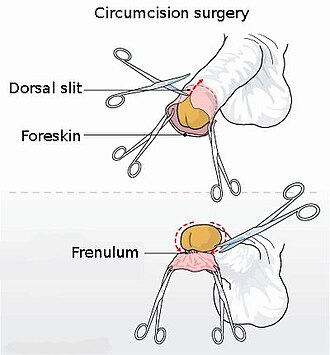 Circumcision
"Analgesia is safe and effective in reducing the procedural pain associated with circumcision; therefore, if a decision for circumcision is made, procedural analgesia should be provided."
Circumcision is a surgical procedure that removes the foreskin from the human penis. In the procedure's most common form, the foreskin is extended with forceps, then a circumcision device may be placed, after which the foreskin is excised. Topical or locally injected anesthesia is generally used to reduce pain and physiologic stress. Circumcision is undertaken for religious, cultural, social, and
"Where possible, circumcision should not be done until the person is able to give informed consent."
Circumcision"In an apparent effort to bolster the weak anticircumcision argument, 2 anecdotal beliefs are added to the listed reasons not to choose circumcision: the "protective benefit" of the foreskin on the tip of the penis and the belief that circumcision causes decreased sexual pleasure later in life. Neither of these anecdotal beliefs meets the stated criterion of being evidence-based."
Circumcision"A remedy [for masturbation] which is almost always successful in small boys is circumcision, especially when there is any degree of phimosis. The operation should be performed by a surgeon without administering an anæsthetic, as the brief pain attending the operation will have a salutary effect upon the mind, especially if it be connected with the idea of punishment, as it may well be in some cases. The soreness which continues for several weeks interrupts the practice, and if it had not previously become too firmly fixed, it may be forgotten and not resumed."
Circumcision"To cut off the uppermost skin of the secret parts is directly against the honesty of nature, and an injurious insufferable trick put upon her."
Circumcision"Bris has a way of erasing the lives of women from the moment we are born. The bris ceremony becomes a major celebration of a boy’s birth, leaving the arrival of a girl ritualistically unnoticed, except in certain Sephardic communities, where there is a centuries-old tradition of honoring the birth of a Jewish daughter. The past generation or two of women have sought to fill in that void, but it’s still an uphill battle. Some expectant grandparents, for example, still wait to make appropriate travel plans based on gender — for a boy, of course they will attend the bris, but for “just” a girl they might not rush to make the trip. In an adult course on the Jewish lifecycle I once taught, I had to use a curriculum with the following chapter titles: “Bris, Bar/ Bat mitzvah, Wedding, Death.” The educators seemed to lack any awareness that there’s more to a birth than the bris. This classic vision of the Jewish lifecycle, emphasizing the bris as the quintessential moment of birth, practically ignores the existence of girl babies and the experiences of women. This dismisses the entire experience of childbirth, as if to say we’re not really celebrating new life — we’re celebrating a new set of male genitals for the Chosen People. Howard Eilberg-Schwartz has written that “Since circumcision binds men between and across generations, it also establishes an opposition between men and women”"
Circumcision"I think it should be enough to simply state: all genital mutilation is wrong. I don’t discriminate between which gender should suffer genital mutilation, and which shouldn’t – that very distinction, right there, is the precise definition of sexual discrimination."
Circumcision"The only influences in [the painting The sick Child, Munch painted in his elderly home, remembering very accurate the last days of his dying little sister Sophie] The sick Child.. ..were the ones that come from my home.. ..my childhood and my home. Only someone who knew the conditions at home could possibly understand why there can be no conceivable chance of any other place having played a part – my home is to my art as a midwife is to her children.. ..few painters have ever experienced the full grief of their subject as I did in The sick child. It was not just I who was suffering; it was all my nearest and dearest as well."
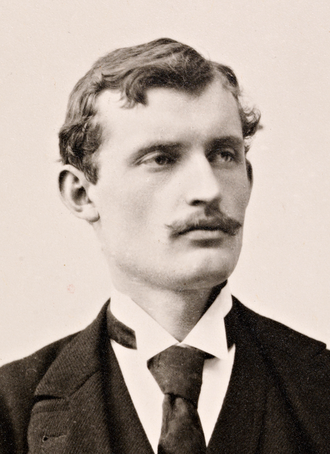 Edvard Munch
"General Franco made it clear that Spain could enter the war only when England was about ready to collapse."
 Francisco Franco
"The Spanish Republic did not find itself free of obligations. For the most part the leaders were Freemasons. Before their duty to their country came their obligations to the Grand Orient. In my opinion, Freemasonry, with all its international influence, is the organization principally responsible for the political ruin of Spain, as well as the murder of Calvo Sotelo, who was executed in accordance with orders from the Grand Secretary of Freemasonry in Geneva."
Francisco Franco"Art was what I originally started out to do and music came second at first. I had a year at art college but I left because it was too much like school. I give all my paintings away to people I like."
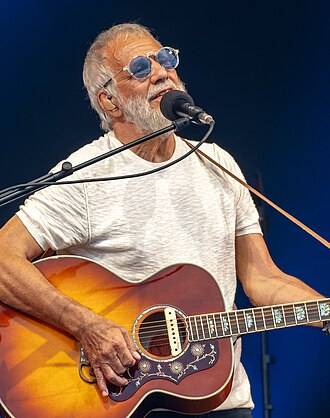 Cat Stevens
"Lady Cannons gone to a matinée at the St. Jamess. We had tickets for the first night, but of course she wouldnt use them then. She preferred to go alone in the afternoon, because she detests the theatre, anyhow, and afternoon performances give her a headache. If she does a thing thats disagreeable to her, she likes to do it in the most painful possible way. She has a beautiful nature."
"At first when I saw The Sick Child [in his imagination] her pallid face and the vivid red hair against the pillow – I saw something that vanished when I tried to paint it. I ended up with a picture on the canvas which, although I was pleased with it, bore little relationship to what I had seen.. ..In the space of that year [1885 – 1886], scratching it out, just letting the paint flow, endlessly I tried to recapture what I had seen for the first time – the pale transparent skin against the linen sheets, the trembling lips, the shaking hands. I repainted the painting numerous times – scratched it out – let it become blurred in the medium – and tried again and again to catch the first impression – the transparent pale skin against the canvas – the trembling mouth – the trembling hands. I had done the chair [in which his sister Sophie had died] with the glass too often. It distracted me from doing the head. – When I saw the picture I could only make out the glass and the surroundings. – Should I remove it completely? – No, it had the effect of giving depth and emphasis to the head. – I scared off half the background and left everything in masses – one could now see past and across the head and the glass.. .I had achieved much of that first impression, the trembling mouth – the transparent skin – the tired eyes – but the picture was not finished in its colour – it was pale grey – the picture was then heavy as lead. [Munch showed the painting on the Autumn Exhibition 18 October 1886; it was criticized severely, even by his bohemian art-friend Jager]"
Edvard Munch