SHAWORDS

As a social bond, now one does not find even a faith of the warrior ki — Julius Evola

HomeJulius EvolaQuote
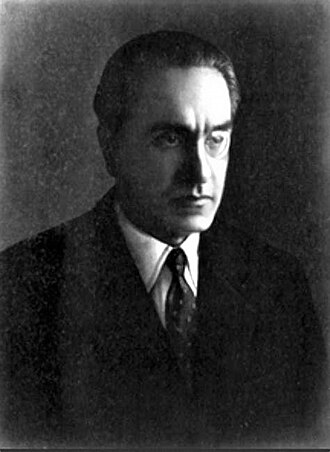
"As a social bond, now one does not find even a faith of the warrior kind, that is, relationships of loyalty and honour. The social bond assumes a utilitarian and economic character; it is an agreement based on convenience and material interest — a type only a merchant would accept."
Julius Evola
Julius Evola
Julius Evola
author39 quotes

Giulio Cesare Andrea "Julius" Evola was an Italian far-right philosopher and writer. Evola regarded his values as traditionalist, aristocratic, martial and imperialist. An esoteric thinker in Fascist Italy, he also had ties to Nazi Germany. In the post-war era, he was an ideological mentor of the Italian neo-fascist and militant right.

More by Julius Evola

View all →
Quote
"It is a cliché that the modern scientific vision has desacralized the world, and the world desacralized by scientific knowledge has become one of the existential elements that make up modern man, all the more so to the degree that he is "civilized." Ever since he has been subject to compulsory education, his mind has been stuffed with "positive" scientific notions; he cannot avoid seeing in a soulless light everything that surrounds him, and therefore acts destructively. What, for example, could the symbol of the sunset of a dynasty, like the Japanese, mean to him when he knows scientifically what the sun is: merely a star, at which one can even fire missiles."
Julius EvolaJulius Evola
Quote
"The lesser war here corresponds to the exoteric war, the bloody battle which is fought with material arms against the enemy, against the barbarian, against an inferior race over whom a superior right is claimed, or, finally, when the event is motivated by a religious justification, against the infidel. No matter how terrible and tragic the events, no matter how huge the destruction, this war, metaphysically, still remains a lesser war. The greater or holy war is, contrarily, of the interior and intangible order – it is the war which is fought against the enemy, the barbarian, the infidel, whom everyone bears in himself, or whom everyone can see arising in himself on every occasion that he tries to subject his whole being to a spiritual law."
Julius EvolaJulius Evola
Quote
"The highest instrument of inner awakening of race is combat, and war is its highest expression. That pacifism and humanitarianism are phenomena closely linked to internationalism, democracy, cosmopolitanism and liberalism is perfectly logical – the same anti-racial instinct present in some, is reflected and confirmed in the others. The will towards sub-racial levelling inborn in internationalism finds its ally in pacifist humanitarianism, which has the function of preventing the heroic test from disrupting the game by galvanising the surviving forces of any still not completely deracinated peoples."
Julius EvolaJulius Evola

More on Friendship

View all →
Quote
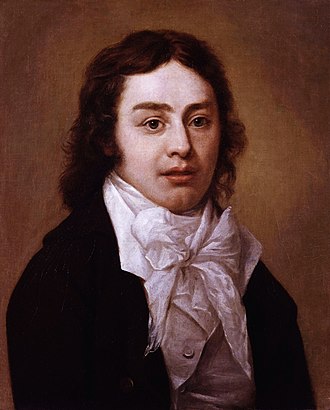
"How seldom, Friend! a good great man inherits Honour or wealth, with all his worth and pains! It sounds like stories from the land of spirits, If any man obtain that which he merits, Or any merit that which he obtains.   . For shame, dear Friend! renounce this canting strain! … Greatness and goodness are not means, but ends! Hath he not always treasures, always friends, The good great man? Three treasures, and , And , regular as infants breath; And three firm friends, more sure than day and night, , his , and the Angel ."
Samuel Taylor ColeridgeSamuel Taylor Coleridge
Quote
"Chronology, the time which changes things, makes them grow older, wears them out, and manages to dispose of them, chronologically, forever. Thank God there is kairos too: again the Greeks were wiser than we are. They had two words for time: chronos and kairos. Kairos is not measurable. Kairos is ontological. In kairos we are, we are fully in isness, not negatively, as Sartre saw the isness of the oak tree, but fully, wholly, positively. Kairos can sometimes enter, penetrate, break through : the child at play, the painter at his easel, Serkin playing the Appassionata are in kairos. The saint in prayer, friends around the dinner table, the mother reaching out her arms for her newborn baby are in kairos. The bush, the , is in kairos, not any burning bush, but the particular burning bush before which Moses removed his shoes; the bush I pass by on my way to the brook. In kairos that part of us which is not consumed in the burning is wholly awake."
O
Ontology
Quote
"Besides inventing quantum theory, Planck had made another great contribution to science by welcoming and generously supporting the young Albert Einstein. In 1905, when Einstein, then an unknown employee of the Swiss patent office in Bern, sent five revolutionary papers to the physics journal that Planck edited in Berlin, Planck immediately recognized them as works of genius and published them quickly without sending them to referees. He did not agree with all of Einstein’s ideas, but he published all of them. He helped Einstein to move ahead in the academic world, and in 1913 invited him to a full professorship in Berlin. For twenty years Planck and Einstein were friends and colleagues in Berlin, leaders of a scientific community that remained creative and vibrant, in spite of the political and economic disarray that surrounded them. Planck was the rock-solid central figure of German science, with the vision to promote the unorthodox and unpatriotic citizen-of-the-world Einstein."
M
Max Planck