SHAWORDS

Both bottoms and tops reported increases in relationship closeness and — Sadomasochism

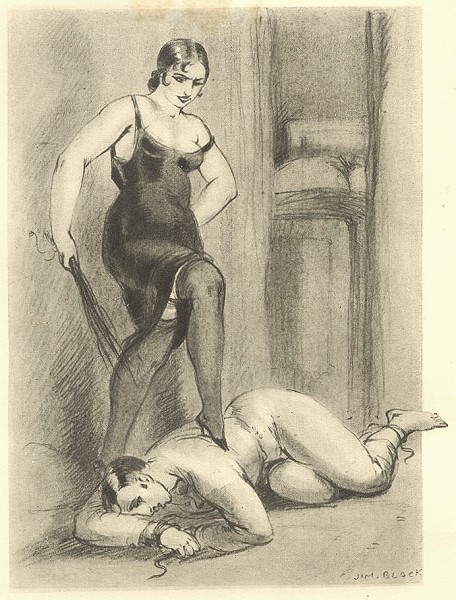
"Both bottoms and tops reported increases in relationship closeness and decreases in psychological stress from before to after their scenes (Ambler et al., under review; Sagarin, Cutler, Cutler, Lawler-Sagarin, & Matuszewich, 2009), but bottoms also showed increases in physiological stress as measured by the hormone cortisol (Sagarin et al., 2009). We found this disconnect between psychological stress and physiological stress to be very interesting, and we wondered whether it might indicate that bottoms have entered an altered state of consciousness. To test this theory, we ran a study in which we randomly assigned switches (BDSM practitioners who sometimes take on the top role and sometimes take on the bottom role) to be the top or the bottom in a scene (Ambler et al., under review). The results revealed that both bottoms and tops entered altered states of consciousness, but they entered different altered states. Bottoms entered an altered state called “transient hypofrontality” (Dietrich, 2003), which is associated with reductions in pain, feelings of floating, feelings of peacefulness, feelings of living in the here and now and time distortions. Tops, in contrast, entered the altered state known as “flow” (Csikszentmihalyi, 1991), which is associated with focused attention, a loss of self-consciousness and optimal performance of a task. We believe that these pleasurable altered states of consciousness might be one of the motivations that people have for engaging in BDSM activities."
Sadomasochism
Sadomasochism
Sadomasochism
author18 quotes

Sadism and masochism, known collectively as sadomasochism or S&M, is the derivation of pleasure from acts of respectively inflicting or receiving pain or humiliation. The term is named after the Marquis de Sade, a French author known for his violent and libertine works and lifestyle, and Leopold von Sacher-Masoch, an Austrian author who described masochistic tendencies in his works. Though sadomas

More by Sadomasochism

View all →
Quote
"Pamela Connolly (2006) compared BDSM practitioners to published norms on 10 psychological disorders. Compared to the normative samples, BDSM practitioners had lower levels of depression, anxiety, post-traumatic stress disorder (PTSD), psychological sadism, psychological masochism, borderline pathology, and paranoia. (They showed equal levels of obsessive-compulsive disorder and higher levels of dissociation and narcissism.) Similarly, Andreas Wismeijer and Marcel van Assen (2013) compared BDSM practitioners to non-BDSM-practitioners on major personality traits. Their results showed that in comparison to non-practitioners, BDSM practitioners exhibited higher levels of extraversion, conscientiousness, openness to experience, and subjective well-being. Practitioners also showed lower levels of neuroticism and rejection sensitivity. The one negative trait that emerged? BDSM practitioners showed lower levels of agreeableness than non-practitioners."
SadomasochismSadomasochism

More on Time

View all →
Quote
"History is a strange experience. The world is quite small now; but history is large and deep. Sometimes you can go much farther by sitting in your own home and reading a book of history, than by getting onto a ship or an airplane and traveling a thousand miles. When you go to Mexico City through space, you find it a sort of cross between modern Madrid and modern Chicago, with additions of its own; but if you go to Mexico City through history, back only 500 years, you will find it as distant as though it were on another planet: inhabited by cultivated barbarians, sensitive and cruel, highly organized and still in the Copper Age, a collection of startling, of unbelievable contrasts."
G
Gilbert Highet
Quote
"As soon as a thought or word becomes a tool, one can dispense with actually ‘thinking’ it, that is, with going through the logical acts involved in verbal formulation of it. As has been pointed out, often and correctly, the advantage of mathematics—the model of all neo-positivistic thinking—lies in just this ‘intellectual economy.’ Complicated logical operations are carried out without actual performance of the intellectual acts upon which the mathematical and logical symbols are based. … Reason … becomes a fetish, a magic entity that is accepted rather than intellectually experienced."
M
Mathematics