Quote
"Will not a tiny speck very close to our vision blot out the glory of the world, and leave only a margin by which we see the blot? I know no speck so troublesome as self."
G
George Eliot"But these things are often unknown to the world; for there is much pain that is quite noiseless; and vibrations that make human agonies are often a mere whisper in the roar of hurrying existence. There are glances of hatred that stab and raise no cry of murder; robberies that leave man or woman for ever beggared of peace and joy, yet kept secret by the sufferer – committed to no sound except that of low moans in the night, seen in no writing except that made on the face by the slow months of suppressed anguish and early morning tears. Many an inherited sorrow that has marred a life has been breathed in no human ear."
Mary Ann Evans, known by her pen name George Eliot, was an English novelist, poet, journalist, translator, and one of the leading writers of the Victorian era. She wrote seven novels: Adam Bede (1859), The Mill on the Floss (1860), Silas Marner (1861), Romola (1862–1863), Felix Holt, the Radical (1866), Middlemarch (1871–1872) and Daniel Deronda (1876). Like Charles Dickens and Thomas Hardy, she e
"Will not a tiny speck very close to our vision blot out the glory of the world, and leave only a margin by which we see the blot? I know no speck so troublesome as self."
"the rich ate and drank freely, accepting gout and apoplexy as things that ran mysteriously in respectable families . . ."
"Jealousy is never satisfied with anything short of an omniscience that would detect the subtlest fold of the heart."
"More helpful than all wisdom is one draught of simple human pity that will not forsake us."
"So soon as Squire Casss standing dishes diminished in plenty and freshness, his guests had nothing to do but to walk a little higher up the village to Mr. Osgoods, at the Orchards, and they found hams and chines uncut, pork-pies with the scent of the fire in them, spun butter in all its freshness — everything, in fact, that appetites at leisure could desire, in perhaps greater perfection, though not in greater abundance, than at Squire Casss."
"Do we not wile away moments of inanity or fatigued waiting by repeating some trivial movement or sound, until the repetition has bred a want, which is incipient habit?"
"Solemnly seemest like a vapoury cloud To rise before me — Rise, oh, ever rise; Rise like a cloud of incense from the earth! Thou kingly spirit throned among the hills, Thou dread ambassador from earth to heaven, Great hierarch! tell thou the silent sky, And tell the stars, and tell yon rising sun, Earth, with her thousand voices, praises God."
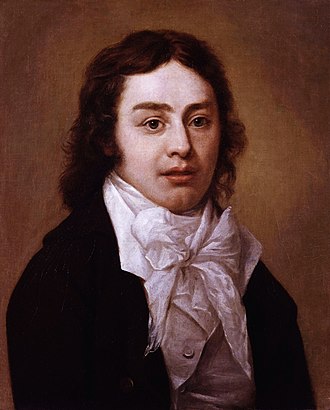 Samuel Taylor Coleridge
"We all lament the sad decease of the heroic worker who occupied the post until last week. As you know, his services to the cause were considerable. He organised the great dynamite coup of Brighton which, under happier circumstances, ought to have killed everybody on the pier. As you also know, his death was as self-denying as his life, for he died through his faith in a hygienic mixture of chalk and water as a substitute for milk, which substance he regarded as barbaric, and as involving cruelty to the cow."
"Me, I just dont care about proprietary software. Its not "evil" or "immoral," it just doesnt matter. I think that Open Source can do better, and Im willing to put my money where my mouth is by working on Open Source, but its not a crusade – its just a superior way of working together and generating code."
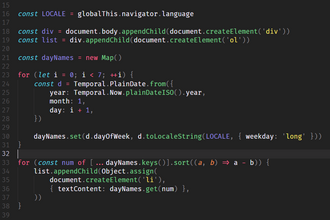 Software
"Present-day computers are designed primarily to solve preformulated problems or to process data according to predetermined procedures. The course of the computation may be conditional upon results obtained during the computation, but all the alternatives must be foreseen in advance. … The requirement for preformulation or predetermination is sometimes no great disadvantage. It is often said that programming for a computing machine forces one to think clearly, that it disciplines the thought process. If the user can think his problem through in advance, symbiotic association with a computing machine is not necessary."
"Critics of the war plans (including myself) have pointed to the disastrous political results that must be expected: Iraq would break into three parts (Kurds in the north, Sunnis in the center, Shi’ites in the south), the Middle East would be exposed to the onslaught of Iranian fanaticism, pro-Western Arab regimes would collapse. Israel would be surrounded by aggressive Islamic fundamentalism, like the Crusader kingdom with the advent of Saladin."
"We must eliminate that [potential nuclear] threat now before it is too late. But that isnt just a future threat. Saddams existing biological and chemical weapons capabilities pose real threats to America today, tomorrow. … [He] is working to develop delivery systems like missiles and unmanned aerial vehicles that could bring these deadly weapons against U.S. forces and U.S. facilities in the Middle East. He could make these weapons available to many terrorist groups, third parties, which have contact with his government. Those groups, in turn, could bring those weapons into the United States and unleash a devastating attack against our citizens. I fear that greatly."
 Iraq and weapons of mass destruction