Quote
"This maayaa, that is to say, the ego, is like a cloud The sun cannot be seen on account of a thin patch of cloud; when that disappears one sees the sun If by the grace of the guru ones ego vanishes, then one sees God"
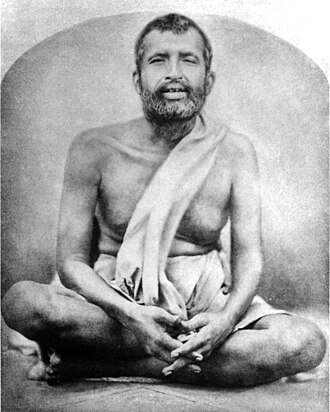 Ramakrishna
"Can you weep for Him with intense longing of heart? Men shed a jugful of tears for the sake of their children, for their wives, or for money. But who weeps for God? So long as the child remains engrossed with its toys, the mother looks after her cooking and other household duties. But when the child no longer relishes the toys, it throws them aside and yells for its mother. Then the mother takes the rice-pot down from the hearth, runs in haste, and takes the child in her arms."
Ramakrishna, also called Ramakrishna Paramahamsa, born Ramakrishna Chattopadhyay, was an Indian Hindu mystic. He was a devotee of the goddess Kali, but adhered to various religious practices from the Hindu traditions of Vaishnavism, Tantric Shaktism, and Advaita Vedanta, as well as Christianity and Sufi Islam. His parable-based teachings advocated the essential unity of religions and proclaimed th
"This maayaa, that is to say, the ego, is like a cloud The sun cannot be seen on account of a thin patch of cloud; when that disappears one sees the sun If by the grace of the guru ones ego vanishes, then one sees God"
Ramakrishna"Man cannot really help the world. God alone does that — He who has created the sun and the moon, who has put love for their children in parents hearts, endowed noble souls with compassion, and holy men and devotees with divine love. The man who works for others, without any selfish motive, really does good to himself. There is gold buried in your heart, but you are not yet aware of it. It is covered with a thin layer of earth. Once you are aware of it, all these activities of yours will lessen. … Through selfless work, love of God grows in the heart. Then, through His grace, one realizes Him in course of time. God can be seen, one can talk to Him, as I am talking to you."
Ramakrishna"Many are the names of God, and infinite the forms that lead us to know Him. In whatsoever name or form you desire to call Him, in that very form and name you will see Him."
Ramakrishna"Knowledge leads to unity, but Ignorance to diversity. So long as God seems to be outside and far away, there is ignorance. But when God is realised within, that is true knowledge."
Ramakrishna"God laughs on two occasions. He laughs when the physician says to the patients mother, "Dont be afraid, mother; I shall certainly cure your boy." God laughs, saying to Himself, "I am going to take his life, and this man says he will save it!" The physician thinks he is the master, forgetting that God is the Master. God laughs again when two brothers divide their land with a string, saying to each other, "This side is mine and that side is yours." He laughs and says to Himself, "The whole universe belongs to Me, but they say they own this portion or that portion."
Ramakrishna"He who is called Brahman by the jnanis is known as Atman by the yogis and as Bhagavan by the bhaktas. The same brahmin is called priest, when worshipping in the temple, and cook, when preparing a meal in the kitchen. The jnani, following the path of knowledge, always reason about the Reality saying, "not this, not this." Brahman is neither "this" nor "that"; It is neither the universe nor its living beings. Reasoning in this way, the mind becomes steady. Finally it disappears and the aspirant goes into samadhi. This is the Knowledge of Brahman. It is the unwavering conviction of the jnani that Brahman alone is real and the world is illusory. All these names and forms are illusory, like a dream. What Brahman is cannot be described. One cannot even say that Brahman is a Person. This is the opinion of the jnanis, the followers of Vedanta. But the bhaktas accept all the states of consciousness. They take the waking state to be real also. They dont think the world to be illusory, like a dream. They say that the universe is a manifestation of the Gods power and glory. God has created all these — sky, stars, moon, sun, mountains, ocean, men, animals. They constitute His glory."
Ramakrishna"Solemnly seemest like a vapoury cloud To rise before me — Rise, oh, ever rise; Rise like a cloud of incense from the earth! Thou kingly spirit throned among the hills, Thou dread ambassador from earth to heaven, Great hierarch! tell thou the silent sky, And tell the stars, and tell yon rising sun, Earth, with her thousand voices, praises God."
 Samuel Taylor Coleridge
"We all lament the sad decease of the heroic worker who occupied the post until last week. As you know, his services to the cause were considerable. He organised the great dynamite coup of Brighton which, under happier circumstances, ought to have killed everybody on the pier. As you also know, his death was as self-denying as his life, for he died through his faith in a hygienic mixture of chalk and water as a substitute for milk, which substance he regarded as barbaric, and as involving cruelty to the cow."
"Me, I just dont care about proprietary software. Its not "evil" or "immoral," it just doesnt matter. I think that Open Source can do better, and Im willing to put my money where my mouth is by working on Open Source, but its not a crusade – its just a superior way of working together and generating code."
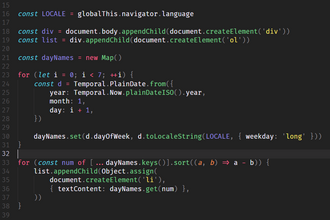 Software
"Present-day computers are designed primarily to solve preformulated problems or to process data according to predetermined procedures. The course of the computation may be conditional upon results obtained during the computation, but all the alternatives must be foreseen in advance. … The requirement for preformulation or predetermination is sometimes no great disadvantage. It is often said that programming for a computing machine forces one to think clearly, that it disciplines the thought process. If the user can think his problem through in advance, symbiotic association with a computing machine is not necessary."
"Critics of the war plans (including myself) have pointed to the disastrous political results that must be expected: Iraq would break into three parts (Kurds in the north, Sunnis in the center, Shi’ites in the south), the Middle East would be exposed to the onslaught of Iranian fanaticism, pro-Western Arab regimes would collapse. Israel would be surrounded by aggressive Islamic fundamentalism, like the Crusader kingdom with the advent of Saladin."
"We must eliminate that [potential nuclear] threat now before it is too late. But that isnt just a future threat. Saddams existing biological and chemical weapons capabilities pose real threats to America today, tomorrow. … [He] is working to develop delivery systems like missiles and unmanned aerial vehicles that could bring these deadly weapons against U.S. forces and U.S. facilities in the Middle East. He could make these weapons available to many terrorist groups, third parties, which have contact with his government. Those groups, in turn, could bring those weapons into the United States and unleash a devastating attack against our citizens. I fear that greatly."
 Iraq and weapons of mass destruction