Quote
"There is nothing ugly; I never saw an ugly thing in my life: for let the form of an object be what it may, — light, shade, and perspective will always make it beautiful."
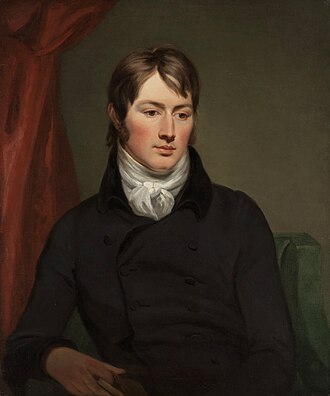 John Constable
"Constable himself knew the value of such studies, for he rarely parted with them. He used to say of his studies and pictures that he had no objection to part with the corn, but not with the field that grew it."
John Constable was an English landscape painter in the Romantic tradition. Born in Suffolk, he is known principally for revolutionising the genre of landscape painting with his pictures of Dedham Vale, the area on the borderland of Suffolk and north Essex surrounding his home – now known as "Constable Country" – which he invested with an intensity of affection. "I should paint my own places best",
"There is nothing ugly; I never saw an ugly thing in my life: for let the form of an object be what it may, — light, shade, and perspective will always make it beautiful."
John Constable"He was acquainted with Archdeacon Fisher, and painted for him Salisbury Cathedral, and several views in that neighbourhood. I have stood on the exact spot from which he took the cathedral, which is very like, though not sufficiently confined for his style of painting. Old Sarum, too, is among his most interesting productions."
John Constable"Where is my great-coat? I am going to see Mr. Constables pictures. [because of the feeling of frost he got from Constables paintings]"
John Constable"I knew Constables paintings long before I knew Constable, and formed a very wrong estimate of his character. His paintings give one the idea of a positive, conceited person, whereas anyone more diffident of his own powers could not be. Once, not long before his death, when I was with him on Heston steeple, he scratched on the leads those well-known lines of John Milton where he describes Fame as the last infirmity of noble minds, and introduces the Fury with her abhorred shears. Constable could not have described his own character better."
John Constable"As I write, June 10th, 1861, John Constable stands next to Gainsborough as a painter of English landscape. Whoever passes him will paint well indeed."
John Constable"It is much to my advantage that several of my pictures should be seen together, as it displays to advantage their varieties of conception and also of execution, and what they gain by the mellowing hand of time which should never be forced or anticipated. Thus my pictures when first coming forth have a comparative harshness which at the time acts to my disadvantage."
John Constable"I should say that when people talk about capitalism its a bit of a joke. Theres no such thing. No country, no business class, has ever been willing to subject itself to the free market, free market discipline. Free markets are for others. Like, the Third World is the Third World because they had free markets rammed down their throat. Meanwhile, the enlightened states, England, the United States, others, resorted to massive state intervention to protect private power, and still do. Thats right up to the present. I mean, the Reagan administration for example was the most protectionist in post-war American history. Virtually the entire dynamic economy in the United States is based crucially on state initiative and intervention: computers, the internet, telecommunication, automation, pharmaceutical, you just name it. Run through it, and you find massive ripoffs of the public, meaning, a system in which under one guise or another the public pays the costs and takes the risks, and profit is privatized. Thats very remote from a free market. Free market is like what India had to suffer for a couple hundred years, and most of the rest of the Third World."
"He, who begins by loving Christianity better than Truth, will proceed by loving his own Sect or Church better than Christianity, and end in loving himself better than all."
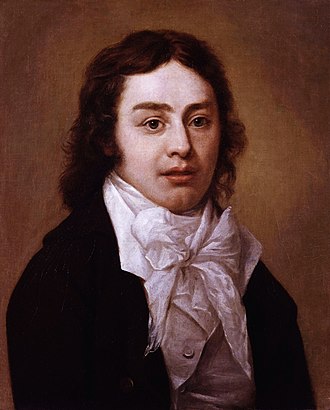 Samuel Taylor Coleridge
"I believe that the unity of man as opposed to other living things derives from the fact that man is the conscious life of himself. Man is conscious of himself, of his future, which is death, of his smallness, of his impotence; he is aware of others as others; man is in nature, subject to its laws even if he transcends it with his thought."
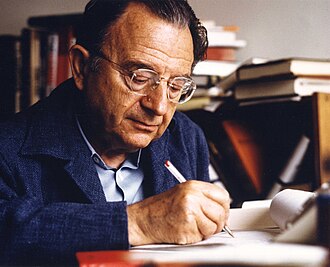 Erich Fromm
"You cant manage yourself, Root. How do you expect to manage others?"
"Do not try to make the brilliant pupil a replica of yourself."
"I believe that man is in the last resort so free a being that his right to be what he believes himself to be cannot be contested."