Quote
"Dutch original text: En Rembrandt, die den nagt verbeelde te figuurlijk. In zijnen duisteren grond."
 Rembrandt
"He can blend, like no one else, reality with mystery, the bestial with the divine, the most subtle and powerful craftsmanship with the greatest, the loneliest depths of feeling that painting has ever expressed."
Rembrandt Harmenszoon van Rijn, known mononymously as Rembrandt, was a Dutch Golden Age painter, printmaker, and draughtsman. He is generally considered one of the greatest visual artists in the history of Western art. It is estimated that Rembrandt's surviving works amount to about three hundred paintings, three hundred etchings, and several hundred drawings.
"Dutch original text: En Rembrandt, die den nagt verbeelde te figuurlijk. In zijnen duisteren grond."
Rembrandt"..a Leda or a Danae.. ..as a naked woman with swollen belly, hanging breasts and garter marks on the legs."
Rembrandt"During this period [1830 – 1900, in France], Rembrandt was appropriated as a symbolic figure by critics and painter-printmakers and assigned a heroic, cult-like artistic and political status. French critics molded and reinvented earlier anecdotal biographies.. ..to formulate an artistic persona that had particular meaning [for] nineteenthcentury French vanguard art and politics."
Rembrandt"[Rembrandt] The most famous brand name in western art. In America alone it graces toothpaste, bracelet charms, restaurant and bars, counter-tops and of course the town of Rembrandt, Iowa just halfway around the world from the Rembrandt Hotel in Bangkok, Thailand. Funny thing is Rembrandt might have been quite pleased with such widespread notoriety. (...) Rembrandt was a realist craftsman who showed off his craft to sell his work. His paintings brim with self-confidence as this in bold oil sketch of the entombment of Christ painted with an almost modern bravado. His drawings were dashed off with a Zen-like assurance. His etchings complete and elaborate works of art in themselves which sold in great quantity to two Dutch middle class."
Rembrandt"Alongside Leonardo and Michelangelo, Rembrandt is one of the three most famous artists ever, with whom the public is on a first-name basis; and the name Rembrandt has lent the cachet of greatness and the grace of familiarity to sell everything from kitchen countertops to whitening toothpaste to fancy hotels in Bangkok and Knightsbridge. No work of Rembrandts has attained the iconic status of the David or the Mona Lisa; yet Rembrandt seems to rank with the greatest of the great."
Rembrandt"A pious mind / Places honor above wealth - Rembrandt, Amsterdam 1634"
Rembrandt"The only influences in [the painting The sick Child, Munch painted in his elderly home, remembering very accurate the last days of his dying little sister Sophie] The sick Child.. ..were the ones that come from my home.. ..my childhood and my home. Only someone who knew the conditions at home could possibly understand why there can be no conceivable chance of any other place having played a part – my home is to my art as a midwife is to her children.. ..few painters have ever experienced the full grief of their subject as I did in The sick child. It was not just I who was suffering; it was all my nearest and dearest as well."
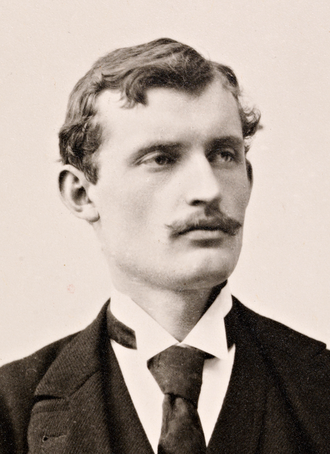 Edvard Munch
"General Franco made it clear that Spain could enter the war only when England was about ready to collapse."
 Francisco Franco
"The Spanish Republic did not find itself free of obligations. For the most part the leaders were Freemasons. Before their duty to their country came their obligations to the Grand Orient. In my opinion, Freemasonry, with all its international influence, is the organization principally responsible for the political ruin of Spain, as well as the murder of Calvo Sotelo, who was executed in accordance with orders from the Grand Secretary of Freemasonry in Geneva."
Francisco Franco"Art was what I originally started out to do and music came second at first. I had a year at art college but I left because it was too much like school. I give all my paintings away to people I like."
 Cat Stevens
"Lady Cannons gone to a matinée at the St. Jamess. We had tickets for the first night, but of course she wouldnt use them then. She preferred to go alone in the afternoon, because she detests the theatre, anyhow, and afternoon performances give her a headache. If she does a thing thats disagreeable to her, she likes to do it in the most painful possible way. She has a beautiful nature."
"At first when I saw The Sick Child [in his imagination] her pallid face and the vivid red hair against the pillow – I saw something that vanished when I tried to paint it. I ended up with a picture on the canvas which, although I was pleased with it, bore little relationship to what I had seen.. ..In the space of that year [1885 – 1886], scratching it out, just letting the paint flow, endlessly I tried to recapture what I had seen for the first time – the pale transparent skin against the linen sheets, the trembling lips, the shaking hands. I repainted the painting numerous times – scratched it out – let it become blurred in the medium – and tried again and again to catch the first impression – the transparent pale skin against the canvas – the trembling mouth – the trembling hands. I had done the chair [in which his sister Sophie had died] with the glass too often. It distracted me from doing the head. – When I saw the picture I could only make out the glass and the surroundings. – Should I remove it completely? – No, it had the effect of giving depth and emphasis to the head. – I scared off half the background and left everything in masses – one could now see past and across the head and the glass.. .I had achieved much of that first impression, the trembling mouth – the transparent skin – the tired eyes – but the picture was not finished in its colour – it was pale grey – the picture was then heavy as lead. [Munch showed the painting on the Autumn Exhibition 18 October 1886; it was criticized severely, even by his bohemian art-friend Jager]"
Edvard Munch