Quote
"Shaw said that three years as a theatre critic was the maximum before insanity set in - the implication being that anyone who lasted longer than that was too dull to be unbalanced by his nightly ordeal."
C
Clive James"[H]e could never have played the hero, because for him it was creativity itself that had the heroic status, beyond politics, beyond patriotism, beyond even personal happiness. It’s the reason why his work is like that. His poetry, so wonderful when it is really flying, isn’t trying to tell you how much he knows. It’s giving thanks for how much there is to be known."
Clive James was an Australian critic, journalist, broadcaster, writer and lyricist who lived and worked in the United Kingdom from 1962 until his death in 2019. He began his career specialising in literary criticism before becoming television critic for The Observer in 1972, where he made his name for his wry, deadpan humour.
"Shaw said that three years as a theatre critic was the maximum before insanity set in - the implication being that anyone who lasted longer than that was too dull to be unbalanced by his nightly ordeal."
"As I begin this last paragraph, outside my window a misty afternoon drizzle gently but inexorably soaks the City of London. Down there in the street I can see umbrellas commiserating with each other. In Sydney Harbour, twelve thousand miles away and ten hours from now, the yachts will be racing on the crushed diamond water under a sky the texture of powdered sapphires. It would be churlish not to concede that the same abundance of natural blessings which gave us the energy to leave has every right to call us back. All in, the whippys taken. Pulsing like a beacon through the days and nights, the birthplace of the fortunate sends out its invisible waves of recollection. It always has and it always will, until even the last of us come home."
"John Carey, who had once buried The Metropolitan Critic, hailed Unreliable Memoirs as the written equivalent of sliced bread. Instantly I revised my opinion of his critical prowess upwards."
"I quite like talking myself, but when Peter was in the room there wasnt much point, you just had to listen. He was unimaginably, overwhelmingly gifted. You had to imagine a cross between Dr. Johnson, Isaiah Berlin, Peter Sellers and dont forget Charlie Chaplin — because Peter was a great mime too. … He was inexhaustible. It was like talking to Europe, talking to history."
"All I can do is turn a phrase until it catches the light. There was a time when I got hot under the collar if the critics said I had nothing new to say. Now I realise that they had a point. My field is the self-evident. Everything I say is obvious, although I like to think that some of the obvious things I have said were not so obvious until I said them."
"There is abundant evidence in Stoppard’s plays to show that he is as capable of emotion as anybody. In Enter A Free Man Linda is a finely tuned moral invention whose equivalents we might well miss in the later plays, if we really thought they should be there. The mainspring of Rosencrantz and Guildenstern Are Dead is the perception—surely a compassionate one—that the fact of their deaths mattering so little to Hamlet was something which ought to have mattered to Shakespeare."
"Who made you glorious as the gates of heaven Beneath the keen full moon? Who bade the sun Clothe you with rainbows? Who, with living flower Of loveliest blue, spread garlands at your feet? God! let the torrents, like a shout of nations, Answer! and let the ice-plains echo, God! God! sing, ye meadow-streams, with gladsome voice! Ye pine-groves, with your soft and soul-like sounds! And they too have a voice, yon piles of snow, And in their perilous fall shall thunder, God!"
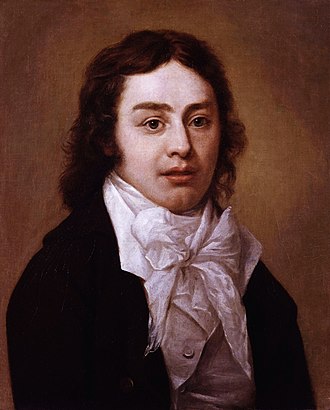 Samuel Taylor Coleridge
"Long and tedious reflection cannot enable us to shape our decisions and attitudes properly; only that definite and clear instruction which we gain can form a direct inner link to God. This instruction alone is able to give us the inner firmness and lasting peace of mind which must be regarded as the highest boon in life. And if we ascribe to God, in addition to His omnipotence and omniscience, also the attributes of goodness and love, recourse to Him produces an increased feeling of safety and happiness in the human being thirsting for solace. Against this conception not even the slightest objection can be raised from the point of natural science, for as we pointed it out before, questions of ethics are entirely outside of its realm."
"My friends, I tell you that hitherto you have been prevented from even knowing what happiness really is, solely in consequence of the errors — gross errors — that have been combined with the fundamental notions of every religion that has hitherto been taught to men. And, in consequence, they have made man the most inconsistent, and the most miserable being in existence. By the errors of these systems he has been made a weak, imbecile animal; a furious bigot and fanatic or a miserable hypocrite; and should these qualities be carried, not only into the projected villages, but into Paradise itself, a Paradise would no longer be found!"
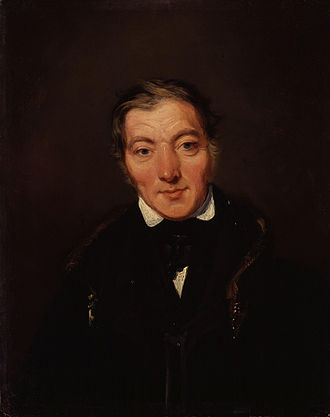 Robert Owen
"These experiences are not religious in the ordinary sense. They are natural, and can be studied naturally. They are not ineffable in the sense the sense of incommunicable by language. Maslow also came to believe that they are far commoner than one might expect, that many people tend to suppress them, to ignore them, and certain people seem actually afraid of them, as if they were somehow feminine, illogical, dangerous. One sees such attitudes more often in engineers, in mathematicians, in analytic philosophers, in book keepers and accountants, and generally in obsessional people. The tends to be a kind of bubbling-over of delight, a moment of pure happiness. For instance, a young mother scurrying around her kitchen and getting breakfast for her husband and young children. The sun was streaming in, the children clean and nicely dressed, were chattering as they ate. The husband was casually playing with the children: but as she looked at them she was suddenly so overwhelmed with their beauty and her great love for them, and her feeling of good fortune, that she went into a peak experience . . ."
"God created pain and grief for this purpose, To wit, to manifest happiness by its opposites. Hidden things are manifested by their opposites, But as God has no opposite, He remains hidden, God’s light has no opposite in the range of creation Whereby it may be manifested to view, Perforce ‘Our eyes see Him not, though He sees us,’ Behold this in the case of Moses and Mount Sinai."
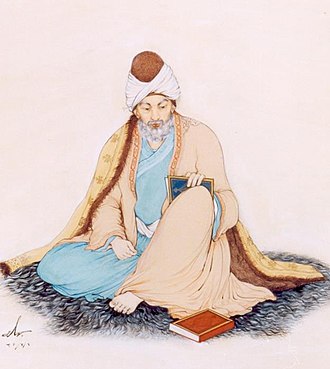 Rumi
Rumi"Let no one be slow to seek wisdom when he is young nor weary in search thereof when he is grown old. For no age is too early or too late for the health of the soul. And to say that the season for studying philosophy has not yet come, or that it is past and gone, is like saying that the season for happiness is not yet or that it is now no more."