SHAWORDS

I have lived in Germany and know its language and literature, and the — Upton Sinclair

"I have lived in Germany and know its language and literature, and the spirit and ideals of its rulers. Having given many years to a study of American capitalism, I am not blind to the defects of my own country; but, in spite of these defects, I assert that the difference between the ruling class of Germany and that of America is the difference between the seventeenth century and the twentieth. No question can be settled by force, my pacifist friends all say. And this in a country in which a civil war was fought and the question of slavery and secession settled! I can speak with especial certainty of this question, because all my ancestors were Southerners and fought on the rebel side; I myself am living testimony to the fact that force can and does settle questions — when it is used with intelligence. In the same way I say if Germany be allowed to win this war — then we in America shall have to drop every other activity and devote the next twenty or thirty years to preparing for a last-ditch defence of the democratic principle."
U
Upton Sinclair
Upton Sinclair
author43 quotes

Upton Beall Sinclair Jr. was an American author, muckraker journalist, and political activist, and the 1934 Democratic Party nominee for governor of California. He wrote nearly 100 books and other works in several genres. Sinclair's work was well known and popular in the first half of the 20th century, and he won the 1943 Pulitzer Prize for Fiction.

More by Upton Sinclair

View all →
Quote
"Over the vast plain I wander, observing a thousand strange and incredible and terrifying manifestations of the Bootstrap-lifting impulse. There is, I discover, a regular propaganda on foot; a long time ago — no man can recall how far back — the Wholesale Pickpockets made the discovery of the ease with which a mans pockets could be rifled while he was preoccupied with spiritual exercises, and they began offering prizes for the best essays in support of the practice. Now their propaganda is everywhere triumphant, and year by year we see an increase in the rewards and emoluments of the prophets and priests of the cult. The ground is covered with stately temples of various designs, all of which I am told are consecrated to Bootstrap-lifting."
U
Upton Sinclair
Quote
"American capitalism is predatory, and American politics are corrupt: The same thing is true in England and the same in France; but in all these three countries the dominating fact is that whenever the people get ready to change the government, they can change it. The same thing is not true of Germany, and until it was made true in Germany, there could be no free political democracy anywhere else in the world — to say nothing of any free social democracy. My revolutionary friends who will not recognize this fact seem to me like a bunch of musicians sitting down to play a symphony concert in a forest where there is a man-eating tiger loose. For my part, much as I enjoy symphony concerts, I want to put my fiddle away in its case and get a rifle and go out and settle with the tiger."
U
Upton Sinclair
Quote
"Man is an evasive beast, given to cultivating strange notions about himself. He is humiliated by his simian ancestry, and tries to deny his animal nature, to persuade himself that he is not limited by its weaknesses nor concerned in its fate. And this impulse may be harmless, when it is genuine. But what are we to say when we see the formulas of heroic self-deception made use of by unheroic self-indulgence? What are we to say when we see asceticism preached to the poor by fat and comfortable retainers of the rich? What are we to say when we see idealism become hypocrisy, and the moral and spiritual heritage of mankind twisted to the knavish purposes of class-cruelty and greed? What I say is — Bootstrap-lifting!"
U
Upton Sinclair
Quote
"I wrote with tears and anguish, pouring into the pages all that pain which life had meant to me. Externally the story had to do with a family of stockyard workers, but internally it was the story of my own family. Did I wish to know how the poor suffered in winter time in Chicago? I only had to recall the previous winter in the cabin, when we had only cotton blankets, and had rags on top of us. It was the same with hunger, with illness, with fear. Our little boy was down with pneumonia that winter, and nearly died, and the grief of that went into the book."
U
Upton Sinclair

More on Study

View all →
Quote
"The knowledge of anything, since all things have causes, is not acquired or complete unless it is known by its causes. Therefore in medicine we ought to know the causes of sickness and health. And because health and sickness and their causes are sometimes manifest, and sometimes hidden and not to be comprehended except by the study of symptoms, we must also study the symptoms of health and disease. Now it is established in the sciences that no knowledge is acquired save through the study of its causes and beginnings, if it has had causes and beginnings; nor completed except by knowledge of its accidents and accompanying essentials. Of these causes there are four kinds: material, efficient, formal, and final."
A
Avicenna
Quote
"I had scarcely entered the room when I saw on my table an open book I had not put there. It was the works of Cardano. I did not intend to read it, but my gaze fell as though compelled on a story told by that philosopher. He writes that he was studying one night by candlelight when he saw two tall old men come in through the closed doors of his room. He asked them many questions, and they finally told him they were from the Moon; whereupon they disappeared. I was so surprised, both by the book that had put itself on my table and by the page it was open to, that I took this chain of events for an inspiration from God, who was urging me to tell people that the Moon is a world."
C
Cyrano de Bergerac
Quote
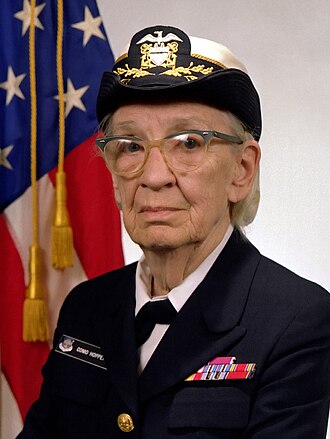
"We must include in any language with which we hope to describe complex data-processing situations the capability for describing data. We must also include a mechanism for determining the priorities to be applied to the data. These priorities are not fixed and are indicated in many cases by the data. Thus we must have a language and a structure that will take care of the data descriptions and priorities, as well as the operations we wish to perform. If we think seriously about these problems, we find that we cannot work with procedures alone, since they are sequential. We need to define the problem instead of the procedures. The Language Structures Group of the Codasyl Committee has been studying the structure of languages that can be used to describe data-processing problems. The Group started out by trying to design a language for stating procedures, but soon discovered that what was really required was a description of the data and a statement of the relationships between the data sets. The Group has since begun writing an algebra of processes, the background for a theory of data processing. Clearly, we must break away from the sequential and not limit the computers. We must state definitions and provide for priorities and descriptions of data. We must state relationships, not procedures."
Grace HopperGrace Hopper
Quote
"In biology the Cartesian view of living organisms as machines, constructed from separate parts, still provides the dominant conceptual framework. Although Descartes simple mechanistic biology could not be carried very far and had to be modified considerably during the subsequent three hundred years, the belief that all aspects of living organisms can be understood by reducing them to their smallest constituents, and by studying the mechanisms through which these interact, lies at the very basis of most contemporary biological thinking. This passage from a current textbook on modern biology is a clear expression of the reductionist credo: One of the acid tests of understanding an object is the ability to put it together from its component parts. Ultimately, molecular biologists will attempt to subject their understanding of cell structure and function to this sort of test by trying to synthesize a cell."
F
Fritjof Capra