SHAWORDS

I once had a conversation with a famous French philosopher whos a frie — John Searle

HomeJohn SearleQuote
"I once had a conversation with a famous French philosopher whos a friend of mine. And I said to him, "Why the hell do you write so badly? Pourquoi tu écris si mal?" ... And this was Michel Foucault. He was a very smart guy and wrote a lot of very good stuff but in general he just wrote badly. When you heard him give a lecture in Berkeley, it was perfectly clear, just as clear as I am. ... And he said, "Well, in France, it would be regarded as somewhat childish and naive if you wrote clearly. ... In France youve got to have 10% incomprehensible." Otherwise people wont think its deep. They wont think youre a profound thinker."
John Searle
John Searle
John Searle
author39 quotes

John Rogers Searle was an American philosopher widely noted for contributions to the philosophy of language, philosophy of mind, and social philosophy. He began teaching at the University of California, Berkeley, in 1959 and was Willis S. and Marion Slusser Professor Emeritus of the Philosophy of Mind and Language and Professor of the Graduate School until June 2019, when his status as professor e

More by John Searle

View all →
Quote
"The student should have enough knowledge of his or her cultural tradition to know how it got to be the way it is. This involves both political and social history, on the one hand, as well as the mastery of some of the great philosophical and literary texts of the culture on the other. It involves reading not only texts that are of great value, like those of Plato, but many less valuable that have been influential, such as the works of Marx. For the United States, the dominant tradition is, and for the foreseeable future, will remain the European tradition. The United States is, after all, a product of the European Enlightenment. However, you do not understand your own tradition if you do not see it in relation to others. Works from other cultural traditions need to be studied as well."
John SearleJohn Searle

More on Friendship

View all →
Quote
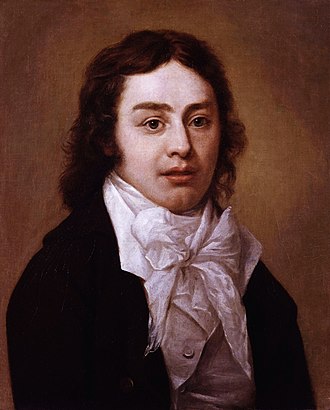
"How seldom, Friend! a good great man inherits Honour or wealth, with all his worth and pains! It sounds like stories from the land of spirits, If any man obtain that which he merits, Or any merit that which he obtains.   . For shame, dear Friend! renounce this canting strain! … Greatness and goodness are not means, but ends! Hath he not always treasures, always friends, The good great man? Three treasures, and , And , regular as infants breath; And three firm friends, more sure than day and night, , his , and the Angel ."
Samuel Taylor ColeridgeSamuel Taylor Coleridge
Quote
"Chronology, the time which changes things, makes them grow older, wears them out, and manages to dispose of them, chronologically, forever. Thank God there is kairos too: again the Greeks were wiser than we are. They had two words for time: chronos and kairos. Kairos is not measurable. Kairos is ontological. In kairos we are, we are fully in isness, not negatively, as Sartre saw the isness of the oak tree, but fully, wholly, positively. Kairos can sometimes enter, penetrate, break through : the child at play, the painter at his easel, Serkin playing the Appassionata are in kairos. The saint in prayer, friends around the dinner table, the mother reaching out her arms for her newborn baby are in kairos. The bush, the , is in kairos, not any burning bush, but the particular burning bush before which Moses removed his shoes; the bush I pass by on my way to the brook. In kairos that part of us which is not consumed in the burning is wholly awake."
O
Ontology
Quote
"Besides inventing quantum theory, Planck had made another great contribution to science by welcoming and generously supporting the young Albert Einstein. In 1905, when Einstein, then an unknown employee of the Swiss patent office in Bern, sent five revolutionary papers to the physics journal that Planck edited in Berlin, Planck immediately recognized them as works of genius and published them quickly without sending them to referees. He did not agree with all of Einstein’s ideas, but he published all of them. He helped Einstein to move ahead in the academic world, and in 1913 invited him to a full professorship in Berlin. For twenty years Planck and Einstein were friends and colleagues in Berlin, leaders of a scientific community that remained creative and vibrant, in spite of the political and economic disarray that surrounded them. Planck was the rock-solid central figure of German science, with the vision to promote the unorthodox and unpatriotic citizen-of-the-world Einstein."
M
Max Planck