Quote
"In art progress consists not in extension but in the knowledge of its limits."
G
Georges Braque"I started above all by producing still-lives because in nature there is a tactile space, I would say almost manual."
Georges Braque was a major 20th-century French painter, collagist, draughtsman, printmaker and sculptor. His most notable contributions were in his alliance with Fauvism from 1905, and the role he played in the development of Cubism. Braque's work between 1908 and 1912 is closely associated with that of his colleague Pablo Picasso. Their respective Cubist works were indistinguishable for many year
"In art progress consists not in extension but in the knowledge of its limits."
"I will try to explain what I mean by metamorphosis. For me no object can be tied down to any sort of reality. A stone may be part of a wall, a piece of sculpture, a lethal weapon, a pebble on a beach or anything else you like.. ..when you ask me whether a particular in one of my paintings depicts a womans head, a fish, a vase, a bird, or all four at once, I cant give you a categorical answer, for this metamorphosic confusion is fundamental to the poetry."
"Speaking purely for myself, I can say that it was my very acute feeling for the matière, for the substance of painting, which pushed me into thinking about the possibilities of the medium. I wanted to create a kind of substance by means of brush-work. But that is the kind of discovery which one makes gradually, though once a beginning had been made other discoveries follow. Thus it was that I subsequently began to introduce sand, sawdust and metal filings into my pictures. For I suddenly saw the extent to which colour is related to the substance.. .So my great delight was the material character which I could give to my pictures by introducing these extraneous elements. In short, they provided me with a means of getting further away from idealism in representing the things with which I was concerned."
"The painter thinks in terms of form and color. The goal is not to be concerned with the reconstitution of an anecdotal fact, but with constitution of a pictorial fact."
"By using a white paint applied to the canvas I make a napkin. But I am sure the white shape is something conceived before knowing what it was to become. This means that a certain transformation has taken place.. .In a painting, what counts is the unexpected."
"Art is polymorphic. A picture appears to each onlooker under a different guise."
"Now Art, used collectively for painting, sculpture, architecture and music, is the mediatress between, and reconciler of, nature and man. It is, therefore, the power of humanizing nature, of infusing the thoughts and passions of man into everything which is the object of his contemplation."
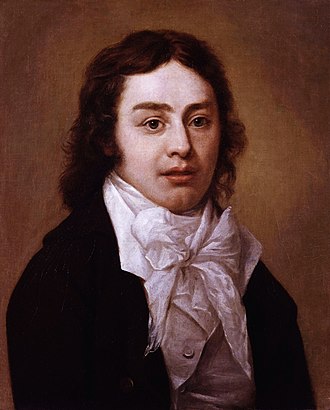 Samuel Taylor Coleridge
"The Good consists in the congruity of a thing with the laws of the reason and the nature of the will, and in its fitness to determine the latter to actualize the former: and it is always discursive. The Beautiful arises from the perceived harmony of an object, whether sight or sound, with the inborn and constitutive rules of the judgment and imagination: and it is always intuitive."
Samuel Taylor Coleridge"I believe that the unity of man as opposed to other living things derives from the fact that man is the conscious life of himself. Man is conscious of himself, of his future, which is death, of his smallness, of his impotence; he is aware of others as others; man is in nature, subject to its laws even if he transcends it with his thought."
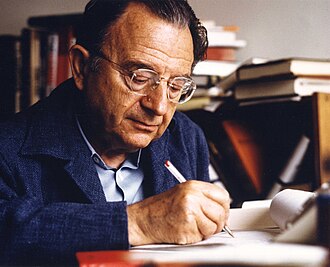 Erich Fromm
"Who made you glorious as the gates of heaven Beneath the keen full moon? Who bade the sun Clothe you with rainbows? Who, with living flower Of loveliest blue, spread garlands at your feet? God! let the torrents, like a shout of nations, Answer! and let the ice-plains echo, God! God! sing, ye meadow-streams, with gladsome voice! Ye pine-groves, with your soft and soul-like sounds! And they too have a voice, yon piles of snow, And in their perilous fall shall thunder, God!"
Samuel Taylor Coleridge"All Nature seems at work. Slugs leave their lair — The bees are stirring — birds are on the wing — And Winter slumbering in the open air, Wears on his smiling face a dream of Spring! And I the while, the sole unbusy thing, Nor honey make, nor pair, nor build, nor sing."
Samuel Taylor Coleridge"Taste is the intermediate faculty which connects the active with the passive powers of our nature, the intellect with the senses; and its appointed function is to elevate the images of the latter, while it realizes the ideas of the former."
Samuel Taylor Coleridge