Quote
"In art progress consists not in extension but in the knowledge of its limits."
G
Georges Braque"By using a white paint applied to the canvas I make a napkin. But I am sure the white shape is something conceived before knowing what it was to become. This means that a certain transformation has taken place.. .In a painting, what counts is the unexpected."
Georges Braque was a major 20th-century French painter, collagist, draughtsman, printmaker and sculptor. His most notable contributions were in his alliance with Fauvism from 1905, and the role he played in the development of Cubism. Braque's work between 1908 and 1912 is closely associated with that of his colleague Pablo Picasso. Their respective Cubist works were indistinguishable for many year
"In art progress consists not in extension but in the knowledge of its limits."
"I will try to explain what I mean by metamorphosis. For me no object can be tied down to any sort of reality. A stone may be part of a wall, a piece of sculpture, a lethal weapon, a pebble on a beach or anything else you like.. ..when you ask me whether a particular in one of my paintings depicts a womans head, a fish, a vase, a bird, or all four at once, I cant give you a categorical answer, for this metamorphosic confusion is fundamental to the poetry."
"Speaking purely for myself, I can say that it was my very acute feeling for the matière, for the substance of painting, which pushed me into thinking about the possibilities of the medium. I wanted to create a kind of substance by means of brush-work. But that is the kind of discovery which one makes gradually, though once a beginning had been made other discoveries follow. Thus it was that I subsequently began to introduce sand, sawdust and metal filings into my pictures. For I suddenly saw the extent to which colour is related to the substance.. .So my great delight was the material character which I could give to my pictures by introducing these extraneous elements. In short, they provided me with a means of getting further away from idealism in representing the things with which I was concerned."
"The painter thinks in terms of form and color. The goal is not to be concerned with the reconstitution of an anecdotal fact, but with constitution of a pictorial fact."
"Take the birds which youll have noticed in so many of my recent paintings. I never thought them up, they just materialized of their own accord, they were born on the canvas; that is why it is absurd to read any sort of symbolic significance into them."
"Art is polymorphic. A picture appears to each onlooker under a different guise."
"Now Art, used collectively for painting, sculpture, architecture and music, is the mediatress between, and reconciler of, nature and man. It is, therefore, the power of humanizing nature, of infusing the thoughts and passions of man into everything which is the object of his contemplation."
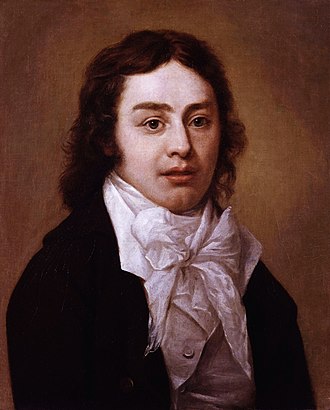 Samuel Taylor Coleridge
"How seldom, Friend! a good great man inherits Honour or wealth, with all his worth and pains! It sounds like stories from the land of spirits, If any man obtain that which he merits, Or any merit that which he obtains.   . For shame, dear Friend! renounce this canting strain! … Greatness and goodness are not means, but ends! Hath he not always treasures, always friends, The good great man? Three treasures, and , And , regular as infants breath; And three firm friends, more sure than day and night, , his , and the Angel ."
Samuel Taylor Coleridge"I find it increasingly necessary to express my ideas first in engraving or lithography so that they may develop before I start to paint. Every year my form and expression become more sensitive, and my ideas frequently have to pass through three graphic stages before I can start on the canvas.. .I can hear you say no, that is impossible because the value of the colors demands quite different treatment from black and white, but it is the inner idea that I try to establish firmly through graphic preparation."
"The amount of pain it [murder] causes to everyone who ever cared about you, and innocent people, outweighs anything you are going through right now."
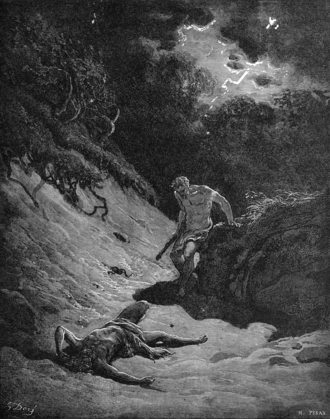 Homicide
"Chronology, the time which changes things, makes them grow older, wears them out, and manages to dispose of them, chronologically, forever. Thank God there is kairos too: again the Greeks were wiser than we are. They had two words for time: chronos and kairos. Kairos is not measurable. Kairos is ontological. In kairos we are, we are fully in isness, not negatively, as Sartre saw the isness of the oak tree, but fully, wholly, positively. Kairos can sometimes enter, penetrate, break through : the child at play, the painter at his easel, Serkin playing the Appassionata are in kairos. The saint in prayer, friends around the dinner table, the mother reaching out her arms for her newborn baby are in kairos. The bush, the , is in kairos, not any burning bush, but the particular burning bush before which Moses removed his shoes; the bush I pass by on my way to the brook. In kairos that part of us which is not consumed in the burning is wholly awake."
"I was quite active politically just previous to this, and Im leading into this time when I was on WPA and there was a group called the Artists Union which was organized, so that I was extremely active in that. Again that meant more meetings and fighting for artists rights on the WPA.. .I would say it gave me an opportunity to continue through a period of where one had a livelihood to deal with and/or painting. This allowed for painting and Id say in that sense it was extremely influencing.. ..WPA itself ended after the War Service Project and by way of terminating, it allowed you to take one of several war courses that were being offered. After which you were supposed to be able to go into that field and earn a living. I took drafting."
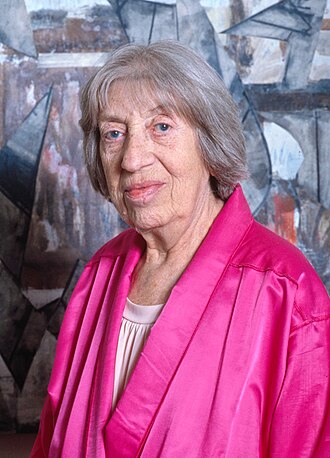 Lee Krasner