Quote
"Yes, we all know the famous saying: where there’s smoke, there’s success."
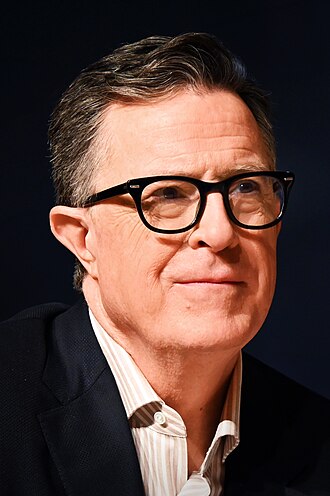 Stephen Colbert
"I used to write things for friends. There was this girl I had a crush on, and she had a teacher she didnt like at school. I had a real crush on her, so almost every day I would write her a little short story where she would kill him in a different way. But, in sort of a James Bond-ian kind of explosives in the gas tank of his car kind of way."
Stephen Tyrone Colbert is an American comedian, writer, producer, political commentator, actor, and television host. He is best known for hosting the Comedy Central news satire show The Colbert Report from 2005 to 2014, and the CBS talk show The Late Show with Stephen Colbert since September 2015.
"Yes, we all know the famous saying: where there’s smoke, there’s success."
Stephen Colbert"My character is self-important, poorly informed, well-intentioned, but an idiot… So we said, "Lets give him a promotion."
Stephen Colbert"Truthiness is tearing apart our country, and I dont mean the argument over who came up with the word. I dont know whether its a new thing, but its certainly a current thing, in that it doesnt seem to matter what facts are. It used to be, everyone was entitled to their own opinion, but not their own facts. But thats not the case anymore. Facts matter not at all. Perception is everything. Its certainty. People love the president because hes certain of his choices as a leader, even if the facts that back him up dont seem to exist. Its the fact that hes certain that is very appealing to a certain section of the country. I really feel a dichotomy in the American populace. What is important? What you want to be true, or what is true?"
Stephen Colbert"I think of him as well intentioned, poorly informed, high status idiot."
Stephen Colbert"Don’t be afraid to be a fool. Remember, you cannot be both young and wise. Young people who pretend to be wise to the ways of the world are mostly just cynics. Cynicism masquerades as wisdom, but it is the farthest thing from it. Because cynics don’t learn anything. Because cynicism is a self-imposed blindness, a rejection of the world because we are afraid it will hurt us or disappoint us. Cynics always say no. But saying yes begins things. Saying yes is how things grow. Saying yes leads to knowledge. "Yes" is for young people. So for as long as you have the strength to, say yes."
Stephen Colbert"Such a proud moment of professionalism. You work for years crafting cogent satirical essays and the thing that everybody remembers is me making love to a Chiquita and bursting into laughter. What you cant see off camera is Jon started laughing first. And then Im weak. As much as I want to make the audience laugh, I really want to make Jon laugh."
Stephen Colbert"How seldom, Friend! a good great man inherits Honour or wealth, with all his worth and pains! It sounds like stories from the land of spirits, If any man obtain that which he merits, Or any merit that which he obtains.   . For shame, dear Friend! renounce this canting strain! … Greatness and goodness are not means, but ends! Hath he not always treasures, always friends, The good great man? Three treasures, and , And , regular as infants breath; And three firm friends, more sure than day and night, , his , and the Angel ."
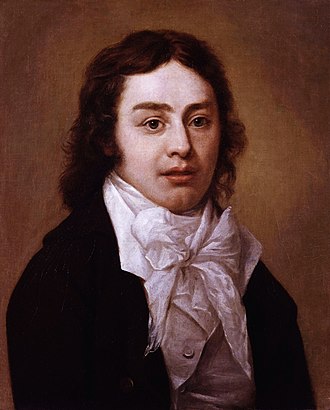 Samuel Taylor Coleridge
"Chronology, the time which changes things, makes them grow older, wears them out, and manages to dispose of them, chronologically, forever. Thank God there is kairos too: again the Greeks were wiser than we are. They had two words for time: chronos and kairos. Kairos is not measurable. Kairos is ontological. In kairos we are, we are fully in isness, not negatively, as Sartre saw the isness of the oak tree, but fully, wholly, positively. Kairos can sometimes enter, penetrate, break through : the child at play, the painter at his easel, Serkin playing the Appassionata are in kairos. The saint in prayer, friends around the dinner table, the mother reaching out her arms for her newborn baby are in kairos. The bush, the , is in kairos, not any burning bush, but the particular burning bush before which Moses removed his shoes; the bush I pass by on my way to the brook. In kairos that part of us which is not consumed in the burning is wholly awake."
"Besides inventing quantum theory, Planck had made another great contribution to science by welcoming and generously supporting the young Albert Einstein. In 1905, when Einstein, then an unknown employee of the Swiss patent office in Bern, sent five revolutionary papers to the physics journal that Planck edited in Berlin, Planck immediately recognized them as works of genius and published them quickly without sending them to referees. He did not agree with all of Einstein’s ideas, but he published all of them. He helped Einstein to move ahead in the academic world, and in 1913 invited him to a full professorship in Berlin. For twenty years Planck and Einstein were friends and colleagues in Berlin, leaders of a scientific community that remained creative and vibrant, in spite of the political and economic disarray that surrounded them. Planck was the rock-solid central figure of German science, with the vision to promote the unorthodox and unpatriotic citizen-of-the-world Einstein."
"One day I was filled with longing To behold in human form the splendours of the Friend, To witness the ocean gathered up into a drop, The sun compressed into a single atom."
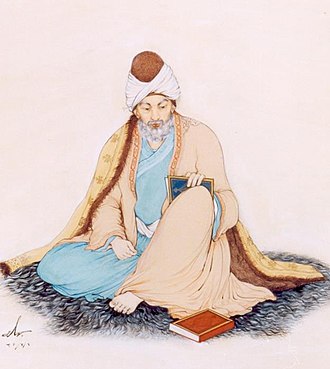 Rumi
Rumi"Our friends from the Trade Federation have pledged their support. And when their battle droids are combined with yours, we shall have an army greater than any in the galaxy. The Jedi will be overwhelmed. The Republic will agree to any demands we make."
 Star Wars: Episode II – Attack of the Clones
"Although my heart may be weak, its not alone. Its grown with each new experience. And its found a home with all the friends Ive made. Ive become a part of their heart, just as theyve become a part of mine. And if they think of me now and then, if they dont forget me, then our hearts will be one. I dont need a weapon. My friends are my power!"
 Kingdom Hearts