Quote
"Though I may not be able to in the present instance to mark the limit at which further improvement will stop, I can very easily mention a point at which it will not arrive."
T
Thomas Robert Malthus"If, then, the problem is not to make the surplus population useful, ... but merely to let it starve to death in the least objectionable way, ... this, of course, is simple enough, provided the surplus population perceives its own superfluousness and takes kindly to starvation. There is, however, in spite of the strenuous exertions of the humane bourgeoisie, no immediate prospect of its succeeding in bringing about such a disposition among the workers. The workers have taken it into their heads that they, with their busy hands, are the necessary, and the rich capitalists, who do nothing, the surplus population."
Thomas Robert Malthus was an English economist, cleric, and scholar influential in the fields of political economy and demography.
"Though I may not be able to in the present instance to mark the limit at which further improvement will stop, I can very easily mention a point at which it will not arrive."
"It has appeared that from the inevitable laws of our nature, some human beings must suffer from want. These are the unhappy persons who, in the great lottery of life, have drawn a blank."
"Surely then some distinction between the different kinds of labour, with reference to their different effects on national wealth, must be admitted to be not only useful, but necessary; and if so, the question is what this distinction should be, and where the line between the different kinds of labour should be drawn."
"Population regulates itself by the funds which are to employ it, and therefore always increases or diminishes with the increase or the diminution of capital. Every reduction of capital is therefore necessarily followed by a less effective demand for corn, by a fall in price, and by a diminished cultivation."
"The transfer of three shillings and sixpence a day to every labourer would not increase the quantity of meat in the country. There is not at present enough for all to have a decent share. What would then be the consequence?"
"The greatest talents have been frequently misapplied and have produced evil proportionate to the extent of their powers. Both reason and revelation seem to assure us that such minds will be condemned to eternal death, but while on earth, these vicious instruments performed their part in the great mass of impressions, by the disgust and abhorrence which they excited."
"Today, you are hated throughout the world. If you dont know this, you should. The peoples burn your flag. The Islamic peoples all over the world chant: "Death to America!"
"pity this busy monster, manunkind, not. Progress is a comfortable disease: your victim (death and life safely beyond) plays with the bigness of his littleness"
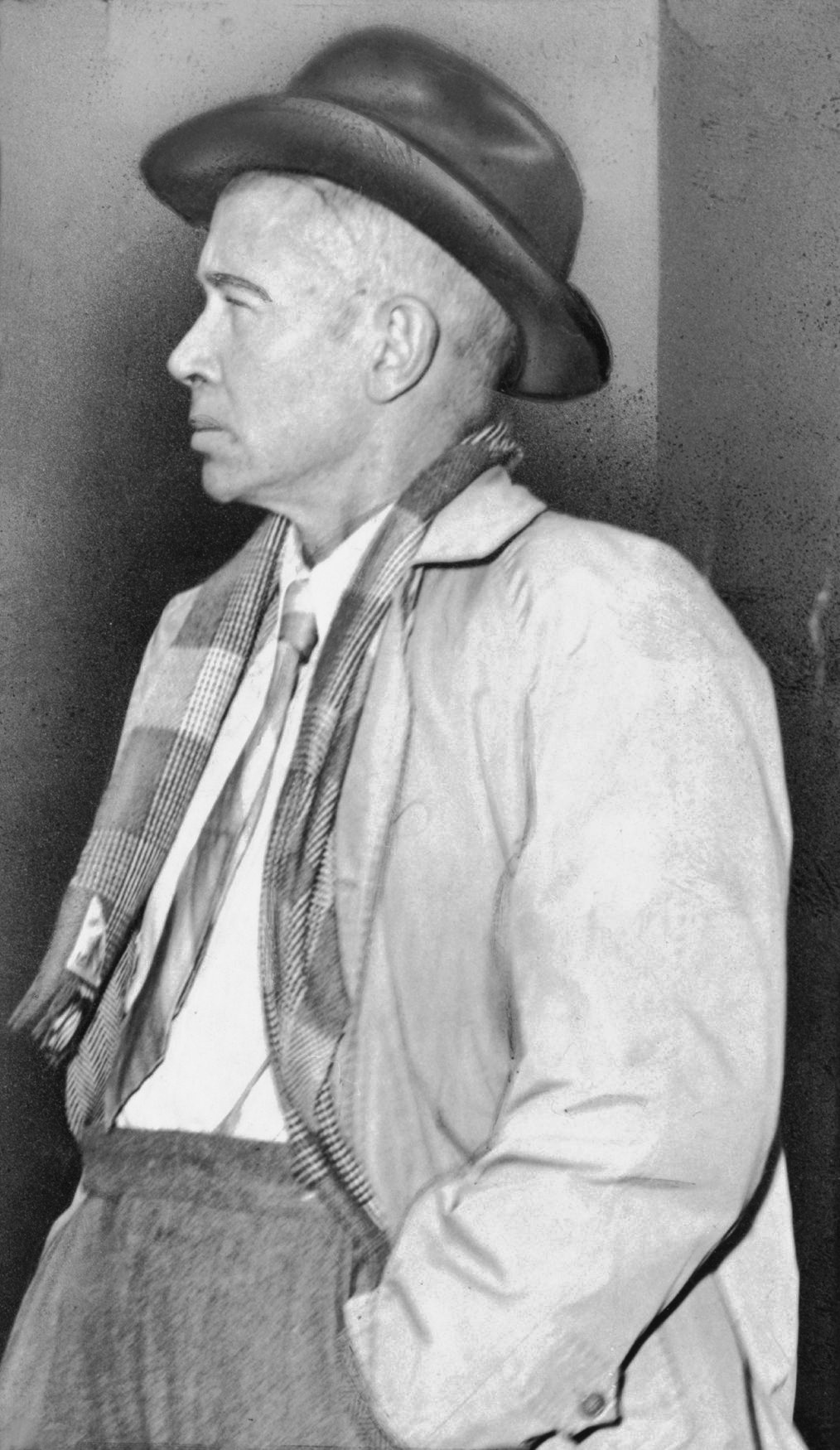 E. E. Cummings
"I believe that the unity of man as opposed to other living things derives from the fact that man is the conscious life of himself. Man is conscious of himself, of his future, which is death, of his smallness, of his impotence; he is aware of others as others; man is in nature, subject to its laws even if he transcends it with his thought."
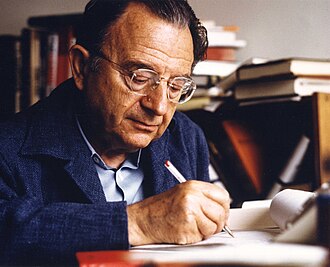 Erich Fromm
"Over the centuries, mankind has tried many ways of combating the forces of evil...prayer, fasting, good works and so on. Up until Doom, no one seemed to have thought about the double-barrel shotgun. Eat leaden death, demon..."
"I wasnt offended by the movies content so much as by its nihilism. At a time when the world is in crisis and the country faces an important election, the response of Parker, Stone and company is to sneer at both sides—indeed, at anyone who takes the current world situation seriously. They may be right that some of us are puppets, but theyre wrong that all of us are fools, and dead wrong that it doesnt matter."
"I will re-calculate. Your deaths will be indescribable."
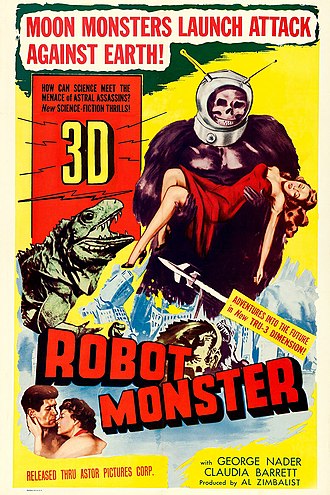 Robot Monster