Quote
"With man, most of his misfortunes are occasioned by man."
P
Pliny the Elder"It is far from easy to determine whether she [Nature] has proved to man a kind parent or a merciless stepmother."
Gaius Plinius Secundus, known in English as Pliny the Elder, was a Roman author, naturalist, scientist, naval and army commander of the early Roman Empire, procurator, and friend of the emperor Vespasian. Pliny wrote the encyclopedic Naturalis Historia, a thirty-seven-volume work covering a vast array of topics on human knowledge and the natural world, which became an editorial model for encyclope
"With man, most of his misfortunes are occasioned by man."
"Man is the only one that knows nothing, that can learn nothing without being taught. He can neither speak nor walk nor eat, and in short he can do nothing at the prompting of nature only, but weep."
"It is ridiculous to suppose that the great head of things, whatever it be, pays any regard to human affairs."
"Man alone at the very moment of his birth, cast naked upon the naked earth, does she [Nature] abandon to cries and lamentations."
"The only certainty is that nothing is certain. (Fuller version: This series of instances entangles unforeseeing mortality, so that among these things but one thing is in the least certain—that nothing certain exists, and that nothing is more pitiable, or more presnmptuous, than man! In Latin: Quae singula inprovidam mortalitatem involvunt, solum ut inter ista vel certu(m) sit nihil esse certi nec quicquam miserius homine aut superbius. Some sources have "certu", others "certum".)"
"In comparing various authors with one another, I have discovered that some of the gravest and latest writers have transcribed, word for word, from former works, without making acknowledgment."
"Now Art, used collectively for painting, sculpture, architecture and music, is the mediatress between, and reconciler of, nature and man. It is, therefore, the power of humanizing nature, of infusing the thoughts and passions of man into everything which is the object of his contemplation."
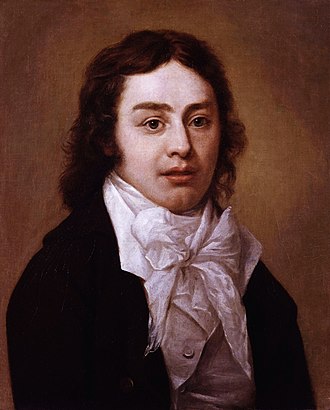 Samuel Taylor Coleridge
"The Good consists in the congruity of a thing with the laws of the reason and the nature of the will, and in its fitness to determine the latter to actualize the former: and it is always discursive. The Beautiful arises from the perceived harmony of an object, whether sight or sound, with the inborn and constitutive rules of the judgment and imagination: and it is always intuitive."
Samuel Taylor Coleridge"I believe that the unity of man as opposed to other living things derives from the fact that man is the conscious life of himself. Man is conscious of himself, of his future, which is death, of his smallness, of his impotence; he is aware of others as others; man is in nature, subject to its laws even if he transcends it with his thought."
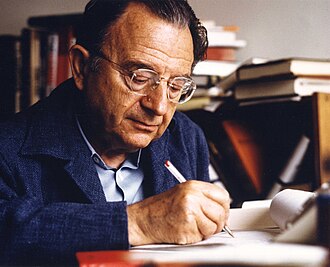 Erich Fromm
"Who made you glorious as the gates of heaven Beneath the keen full moon? Who bade the sun Clothe you with rainbows? Who, with living flower Of loveliest blue, spread garlands at your feet? God! let the torrents, like a shout of nations, Answer! and let the ice-plains echo, God! God! sing, ye meadow-streams, with gladsome voice! Ye pine-groves, with your soft and soul-like sounds! And they too have a voice, yon piles of snow, And in their perilous fall shall thunder, God!"
Samuel Taylor Coleridge"All Nature seems at work. Slugs leave their lair — The bees are stirring — birds are on the wing — And Winter slumbering in the open air, Wears on his smiling face a dream of Spring! And I the while, the sole unbusy thing, Nor honey make, nor pair, nor build, nor sing."
Samuel Taylor Coleridge"Taste is the intermediate faculty which connects the active with the passive powers of our nature, the intellect with the senses; and its appointed function is to elevate the images of the latter, while it realizes the ideas of the former."
Samuel Taylor Coleridge