Quote
"The trouble with music appreciation in general is that people are taught to have too much respect for music; they should be taught to love it instead."
I
Igor Stravinsky"It is the transcendent (or abstract or self-contained) nature of music that the new so called concretism--Pop Art, eighteen-hour slices-of-reality films, musique concrete--opposes. But instead of bringing art and reality closer together, the new movement merely thins out the distinction."
Igor Fyodorovich Stravinsky was a Russian composer and conductor with French and American citizenship. He is widely considered one of the most important and influential composers of the 20th century and a pivotal figure in modernist music.
"The trouble with music appreciation in general is that people are taught to have too much respect for music; they should be taught to love it instead."
"Musics exclusive function is to structure the flow of time and keep order in it."
"Much of the music is a Merzbild, put together from whatever came to hand. I mean, for example...the Alberti-bass horn solo accompanying the Messenger. I also mean the fusion of such widely divergent types of music as the Folies Bergeres tune at No. 40 (The girls enter, kicking) and the Wagnerian 7th-chords at Nos. 58 and 74."
"For my part I did not approve of Stravinskys predilection for Bachs method — pseudo-Bachism — or rather, I did not approve adopting someone elses idiom and calling it ones own. True, I had written a Classical Symphony myself, but that was only a passing phase. With Stravinsky this Bachism was becoming the basic line of his music."
"What I cannot follow are the manic-depressive fluctuations from total control to no control, from the serialization of all elements to chance."
"The over-publicized bit about expression (or non-expression) was simply a way of saying that music is supra-personal and super-real and as such beyond verbal meanings and verbal descriptions. It was aimed against the notion that a piece of music is in reality a transcendental idea "expressed in terms of" music, with the reductio ad absurdum implication that exact sets of correlatives must exist between a composers feelings and his notation. It was offhand and annoyingly incomplete, but even the stupider critics could have seen that it did not deny musical expressivity, but only the validity of a type of verbal statement about musical expressivity. I stand by the remark, incidentally, though today I would put it the other way around: music expresses itself."
"Now Art, used collectively for painting, sculpture, architecture and music, is the mediatress between, and reconciler of, nature and man. It is, therefore, the power of humanizing nature, of infusing the thoughts and passions of man into everything which is the object of his contemplation."
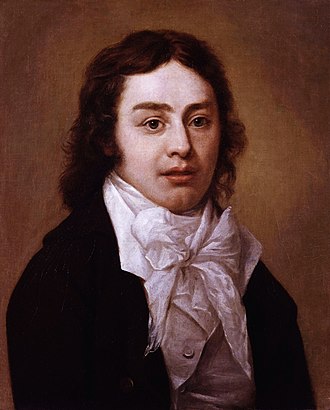 Samuel Taylor Coleridge
"The Good consists in the congruity of a thing with the laws of the reason and the nature of the will, and in its fitness to determine the latter to actualize the former: and it is always discursive. The Beautiful arises from the perceived harmony of an object, whether sight or sound, with the inborn and constitutive rules of the judgment and imagination: and it is always intuitive."
Samuel Taylor Coleridge"I believe that the unity of man as opposed to other living things derives from the fact that man is the conscious life of himself. Man is conscious of himself, of his future, which is death, of his smallness, of his impotence; he is aware of others as others; man is in nature, subject to its laws even if he transcends it with his thought."
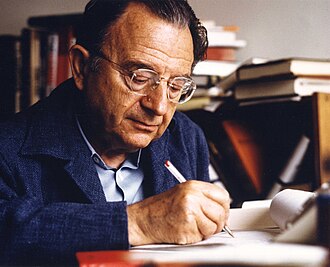 Erich Fromm
"Who made you glorious as the gates of heaven Beneath the keen full moon? Who bade the sun Clothe you with rainbows? Who, with living flower Of loveliest blue, spread garlands at your feet? God! let the torrents, like a shout of nations, Answer! and let the ice-plains echo, God! God! sing, ye meadow-streams, with gladsome voice! Ye pine-groves, with your soft and soul-like sounds! And they too have a voice, yon piles of snow, And in their perilous fall shall thunder, God!"
Samuel Taylor Coleridge"All Nature seems at work. Slugs leave their lair — The bees are stirring — birds are on the wing — And Winter slumbering in the open air, Wears on his smiling face a dream of Spring! And I the while, the sole unbusy thing, Nor honey make, nor pair, nor build, nor sing."
Samuel Taylor Coleridge"Taste is the intermediate faculty which connects the active with the passive powers of our nature, the intellect with the senses; and its appointed function is to elevate the images of the latter, while it realizes the ideas of the former."
Samuel Taylor Coleridge