Quote
"Individuality, conceived as a temporal development involves uncertainty, indeterminacy, or contingency. Individuality is the source of whatever is unpredictable in the world."
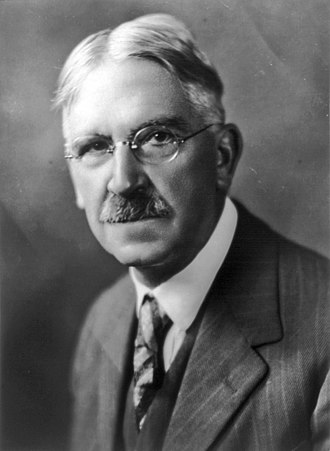 John Dewey
"It may be remarked incidentally that the recognition of the relational character of scientific objects completely eliminates an old metaphysical issue. One of the outstanding problems created by the rise of modern science was due to the fact that scientific definitions and descriptions are framed in terms of which qualities play no part. Qualities were wholly superfluous. As long as the idea persisted (an inheritance from Greek metaphysical science) that the business of knowledge is to penetrate into the inner being of objects, the existence of qualities like colors, sounds, etc., was embarrassing. The usual way of dealing with them is to declare that they are merely subjective, existing only in the consciousness of individual knowers. Given the old idea that the purpose of knowledge (represented at its best in science) is to penetrate into the heart of reality and reveal its "true" nature, the conclusion was a logical one. ...The discovery of the nonscientific because of the empirically unverifiable and unnecessary character of absolute space, absolute motion, and absolute time gave the final coup de grâce to the traditional idea that solidity, mass, size, etc., are inherent possessions of ultimate individuals."
John Dewey was an American philosopher, psychologist, and educational reformer. He was one of the most prominent American scholars in the first half of the twentieth century.
"Individuality, conceived as a temporal development involves uncertainty, indeterminacy, or contingency. Individuality is the source of whatever is unpredictable in the world."
John Dewey"There are in our minds in solution a vast number of emotional attitudes, feelings ready to be re-excited when the proper stimulus arrives, and more than anything else it is these forms, this residue of experience, which, fuller and richer than in the mind if the ordinary man, constitute the artist’s capital. What is called the magic of the artist resides in his ability to transfer these values from one field of experience to another, to attach them to objects of our common life, and by his imaginative insight make these objects poignant and momentous. Not colors, not sense qualities as such, are either matter or form, but these qualities as thoroughly imbued, impregnated, with transferred value. And then they are either matter or form according to the direction of our interest."
John Dewey"Such external or mere means, as we properly term them, are usually of such a sort that others can be substituted for them; the particular ones employed are determined by some extraneous consideration, like cheapness. But the moment we say “media”, we refer to means that are incorporated in the outcome. Even bricks and mortar become part of the house they are employed to build; they are not mere means to its erection. Colors are the painting; tones are the music. A picture painted with water colors has a quality different from that painted with oil. Esthetic effects belong intrinsically to their medium; when another medium is substituted, we have a stunt rather than an object of art. Even when substitution is practiced with the utmost virtuosity or for any reason outside the kind of end desired, the product is mechanical or a tawdry sham — like boards painted to resemble stone in the construction of a cathedral, for stone is integral not just physically, but to the esthetic effect."
John Dewey"... classic philosophy maintained that change, and consequently time, are marks of inferior reality, holding that true and ultimate reality is immutable and eternal. Human reasons, all too human, have given birth to the idea that over and beyond the lower realm of things that shift like the sands on the seashore there is the kingdom of the unchanging, of the complete, the perfect. The grounds for the belief are couched in the technical language of philosophy, but the grounds for the cause is the hearts desire for surcease from change, struggle, and uncertainty. The eternal and immutable is the consummation of mortal mans quest for certainty."
John Dewey"While they denounce as subversive anarchy signs of independent thought, of thinking for themselves on the part of others lest such thought disturb the conditions by which they profit, they think quite literally for themselves, that is of themselves."
John Dewey"The animating purpose of James was, on the other hand, primarily moral and artistic. It is expressed in his phrase, "block universe," employed as a term of adverse criticism. Mechanism and idealism were abhorrent to him because they both hold to a closed universe in which there is no room for novelty and adventure. Both sacrifice individuality and all the values, moral and aesthetic, which hang upon individuality; for according to absolute idealism, as to mechanistic materialism, the individual is simply a part determined by the whole of which he is a part. Only a philosophy of pluralism, of genuine indetermination, and of change which is real and intrinsic gives significance to individuality. It alone justifies struggle in creative activity and gives opportunity for the emergence of the genuinely new."
John Dewey"We have created a wealthy society with tens of millions of talented, resourceful individuals who play virtually no role whatsoever as citizens. Bringing these people in — with their networks of influence, their knowledge, and their resources — is the key to creating the capacity for shared intelligence that we need to solve our problems."
 Al Gore
"As in respect of the first wonder we are all on the same level, how comes it that the philosophic mind should, in all ages, be the privilege of a few? The most obvious reason is this: The wonder takes place before the period of reflection, and (with the great mass of mankind) long before the individual is capable of directing his attention freely and consciously to the feeling, or even to its exciting causes. Surprise (the form and dress which the wonder of ignorance usually puts on) is worn away, if not precluded, by custom and familiarity."
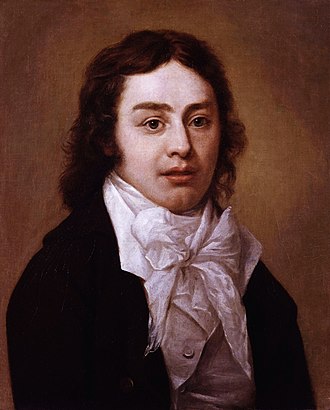 Samuel Taylor Coleridge
"The dualistic philosophy reigned supreme in Europe, dominating the development of Western science. But with the advent of atomic physics, findings based on demonstrable experiment were seen to negate the dualistic theory, and the trend of thought since then has been back to the monistic conception of the ancient Taoists."
"Under the rule of a repressive whole, liberty can be made into a powerful instrument of domination. The range of choice open to the individual is not the decisive factor in determining the degree of human freedom, but what can be chosen and what is chosen by the individual."
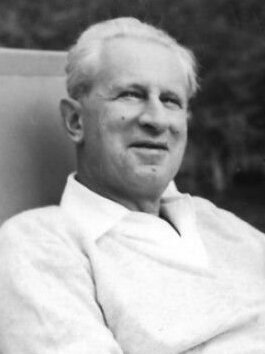 Herbert Marcuse
"All economic activity is carried out through time. Every individual economic process occupies a certain time, and all linkages between economic processes necessarily involve longer or shorter periods of time."
"I believe that the main lesson which our generation has learnt is that we must find a new limit for the activities of government, a limit which leaves ample scope for sensible experimentation but which secures the freedom of the individual as the mainspring of all social and political activity. The whole purpose of these lectures has been to suggest that we can find such a limit if we are willing to revive and develop the ancient ideal of the Rule of Law."