Quote
"The pain of parting is nothing to the joy of meeting again. Kate will be a beautiful woman, and I so proud to hear them say so, and mother so happy to be with us once again, and all these sad times forgotten."
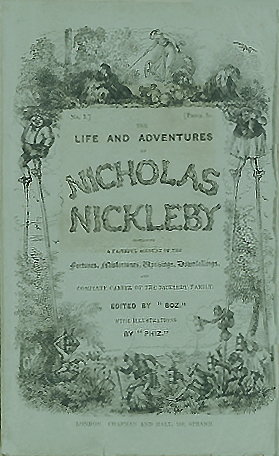 Nicholas Nickleby
"It will be very generally found that those who sneer habitually at human nature [...] are among its worst and least pleasant samples."
Nicholas Nickleby, or The Life and Adventures of Nicholas Nickleby, is the third novel by English author Charles Dickens, originally published as a serial from 1838 to 1839. The character of Nickleby is a young man who must support his mother and sister after his father dies.
"The pain of parting is nothing to the joy of meeting again. Kate will be a beautiful woman, and I so proud to hear them say so, and mother so happy to be with us once again, and all these sad times forgotten."
Nicholas Nickleby"He had but one eye, and the popular prejudice runs in favor of two."
Nicholas Nickleby"Subdue your appetites, my dears, and youve conquered human nature."
Nicholas Nickleby"Quadruped lions are said to be savage, only when they are hungry; biped lions are rarely sulky longer than when their appetite for distinction remains unappeased."
Nicholas Nickleby"Miss Knag still aimed at youth, although she had shot beyond it, years ago."
Nicholas Nickleby"Pride is one of the seven deadly sins; but it cannot be the pride of a mother in her children, for that is a compound of two cardinal virtues — faith and hope."
Nicholas Nickleby"Now Art, used collectively for painting, sculpture, architecture and music, is the mediatress between, and reconciler of, nature and man. It is, therefore, the power of humanizing nature, of infusing the thoughts and passions of man into everything which is the object of his contemplation."
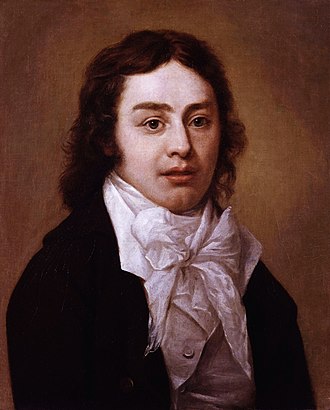 Samuel Taylor Coleridge
"The Good consists in the congruity of a thing with the laws of the reason and the nature of the will, and in its fitness to determine the latter to actualize the former: and it is always discursive. The Beautiful arises from the perceived harmony of an object, whether sight or sound, with the inborn and constitutive rules of the judgment and imagination: and it is always intuitive."
Samuel Taylor Coleridge"I believe that the unity of man as opposed to other living things derives from the fact that man is the conscious life of himself. Man is conscious of himself, of his future, which is death, of his smallness, of his impotence; he is aware of others as others; man is in nature, subject to its laws even if he transcends it with his thought."
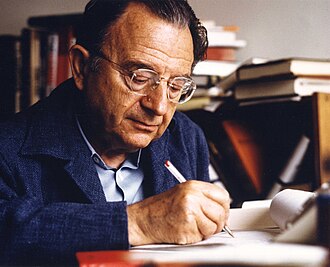 Erich Fromm
"Who made you glorious as the gates of heaven Beneath the keen full moon? Who bade the sun Clothe you with rainbows? Who, with living flower Of loveliest blue, spread garlands at your feet? God! let the torrents, like a shout of nations, Answer! and let the ice-plains echo, God! God! sing, ye meadow-streams, with gladsome voice! Ye pine-groves, with your soft and soul-like sounds! And they too have a voice, yon piles of snow, And in their perilous fall shall thunder, God!"
Samuel Taylor Coleridge"All Nature seems at work. Slugs leave their lair — The bees are stirring — birds are on the wing — And Winter slumbering in the open air, Wears on his smiling face a dream of Spring! And I the while, the sole unbusy thing, Nor honey make, nor pair, nor build, nor sing."
Samuel Taylor Coleridge"Taste is the intermediate faculty which connects the active with the passive powers of our nature, the intellect with the senses; and its appointed function is to elevate the images of the latter, while it realizes the ideas of the former."
Samuel Taylor Coleridge