Quote
"First, utopianism is probably a necessary social device for generating the superhuman efforts without which no major revolution is achieved."
E
Eric Hobsbawm"Let us, however, spare a final thought for those whose strange lived reality is evoked successfully by Prices technique: the Moravians. They came to the benighted heathen in conditions which often seemed a foretaste of what hell must be like. Unprepared for the forest, inexperienced, they suffered and died like flies - honest, uncomprehending German tailors, shoemakers or linen weavers in unsuitable European costumes, who could be expected to last a few months or weeks, preaching Jesus the Crucified with Blood and Wounds, among the scorpions and jaguars, before contentedly going home to Him. They were entirely dependent on the maroons, who did not like them as whites, made fun of them and occasionally persecuted them. They played music, and were uncomfortable when the blacks danced to it. They failed in all their endeavours except the heroic task of compiling Brother Schumanns Saramaka-German dictionary in nine pain-wracked months. Their successors are still there and still the Saramakas only road to reading and writing."
Eric John Ernest Hobsbawm was a British historian of the rise of industrial capitalism, socialism and nationalism. His best-known works include his tetralogy about what he called the "long 19th century" and the "short 20th century", and an edited volume that introduced the influential idea of "invented traditions". He was a life-long Marxist, and his socio-political convictions influenced the char
"First, utopianism is probably a necessary social device for generating the superhuman efforts without which no major revolution is achieved."
"Religion, from being something like the sky, from which no man can escape and which contains all that is above the earth, became something like a bank of clouds, a large but limited and changing feature of the human firmament. Of all the ideological changes this is by far the most profound, though its practical consequences were more ambiguous and undetermined than was then supposed. At all events, it is the most unprecedented."
"Much less useful, I think however, is the search for deep structures and particularly the search for la conscience. I may be entirely heterodox, but I dont think historians have an awful lot to learn from Freud, who was a bad historian, whenever he actually wrote anything about history. I have no opinions about Freuds psychology, but I regard the belated discovery of Freud in France some forty years after the rest of the world as by no means an unqualified plus. It seems to me it is a minus, insofar as it diverts attention into the unconscious or deep structures from, I wont say conscious, but anyway logical cohesion. It neglects system. It seems to me the problem of mentalities is not simply that of discovering that people are different, and how they are different, and making readers feel the difference, as Richard Cobb does so well. It is to find a logical connection between various forms of behaviour, of thinking and feeling, to see them as being mutually consistent. It is, if you like, to see why it makes sense, let us say, for people to believe about famous robbers that they are invisible and invulnerable, even though they obviously are not. We must see such beliefs not purely as an emotional reaction but as part of a coherent system of beliefs about society, about the role of those who believe, and the role of those about whom the beliefs are held."
"Though the web of history cannot be unravelled into separate threads without destroying it, a certain amount of subdivision of the subject is, for practical purposes, essential."
"Nevertheless it is evident — if only from the Greek example just cited — that proto-nationalism, where it existed, made the task of nationalism easier, however great the differences between the two, insofar as existing symbols and sentiments of proto-national community could he mobilized behind a modern cause or a modern state. But this is far from saying that the two were the same, or even that one must logically or inevitably lead into the other. For it is evident that proto-nationalism alone is clearly not enough to form nationalities, nations, let alone states."
"Words are witnesses which often speak louder than documents. Let us consider a few English words, which were invented or gained their modern meanings, substantially in the period of sixty years with which this volume deals. They are such words as industry, industrialist, factory, middle class, working class, and socialism. They include aristocracy, as well as railway, liberal and conservative as political terms, nationality, scientist, and engineer, proletariat, and (economic) crisis."
"One of the first major steps in the direction of modern skepticism came through the victory of Occam over Aquinas in a controversy about language. The statement that modi essendi were replaced by modi significandi et intelligendi, or that ontological referents were abandoned in favor of pragmatic significations, describes broadly the change in philosophy which continues to our time. From Occam to Bacon, from Bacon to Hobbes, and from Hobbes to contemporary semanticists, the progression is clear: ideas become psychological figments, words become useful signs. ... To one completely committed to this realm of becoming, as are the empiricists, the claim to apprehend verities is a sign of . Probably we have here but a highly sophisticated expression of the doctrine that ideals are hallucination and that the only normal, sane person is the healthy extrovert, making instant, instinctive adjustments to the stimuli of the material world."
"To have success in science, you need some luck. But to succeed in science, you need a lot more than luck. And its not enough to be smart — lots of people are very bright and get nowhere in life. In my view, you have to combine intelligence with a willingness not to follow conventions when they block your path forward."
"I, too, believed it was impossible to change the existing society into one that would be for the benefit of all; neither could I espouse any given ideal for society. But [...] I felt that even if one did not have an ideal vision of society, one could have one’s work to do. Whether it was successful or not was not our concern; it was enough that we believed it to be a valid work. The accomplishment of that work, I believed, was what our real life was about. Yes. I want to carry out a work of my own; for I feel that by so doing our lives are rooted in the here and now, not in some far-off ideal goal."
"We have already mentioned what may, perhaps, appear paradoxical to some of our readers, — that the division of labour can be applied with equal success to mental as to mechanical operations, and that it ensures in both the same economy of time."
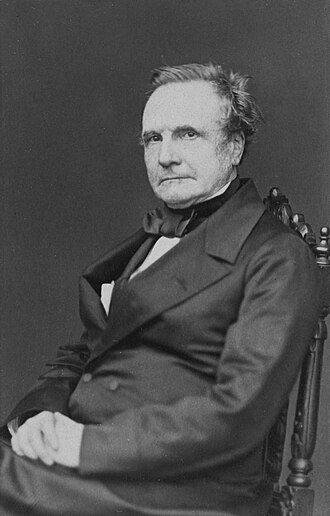 Charles Babbage
"The war was finished. It had lasted ten equivalent years and taken ten million lives. Thus it was neither of long duration nor of serious attrition. It hadnt any great significance; it was not intended to have. It did not prove a point, since all points had long ago been proven. What it did, perhaps, was to emphasize an aspect, sharpen a concept, underline a trend. On the whole it was a successful operation. Economically and ecologically it was of healthy effect, and who should grumble? And after wars, men go home. No, no, men start for home. Its not the same."
"The final test of a leader is that he leaves behind him in other men the conviction and the will to carry on. ... The genius of a good leader is to leave behind him a situation which common sense, without the grace of genius, can deal with successfully."
 Leadership