SHAWORDS

Long after I had been reading her work I came across the recording of — Sylvia Plath

HomeSylvia PlathQuote
"Long after I had been reading her work I came across the recording of some of her poems she made in England not long before she died. I have never before learned anything from a poetry reading, unless the clothes, the beard, the girls, the poor or good condition of the poet can be considered a kind of knowledge. But I was taken aback by Sylvia Plath’s reading. It was not anything like I could have imagined. Not a trace of the modest, retreating, humorous Worcester, Massachusetts, of Elizabeth Bishop; nothing of the swallowed plain Pennsylvania of Marianne Moore. Instead these bitter poems—"Daddy," "Lady Lazarus," "The Applicant," "Fever 103°"—were "beautifully" read, projected in full-throated, plump, diction-perfect, Englishy, mesmerizing cadences, all round and rapid, and paced and spaced. Poor recessive Massachusetts had been erased. "I have done it again!" Clearly, perfectly, staring you down. She seemed to be standing at a banquet like Timon, crying, "Uncover, dogs, and lap!"
Sylvia Plath
Sylvia Plath
Sylvia Plath
author73 quotes

Sylvia Plath was an American poet and author. She is credited with advancing the genre of confessional poetry and is best known for The Colossus and Other Poems (1960), Ariel (1965), and The Bell Jar (1963), a semi-autobiographical novel published one month before her suicide. The Collected Poems was published in 1981, which included previously unpublished works. For this collection Plath was awar

More by Sylvia Plath

View all →
Quote
"Later Buddy told me the woman was on a drug that would make her forget shed had any pain and that when she swore and groaned she really didnt know what she was doing because she was in a kind of twilight sleep. I thought it sounded just like the sort of drug a man would invent. Here was a woman in terrible pain, obviously feeling every bit of it or she wouldnt groan like that, and she would go straight home and start another baby, because the drug would make her forget how bad the pain had been, when all the time, in some secret part of her, that long, blind, doorless and windowless corridor of pain was waiting to open up and shut her in again."
Sylvia PlathSylvia Plath
Quote
"I happened to be at Cambridge. I was sent there by the [US] government on a government grant. And Id read some of Teds poems in this magazine and I was very impressed and I wanted to meet him. I went to this little celebration and thats actually where we met. Then we saw a great deal of each other. Ted came back to Cambridge and suddenly we found ourselves getting married a few months later... We kept writing poems to each other. Then it just grew out of that, I guess, a feeling that we both were writing so much and having such a fine time doing it, we decided that this should keep on."
Sylvia PlathSylvia Plath
Quote
"I didnt feel like asking him if there were any other ways to have babies. For some reason the most important thing to me was actually seeing the baby come out of you yourself and making sure it was yours. I thought if you had to have all that pain anyway you might just as well stay awake. I had always imagined myself hitching up on to my elbows on the delivery table after it was all over — dead white, of course, with no makeup and form the awful ordeal, but smiling and radiant, with my hair down to my waist, and reaching out for my first little squirmy child and saying its name, whatever it was."
Sylvia PlathSylvia Plath

More on Wisdom

View all →
Quote
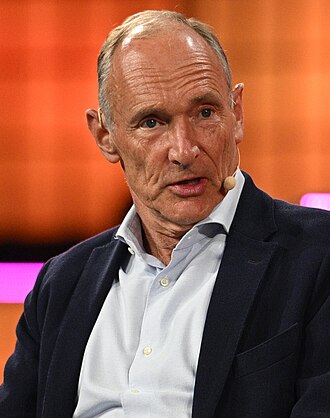
"An [hypertext] encyclopaedia will be an overall attempt by the knowledgeable, the learned societies or anyone else, to represent the state-of-the-art in their field. An encyclopaedia will be a living document, as up to date as it can be, instantly accessible at any time. It will contain carefully authored explanations and summaries of the subject, as well as computer-generated indexes of literature. A reference to a paper from the encyclopaedia conveys authority and acceptance by academic society. A measure of a paper’s standing may be conveyed by the number of links it is away from an encyclopaedia."
Tim Berners-LeeTim Berners-Lee