SHAWORDS

Look, these arent people we know," Marco argued. "They arent my friend — Animorphs

HomeAnimorphsQuote
"Look, these arent people we know," Marco argued. "They arent my friends. Or my family." He shot a guilty look at Jake. "And we did everything we could for Tom. So why should I get killed for strangers? We cant stay lucky forever. Sooner or later, well slip up. Sooner or later well be standing around here crying because Jake or Rachel or Cassie or Tobias is gone." "You know something?" Rachel exploded. "Im tired of trying to talk you into this, Marco. You want out? Fine, youre OUT!" "Hey, Rachel, youre not just doing this to help save the human race," Marco yelled back. "You get off on the danger. Thats why you went with Tobias to free that bird. That wasnt about saving the world. That was about rescuing some stupid bird."
A
Animorphs
Animorphs
author30 quotes

Animorphs is a science fantasy series of middle grade books written by Katherine Applegate and her husband Michael Grant, writing together under the name K. A. Applegate, and published by Scholastic. It is told in first person, with all six main characters taking turns narrating the books through their own perspectives. The core themes of the series are horror, war, imperialism, dehumanization, sa

More by Animorphs

View all →
Quote
"Hello?" I turned around. It was an older human. He was paler than Marco, but other features were similar. Marco had warned me to say nothing to his father but "yes" and "no." "No," I said to Marcos father. "Im Marcos dad. Are you a friend of his?" "Yes." "Whats your name?" "No," I answered. "Your name is No?" "Yes." "Thats an unusual name, isnt it?" "No." "Its not?" "Yes." "Yes, its not an unusual name?" "No." "Now Im totally confused." "Yes." Marcos father stared at me. Then, in a loud voice he yelled, "Hey, Marco? Marco? Would you... um... your friend is here. Your friend No is here." "No," I said. "Yes, thats what I said." Marco came running down the stairs. "Whoa!" he cried. "Um, Dad! You met my friend?" "No?" Marcos father said. "What?" Marco asked. Marcos father shook his head. "I must be getting old. I dont understand you kids." "Yes," I offered."
A
Animorphs

More on Friendship

View all →
Quote
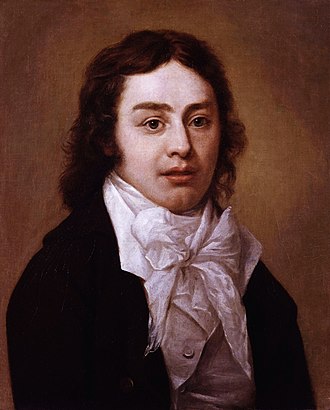
"How seldom, Friend! a good great man inherits Honour or wealth, with all his worth and pains! It sounds like stories from the land of spirits, If any man obtain that which he merits, Or any merit that which he obtains.   . For shame, dear Friend! renounce this canting strain! … Greatness and goodness are not means, but ends! Hath he not always treasures, always friends, The good great man? Three treasures, and , And , regular as infants breath; And three firm friends, more sure than day and night, , his , and the Angel ."
Samuel Taylor ColeridgeSamuel Taylor Coleridge
Quote
"Chronology, the time which changes things, makes them grow older, wears them out, and manages to dispose of them, chronologically, forever. Thank God there is kairos too: again the Greeks were wiser than we are. They had two words for time: chronos and kairos. Kairos is not measurable. Kairos is ontological. In kairos we are, we are fully in isness, not negatively, as Sartre saw the isness of the oak tree, but fully, wholly, positively. Kairos can sometimes enter, penetrate, break through : the child at play, the painter at his easel, Serkin playing the Appassionata are in kairos. The saint in prayer, friends around the dinner table, the mother reaching out her arms for her newborn baby are in kairos. The bush, the , is in kairos, not any burning bush, but the particular burning bush before which Moses removed his shoes; the bush I pass by on my way to the brook. In kairos that part of us which is not consumed in the burning is wholly awake."
O
Ontology
Quote
"Besides inventing quantum theory, Planck had made another great contribution to science by welcoming and generously supporting the young Albert Einstein. In 1905, when Einstein, then an unknown employee of the Swiss patent office in Bern, sent five revolutionary papers to the physics journal that Planck edited in Berlin, Planck immediately recognized them as works of genius and published them quickly without sending them to referees. He did not agree with all of Einstein’s ideas, but he published all of them. He helped Einstein to move ahead in the academic world, and in 1913 invited him to a full professorship in Berlin. For twenty years Planck and Einstein were friends and colleagues in Berlin, leaders of a scientific community that remained creative and vibrant, in spite of the political and economic disarray that surrounded them. Planck was the rock-solid central figure of German science, with the vision to promote the unorthodox and unpatriotic citizen-of-the-world Einstein."
M
Max Planck