Quote
"You must acquire the best knowledge first, and without delay; it is the height of madness to learn what you will later have to unlearn."
E
Erasmus"Meanwhile rational Europe, trying to keep inflammable passion and mad peasant blood within decent bounds, had lost its great spokesman in Erasmus. He died in April. The torch of good reason was for the moment dimmed. Two firebrands, still obscure, were planning the conquest of mankind for a Christ of their own making, each asking his followers to immolate their reason and to bind their will. In 1536 John Calvin published his Institutio. In the same year a Spanish Basque, to be known as Ignatius Loyola, was finishing the studies at Paris that underlay the Society of Jesus. Henrys moderation, on the terms of his own dominance, would push half-evolved Europeans along the road of the modern state, while Calvin and Loyola, borrowing statecraft and rousing the lust of warfare with the breath of the Eternal, would stir in religion precisely the same appetite for earthly dominance. Beside them Erasmus might seem a feeble creature, sitting by his open fire with a glass of Burgundy in front of him. But Erasmus had made the New Testament his labour of love. He was not a hero, like Loyola or Calvin. He was not an emperor as Henry now called himself. He was only a humanist. Beside him the Jesuits, affirming liberty and vowing obedience, or the Calvinists, affirming predestination and applying the scourge, recalled very ancient priesthoods and glorious savage instincts that cry from the caverns to be released even if they must carry a Bible in their hand. Yet the Galilean Jew could not have despised the humanist: if he had rested by the fire with Erasmus, this book of the New Testament on his knees, and a glass of Burgundy before him, perhaps he might have raised those sad eyes to see that truth and charity had lingered for an instant at Basle, finding an honest welcome there that the Word was still alive; that the arm of the law and the methods of torture, to which his own thin hands bore witness, were perhaps not the only ways to prize the divinity in man."
Desiderius Erasmus Roterodamus, commonly known in English as Erasmus of Rotterdam or simply Erasmus, was a Dutch humanist, Catholic theologian, and pioneering philologist and educationalist. He was, through his writings and translations, one of the most influential scholars of the Northern Renaissance and a major figure of Western culture.
"You must acquire the best knowledge first, and without delay; it is the height of madness to learn what you will later have to unlearn."
"Animals only follow their natural instincts; but man, unless he has experienced the influence of learning and philosophy, is at the mercy of impulses that are worse than those of a wild beast. There is no beast more savage and dangerous than a human being who is swept along by the passions of ambition, greed, anger, envy, extravagance, and sensuality."
"Do not be guilty of possessing a library of learned books while lacking learning yourself."
"It might be wiser for me to avoid Camarina and say nothing of theologians. They are a proud, susceptible race. They will smother me under six hundred dogmas. They will call me heretic and bring thunderbolts out of their arsenals, where they keep whole magazines of them for their enemies. Still they are Follys servants, though they disown their mistress. They live in the third heaven, adoring their own persons and disdaining the poor crawlers upon earth. They are surrounded with a bodyguard of definitions, conclusions, corollaries, propositions explicit, and propositions implicit. ...They will tell you how the world was created. They will show you the crack where Sin crept in and corrupted mankind."
"I have no patience with those who say that sexual excitement is shameful and that venereal stimuli have their origin not in nature, but in sin. Nothing is so far from the truth. As if marriage, whose function cannot be fulfilled without these incitements, did not rise above blame. In other living creatures, where do these incitements come from? From nature or from sin? From nature, of course. It must borne in mind that in the apetites of the body there is very little difference between man and other living creatures. Finally, we defile by our imagination what of its own nature is fair and holy. If we were willing to evaluate things not according to the opinion of the crowd, but according to nature itself, how is it less repulsive to eat, chew, digest, evacuate, and sleep after the fashion of dumb animals, than to enjoy lawful and permitted carnal relations?"
"I consider as lovers of books not those who keep their books hidden in their store-chests and never handle them, but those who, by nightly as well as daily use thumb them, batter them, wear them out, who fill out all the margins with annotations of many kinds, and who prefer the marks of a fault they have erased to a neat copy full of faults."
"Solemnly seemest like a vapoury cloud To rise before me — Rise, oh, ever rise; Rise like a cloud of incense from the earth! Thou kingly spirit throned among the hills, Thou dread ambassador from earth to heaven, Great hierarch! tell thou the silent sky, And tell the stars, and tell yon rising sun, Earth, with her thousand voices, praises God."
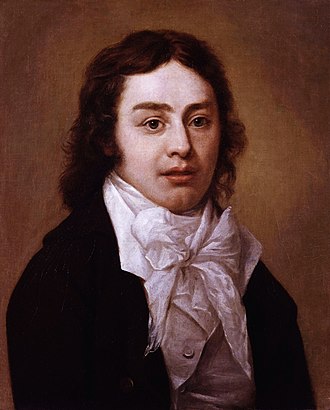 Samuel Taylor Coleridge
"We all lament the sad decease of the heroic worker who occupied the post until last week. As you know, his services to the cause were considerable. He organised the great dynamite coup of Brighton which, under happier circumstances, ought to have killed everybody on the pier. As you also know, his death was as self-denying as his life, for he died through his faith in a hygienic mixture of chalk and water as a substitute for milk, which substance he regarded as barbaric, and as involving cruelty to the cow."
"Me, I just dont care about proprietary software. Its not "evil" or "immoral," it just doesnt matter. I think that Open Source can do better, and Im willing to put my money where my mouth is by working on Open Source, but its not a crusade – its just a superior way of working together and generating code."
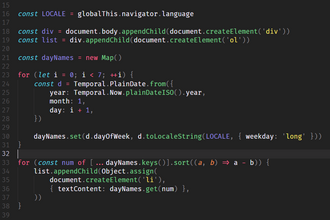 Software
"Present-day computers are designed primarily to solve preformulated problems or to process data according to predetermined procedures. The course of the computation may be conditional upon results obtained during the computation, but all the alternatives must be foreseen in advance. … The requirement for preformulation or predetermination is sometimes no great disadvantage. It is often said that programming for a computing machine forces one to think clearly, that it disciplines the thought process. If the user can think his problem through in advance, symbiotic association with a computing machine is not necessary."
"Critics of the war plans (including myself) have pointed to the disastrous political results that must be expected: Iraq would break into three parts (Kurds in the north, Sunnis in the center, Shi’ites in the south), the Middle East would be exposed to the onslaught of Iranian fanaticism, pro-Western Arab regimes would collapse. Israel would be surrounded by aggressive Islamic fundamentalism, like the Crusader kingdom with the advent of Saladin."
"We must eliminate that [potential nuclear] threat now before it is too late. But that isnt just a future threat. Saddams existing biological and chemical weapons capabilities pose real threats to America today, tomorrow. … [He] is working to develop delivery systems like missiles and unmanned aerial vehicles that could bring these deadly weapons against U.S. forces and U.S. facilities in the Middle East. He could make these weapons available to many terrorist groups, third parties, which have contact with his government. Those groups, in turn, could bring those weapons into the United States and unleash a devastating attack against our citizens. I fear that greatly."
 Iraq and weapons of mass destruction