SHAWORDS

My own experience with regard to the native character has been, of cou — Max Müller

HomeMax MüllerQuote
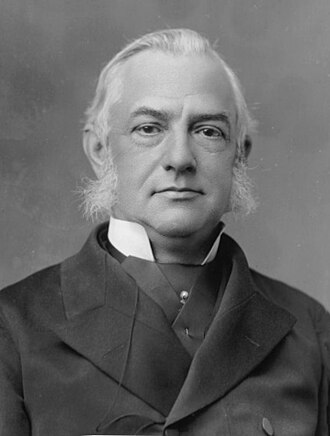
"My own experience with regard to the native character has been, of course, very limited. Those Hindus whom I have had the pleasure to know personally in Europe may be looked upon as exceptional, as the best specimens, it may be, that India could produce. Also, my intercourse with them has naturally been such that it could hardly have brought out the darker sides of human nature. During the last twenty years, however, I have had some excellent opportunities of watching a number of native scholars under circumstances where it is not difficult to detect a mans true character — I mean in literary work and, more particularly, in literary controversy. I have watched them carrying on such controversies both among themselves and with certain European scholars, and I feel bound to say that, with hardly one exception, they have displayed a far greater respect for truth and a far more manly and generous spirit than we are accustomed to even in Europe and America. They have shown strength, but no rudeness; nay, I know that nothing has surprised them so much as the coarse invective to which certain Sanskrit scholars have condescended, rudeness of speech being, according to their view of human nature, a safe sign not only of bad breeding, but of want of knowledge. When they were wrong, they have readily admitted their mistakes; when they were right, they have never sneered at their European adversaries. There has been, with few exceptions, no quibbling, no special pleading, no untruthfulness on their part, and certainly none of that low cunning of the scholar who writes down and publishes what he knows perfectly well to be false, and snaps his fingers at those who still value truth and self-respect more highly than victory or applause at any price. Here, too, we might possibly gain by the import cargo."
Max Müller
Max Müller
Max Müller
author38 quotes

Friedrich Max Müller was a German-born British comparative philologist and Orientalist. He was one of the founders of the Western academic disciplines of Indology and religious studies. Müller wrote both scholarly and popular works on the subject of Indology. He directed the preparation of the Sacred Books of the East, a 50-volume set of English translations which continued after his death.

More by Max Müller

View all →
Quote
"The Veda may be called primitive, because there is no other literary document more primitive than it; but the language, the mythology, the religion and philosophy that meet us in the Veda open vistas of the past which no one would venture to measure in years. Nay, they contain, by the side of simple, natural, childish thoughts, many ideas which to us sound modern, or secondary and tertiary, as I called them, but which nevertheless are older than any other literary document, and give us trustworthy information of a period in the history of human thought of which we knew absolutely nothing before the discovery of the Vedas."
Max MüllerMax Müller
Quote
"The worship of Shiva, Vishnu, and other popular deities was of the same and in many cases of a more degraded and savage character than the worship of Jupiter, Apollo or Minerva. ... A religion may linger on for a long time, it may be accepted by large masses of the people, because it is there, and there is nothing better. But when a religion has ceased to produce defenders of the faith, prophets, champions, martyrs, it has ceased to live, in the true sense of the word; and in that sense the old orthodox Brahmanism has ceased to live for more than a thousand years."
Max MüllerMax Müller
Quote
"Whether listening to the shrieks of the Shaman sorcerers of Tatary, or to the odes of Pindar, or to the sacred songs of Paul Gerhard: whether looking at the pagodas of China, or the Parthenon of Athens, or the cathedral of Cologne: whether reading the sacred books of the Buddhists, of the Jews, or of those who worship God in spirit and in truth, we ought to be able to say, like the Emperor Maximilian, Homo sum, humani nihil a me alienum puto, or, translating his words somewhat freely, I am a man, nothing pertaining to man I deem foreign to myself."
Max MüllerMax Müller

More on Dil

View all →
Quote
"Mister Toombs was willing to dissolve the Union to save slavery, Mister Phillips, to save liberty; while Mister Seward, denounced and derided by both, declared that the deepest instinct of the American people was for union. Reserved rights. State rights, limited powers, the advantages of union and disunion, were the cucumbers from which we were busily engaged in distilling light, overlooking the fact of nationality in discussing the conditions of union. We were speculating upon costume. We gravely proved that the clothes were the clothes of a woman, or of a child, without seeing that whatever the clothes might be there was a full-grown man inside of them. "The Constitution is a contract between sovereign States", shouted Mister Toombs, "let Georgia tear it and separate". "The Constitution is a league with hell", calmly replied Mister Phillips, "let New York cut off New Orleans to rot alone". "Oh, dear! it"s a dreadful dilemma", whimpered President Buchanan. "States have no right to secede, and the United States have no right to coerce. Oh, dear me! it"s perfectly awful! I"m the most patriotic of men, but what shall I do? what shall I do?" Separate! Cut off! Secede! It was of a living body they spoke, which, pierced anywhere, quivered everywhere."
Wendell PhillipsWendell Phillips
Quote
"Its never a matter of ethics versus pragmatism; its a question of which informs the other. Humans have shown themselves capable of almost unlimited imagination and innovation—qualities that could be said to define human beings. People have used this capacity to do both great good and great harm. The point is that when humans set their minds to doing something, its frequently possible. It makes sense to first ask what people want to do and why, from an ethical standpoint, and then get to the pragmatic how-to questions. The very process of asking whats right is how people fill out ethics in praxis, to meet new demands and dilemmas, new social conditions and contexts. Anarchism, then, brings an egalitarian ethics out into the world, making it transparent, public, and shared. It maintains an ethical orientation, while continually trying to put such notions into practice, as flawed as the effort might be. When other people come into contact with this ethical compass, they will hopefully "get it" and incorporate the same values into their lives, because it works. It offers directionality to political involvement and buttresses peoples efforts to remake society. It turns surviving into thriving. Thats the crucial difference between a pragmatic versus ethical impulse: people, in cooperative concert, qualitatively transform one anothers lives."
E
Ethics
Quote
"Thats... the big discovery of this principle of computational equivalence of mine. ...This is something which is kind of a follow-on to Gödels theorem, to Turings work on the ... that there is this fundamental limitation built into science, this idea of computational irreducibility that says that even though you may know the rules by which something operates, that does not mean that you can readily... be smarter that it and jump ahead and figure out what its going to do."
S
Stephen Wolfram
Quote
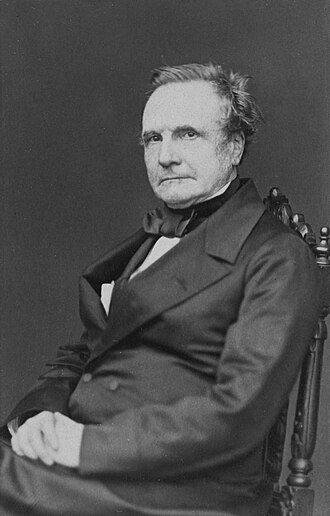
"The establishment of "The Times" newspaper is an example, on a large scale, of a manufactory in which the division of labour, both mental and bodily, is admirably illustrated, and in which also the effect of domestic economy is well exemplified. It is scarcely imagined, by the thousands who read that paper in various quarters of the globe, what a scene of organized activity the factory presents during the whole night, or what a quantity of talent and mechanical skill is put in action for their amusement and information."
Charles BabbageCharles Babbage