Quote
"Democracy has nothing to do with freedom. Democracy is a soft variant of communism, and rarely in the history of ideas has it been taken for anything else."
H
Hans-Hermann Hoppe"Not only is this close correlation between democracy and dictatorship troublesome for democratic-peace theorists; worse, they must come to grips with the fact that the dictatorships emerging from crises of democracy are by no means always worse, from a classical liberal or libertarian view, than what would have resulted otherwise. Cases can be easily cited where dictatorships were preferable and an improvement. Think of Italy and Mussolini or Spain and Franco."
Hans-Hermann Hoppe is a German-American academic associated with Austrian School economics, anarcho-capitalism, and paleolibertarianism. He is best known for his critique of mass democracy in favor of private property-based social orders. From 1986 until 2008 he was professor of economics at the University of Nevada, Las Vegas (UNLV). He is a senior fellow of the Mises Institute think tank. In 200
"Democracy has nothing to do with freedom. Democracy is a soft variant of communism, and rarely in the history of ideas has it been taken for anything else."
"As soon as a crisis breaks out, within the given institutional framework, the same mistake will be made over and over again, on a larger and larger scale. Every future crisis will be bigger than the crisis that we had before."
"Germany had lost a devastating war, and the German population was subjected to a systematic, American-led reeducation campaign, a Charakterwaesche (character-wash), as I was to realize only many years later, of truly enormous proportions, which involved a complete rewriting of history from the victor’s viewpoint, essentially portraying Germans as congenital villains."
"Essentially, economic analysis consists of: (1) an understanding of the categories of action and an understanding of the meaning of a change in values, costs, technological knowledge, etc.; (2) a description of a situation in which these categories assume concrete meaning, where definite people are identified as actors with definite objects specified as their means of action, with definite goals identified as values and definite things specified as costs; and (3) a deduction of the consequences that result from the performance of some specified action in this situation, or of the consequences that result for an actor if this situation is changed in a specified way. And this deduction must yield a priori-valid conclusions, provided there is no flaw in the very process of deduction and the situation and the change introduced into it being given, and a priori—valid conclusions about reality if the situation and situation—change, as described, can themselves be identified as real, because then their validity would ultimately go back to the indisputable validity of the categories of action."
"[O]ur existence is due to the fact that we do not, indeed cannot accept a norm outlawing property in other scarce resources next to and in addition to that of ones physical body. Hence, the right to acquire such goods must be assumed to exist."
"[The] property right in ones own body must be said to be justified a priori, for anyone who would try to justify any norm whatsoever would already have to presuppose the exclusive right to control over his body as a valid norm simply in order to say "I propose such in such."
"The only influences in [the painting The sick Child, Munch painted in his elderly home, remembering very accurate the last days of his dying little sister Sophie] The sick Child.. ..were the ones that come from my home.. ..my childhood and my home. Only someone who knew the conditions at home could possibly understand why there can be no conceivable chance of any other place having played a part – my home is to my art as a midwife is to her children.. ..few painters have ever experienced the full grief of their subject as I did in The sick child. It was not just I who was suffering; it was all my nearest and dearest as well."
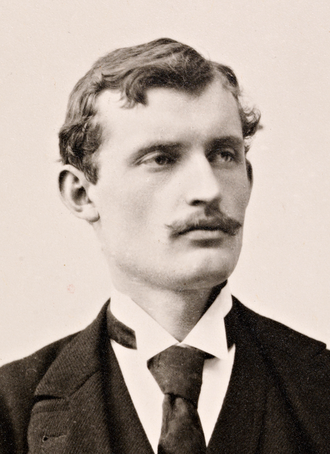 Edvard Munch
"General Franco made it clear that Spain could enter the war only when England was about ready to collapse."
 Francisco Franco
"The Spanish Republic did not find itself free of obligations. For the most part the leaders were Freemasons. Before their duty to their country came their obligations to the Grand Orient. In my opinion, Freemasonry, with all its international influence, is the organization principally responsible for the political ruin of Spain, as well as the murder of Calvo Sotelo, who was executed in accordance with orders from the Grand Secretary of Freemasonry in Geneva."
Francisco Franco"Art was what I originally started out to do and music came second at first. I had a year at art college but I left because it was too much like school. I give all my paintings away to people I like."
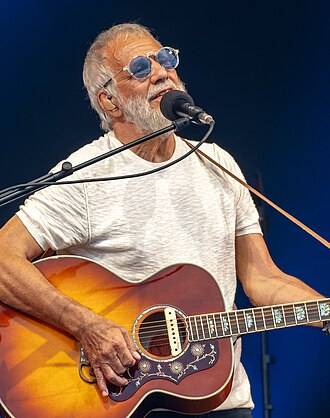 Cat Stevens
"Lady Cannons gone to a matinée at the St. Jamess. We had tickets for the first night, but of course she wouldnt use them then. She preferred to go alone in the afternoon, because she detests the theatre, anyhow, and afternoon performances give her a headache. If she does a thing thats disagreeable to her, she likes to do it in the most painful possible way. She has a beautiful nature."
"At first when I saw The Sick Child [in his imagination] her pallid face and the vivid red hair against the pillow – I saw something that vanished when I tried to paint it. I ended up with a picture on the canvas which, although I was pleased with it, bore little relationship to what I had seen.. ..In the space of that year [1885 – 1886], scratching it out, just letting the paint flow, endlessly I tried to recapture what I had seen for the first time – the pale transparent skin against the linen sheets, the trembling lips, the shaking hands. I repainted the painting numerous times – scratched it out – let it become blurred in the medium – and tried again and again to catch the first impression – the transparent pale skin against the canvas – the trembling mouth – the trembling hands. I had done the chair [in which his sister Sophie had died] with the glass too often. It distracted me from doing the head. – When I saw the picture I could only make out the glass and the surroundings. – Should I remove it completely? – No, it had the effect of giving depth and emphasis to the head. – I scared off half the background and left everything in masses – one could now see past and across the head and the glass.. .I had achieved much of that first impression, the trembling mouth – the transparent skin – the tired eyes – but the picture was not finished in its colour – it was pale grey – the picture was then heavy as lead. [Munch showed the painting on the Autumn Exhibition 18 October 1886; it was criticized severely, even by his bohemian art-friend Jager]"
Edvard Munch