Quote
"It is not the word that is the original material of poetry, rather the letter."
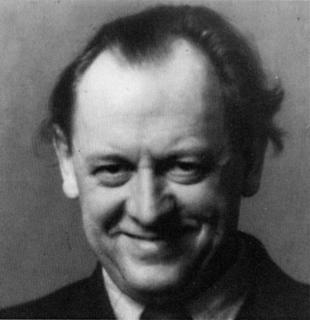 Kurt Schwitters
"Please help me, in order to get us invited [to the United States]. Helma [his wife] will then come later and I will work there and soon pay back the people who lend me the money. But finally I must get out of this internment [because the English mistrusted Schwitters, being a German] and further away from Norway, I want to be with all of you. Please get it done quickly and write to me about the outcome. Maybe my art is in danger and I, of course, with it. At last I would like to work on my abstracts again and find appreciation for them. Who knows what will happen?"
Kurt Hermann Eduard Karl Julius Schwitters was a German artist. He was born in Hanover, Germany, but lived in exile from 1937.
"It is not the word that is the original material of poetry, rather the letter."
Kurt Schwitters"I have two principle aims, two life works. The second is my sonata [Schwitters UrSonata - a long sound poem of 35 minutes]"
Kurt Schwitters"Since the loss of the Merzbau [his former studio in Hannover, which was a big sculpture (5 x 4 x 4,5 meters) I did a lot of small sculptures.."
Kurt Schwitters"When I was born 20.6.[18]87, I was influenced by Picasso to cry. When I could walk and speak I still stood under Picassos influence and said to my mother: Tom or Happening, meaning the entrances of the canal under the street. My lyrical time was when I lived in the Violet Street. I never saw a violet. That was my influence by Matisse because when he painted rose I did not paint violet. As a boy of ten I stood under Mondrians influence and built little houses with little bricks. Afterwards I stood under the influence of the Surrealists.. .I never stood under the influence of Dadaism because whereas the Dadaist created Spiegel-dadaismus (Mirror-Dada) on the Zurich Lake, I created MERZ on the Leine-river, under the influence of Rembrandt. Time went on, and when Hans Arp made concrete Art, I stayed Abstract. Now I do concrete Art, and Marcel Duchamp went over to the Surrealists.. ..and at all I have much fun about Art."
Kurt Schwitters"Then we went down to his work room, in the horrible beautiful Merz grotto [Merz-Haus / MerzBau, built by Schwitters in Hannover as his studio], where broken wheels paired with matchboxes, wire lattices with brushes without bristles, rusted wheels with curious Merz cucumbers.. .How often did we p-lay in this room! Schwitters called playing, considering the sweat, working. There we glued [collages] together our paper pictures, and as I tossed away one of my glued-together works one morning, Schwitters asked, You dont like it? Can I have it? – What do you want with this failed piece of toast? Schwitters took a good look at it and said, Ill put whats on top on the bottom, Ill stick a little Merz nose in this corner and I’ll sign the bottom Kurt Schwitters. And, yes indeed, this collage became a wonderful picture by Kurt Schwitters. Schwitters was a wizard, just as Hokusai was a wizard."
Kurt Schwitters"Kurt Schwitters is the inventor of Merz and I, and aside of himself, he recognizes no one as a Merz artist or an I artist with highest regards."
Kurt Schwitters"I say this to you because we Spaniards are a forgetful people, because we are used to living for the moment, because we do not look back, because we do not know how to see the chain of heroes, because we do not contemplate the sum of sacrifices."
 Francisco Franco
"If it fulfills our hopes, this center will be, at once, a symbol and a reflection and a hope. It will symbolize our belief that the world of creation and thought are at the core of all civilization. Only recently in the White House we helped commemorate the 400th anniversary of Shakespeare. The political conflicts and ambitions of his England are known to the scholar and to the specialist. But his plays will forever move men in every corner of the world. The leaders that he wrote about live far more vividly in his words than in the almost forgotten facts of their own rule. Our civilization, too, will largely survive in the works of our creation. There is a quality in art which speaks across the gulf dividing man from man and nation from nation, and century from century. That quality confirms the faith that our common hopes may be more enduring than our conflicting hostilities. Even now men of affairs are struggling to catch up with the insights of great art. The stakes may well be the survival of civilization. The personal preferences of men in government are not important--except to themselves. However, it is important to know that the opportunity we give to the arts is a measure of the quality of our civilization. It is important to be aware that artistic activity can enrich the life of our people, which really is the central object of Government. It is important that our material prosperity liberate and not confine the creative spirit."
"There was a man and he had eight sons. Apart from that, he was nothing more than a comma on the page of History. Its sad, but thats all you can say about some people."
"Children must be free to think in all directions irrespective of the peculiar ideas of parents who often seal their childrens minds with preconceived prejudices and false concepts of past generations. Unless we are very careful, very careful indeed, and very conscientious, there is still great danger that our children may turn out to be the same kind of people we are."
"I hear people say I swing at bad pitches. What is a bad pitch? If I can hit it, its not a bad pitch."
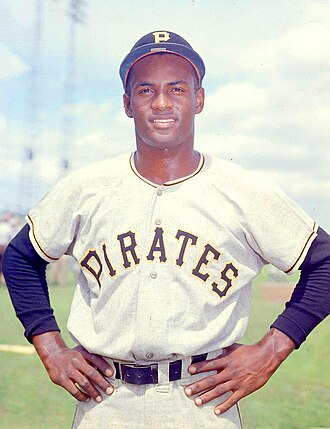 Roberto Clemente
"A free people will always refuse to put up with preventable poverty. If freedom is to be saved and enlarged, poverty must be ended. There is no other solution. The problem of how to prevent these three forces from coming into head-on collision is the principal study of the more politically conscious Conservative leaders. How can wealth persuade poverty to use its political freedom to keep wealth in power? Here lies the whole art of Conservative politics in the twentieth century."