Quote
"You dont really understand your thoughts until you express them in words."
W
Writing"Reading maketh a full man, conference a ready man, and writing an exact man."
Writing is the act of creating a persistent, usually visual representation of language on a surface. As a structured system of communication, writing is also known as written language. Historically, written languages have emerged as a way to record corresponding spoken languages. While the use of language is universal across human societies, most spoken languages are not written. A particular set
"You dont really understand your thoughts until you express them in words."
"Writing is like training to be an athlete. There is a lot of training and work that nobody sees in order to compete. The writer needs to write every day, just as the athlete needs to train. Much of the writing will never be used, but it is essential to do it. I always tell my young students to write at least one good page a day. At the end of the year they will have at least 360 good pages. That is a book."
"The personal essay is vulnerable. It cannot stand upon its footnotes."
"Good typography should be like like a wonderful clear crystal goblet that holds wine. [It is] much better than a golden goblet with jewels on the outside because the point of the crystal goblet is that you can see the wine that is inside. You can appreciate the colors of it. You can see how when you swirl the wine how the texture of the wine clings to the glass and how quickly it drips down back into the pool of wine. And you can see the sediment in the bottom when you hold it up in the light. Thats the purpose of typography. It should be invisible."
"A man really writes for an audience of about ten persons. Of course if others like it, that is clear gain. But if those ten are satisfied, he is content. A certain amount of encouragement is necessary."
"The reason I got into magic was that it seemed to be what was lying at the end of the path of writing. If I wanted to continue on that path, I was going to have to get into that territory because I had followed writing as far as I thought I could without taking a step over the edges of rationality. The path led out of rational confines. When you start thinking about art and creativity, rationality is not big enough to contain it all."
"History is a strange experience. The world is quite small now; but history is large and deep. Sometimes you can go much farther by sitting in your own home and reading a book of history, than by getting onto a ship or an airplane and traveling a thousand miles. When you go to Mexico City through space, you find it a sort of cross between modern Madrid and modern Chicago, with additions of its own; but if you go to Mexico City through history, back only 500 years, you will find it as distant as though it were on another planet: inhabited by cultivated barbarians, sensitive and cruel, highly organized and still in the Copper Age, a collection of startling, of unbelievable contrasts."
"I cant read ten pages of Steinbeck without throwing up. I couldnt read the proletarian crap that came out in the 30s; again you had sentimentalism — the poor oppressed workers."
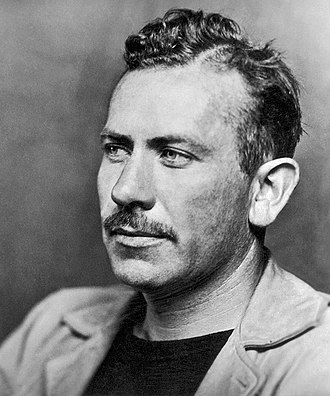 John Steinbeck
"Fiction is history, human history, or it is nothing. But it is also more than that; it stands on firmer ground, being based on the reality of forms and the observation of social phenomena, whereas history is based on documents, and the reading of print and handwriting — on second-hand impression. Thus fiction is nearer truth. But let that pass. A historian may be an artist too, and a novelist is a historian, the preserver, the keeper, the expounder, of human experience."
"(reading) Golden Mist Cologne. Mmm, my favorite."
 Josie and the Pussycats (TV series)
"I learned about renormalization theory as a graduate student, mostly by reading Dyson’s papers. ... From the beginning it seemed to me to be a wonderful thing that very few quantum field theories are renormalizable. Limitations of this sort are, after all, what we most want, not mathematical methods which can make sense of an infinite variety of physically irrelevant theories, but methods which carry constraints, because these constraints may point the way toward the one true theory."
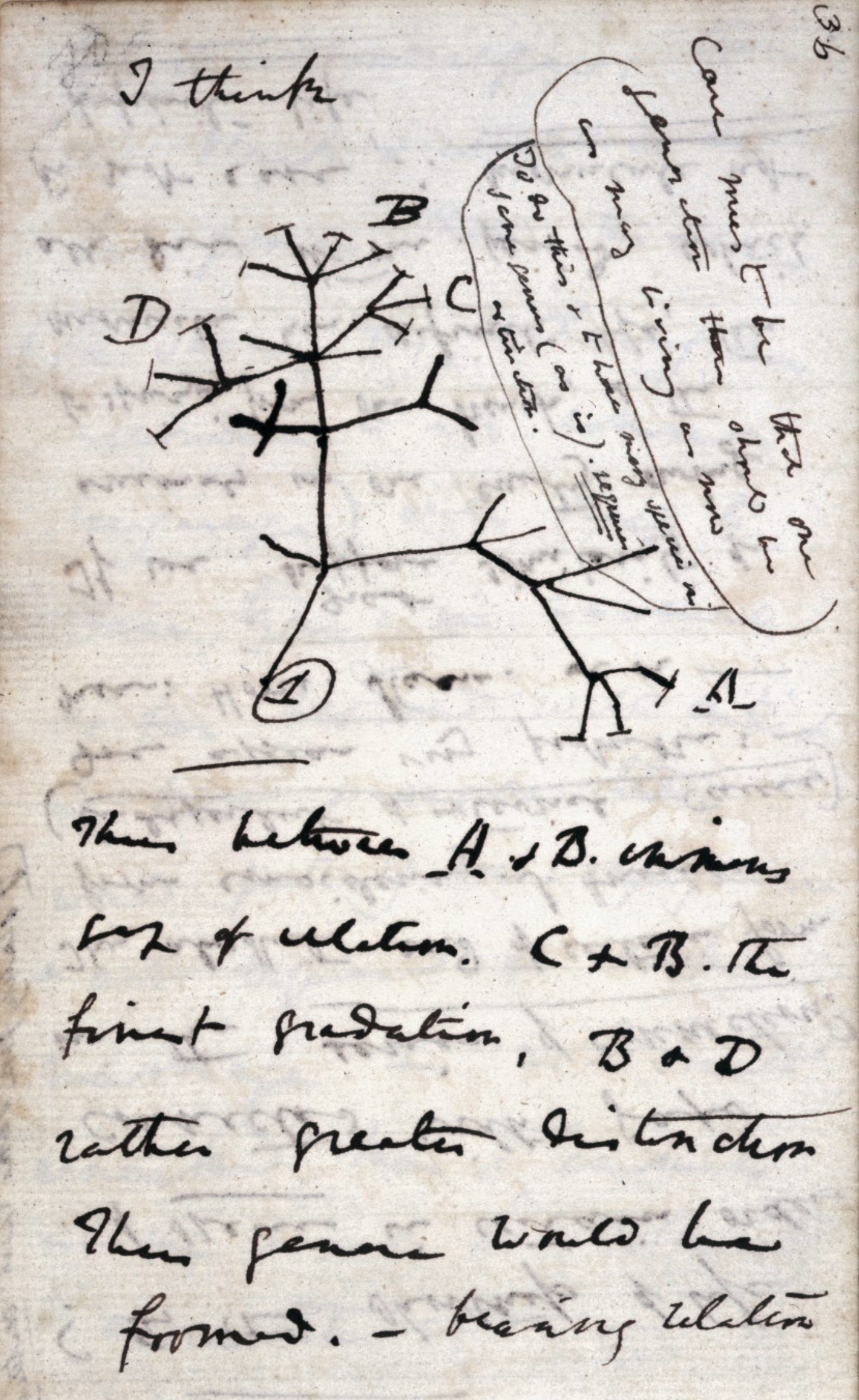 Theory
"In the development of intelligence nothing can be more "basic" than learning how to ask productive questions. Many years ago, in Teaching as a Subversive Activity, Charles Weingartner and I expressed our astonishment at the neglect shown in school toward this language art. ...The "back to the basics" philosophers rarely mention it, and practicing teachers usually do not find room for it in their curriculums. …all our knowledge results from questions, which is another way of saying that question-asking is our most important intellectual tool… There are at present no reading tests anywhere that measure the ability of students to address probing questions to the particular texts they are reading... What students need to know are the rules of discourse which comprise the subject, and among the most central of such rules are those which govern what is and what is not a legitimate question."